Basement waterproofing protects living spaces and structural integrity by preventing water intrusion, efflorescence, and dampness. The following select products are designed to seal, coat, and reinforce concrete, masonry, and foundation surfaces. This guide highlights options for DIY enthusiasts and homeowners seeking reliable, long-lasting barriers against moisture infiltration.
Summary of chosen products
| Product | Brand | Best For | Notes |
|---|---|---|---|
| KILZ Basement And Masonry Waterproofing Paint | KILZ | Interior/Exterior masonry walls | Nanotechnology barrier; not for active leaks or floors |
| Zinsser WaterTite Waterproofing Paint | Zinsser | Basement walls and other masonry surfaces | Clear option; strong 10-year warranty angle |
| Applied Technologies Hydra Stop 300 Kit | Applied Technologies | Crack repair in foundation walls | Fast-set polyurethane foam; DIY friendly |
| RadonSeal Complete DIY Foundation Crack Repair Kit | RadonSeal | Crack sealing without drilling | Low-viscosity urethane; easy caulking gun use |
| RadonSeal Standard Concrete Sealer (5-Gallon) | RadonSeal | Deep penetration and long-term protection | Radon mitigation and concrete densifier |
KILZ Basement And Masonry Waterproofing Paint
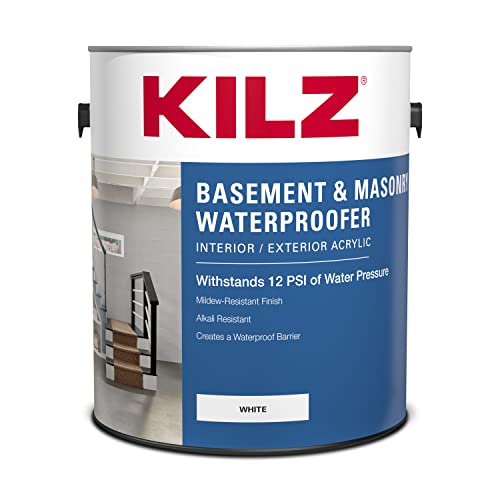
KILZ Basement and Masonry Waterproofing Paint is formulated to waterproof and seal porous concrete and masonry surfaces both inside and outside. The nanotechnology-based barrier helps stop water infiltration, while the alkali-resistant coating provides a long-lasting decorative finish. Suitable for properly prepped above and below grade basement walls, masonry walls, retaining walls, cinder blocks, stucco, and brick. Not recommended for floors or walls with active leaks. Application requires a high-quality roller, brush, or an airless sprayer delivering 2200-3200 PSI with a fine spray tip.
Zinsser WaterTite Waterproofing Floor And Wall Paint

Zinsser WaterTite is ideal for basements and other interior/exterior masonry surfaces such as fountains, retaining walls, and planters. It provides enhanced waterproofing with a 10-year warranty-backed claim. Coverage is suitable for small to moderate areas, and the coating forms a durable layer that resists moisture, providing a long-lasting solution for concrete and masonry surfaces that face hydrostatic pressure or moisture vapor.
Applied Technologies Hydra Stop 300 Kit

The Hydra Stop 300 Kit is designed to repair foundation wall cracks with a fast-setting polyurethane foam that expands to fill cracks and prevent leaks. This complete kit provides a DIY solution to seal cracks in basement walls, reducing the risk of water intrusion. Once set, the polyurethane forms a durable, permanent seal, offering a practical approach for homeowners tackling moisture issues without professional excavation work.
RadonSeal Complete DIY Foundation Crack Repair Kit

The RadonSeal kit uses drill-free, low-viscosity urethane injection to seal hairline cracks in crawl spaces and concrete basement walls. It includes a simple two-component system that a homeowner can apply with a standard caulking gun. The product focuses on persistent water seepage through cracks and aims to provide a long-lasting barrier against moisture and, in some variants, radon gas mitigation.
RadonSeal Standard Concrete Sealer

RadonSeal Standard Concrete Sealer penetrates deep into concrete to seal pores, reducing water infiltration, moisture vapor, and efflorescence. It also acts as a densifier to harden concrete and resist wear, freeze-thaw cycles, and abrasion. The product is designed for indoor and outdoor use on poured concrete walls, slabs, and foundation areas, and is marketed as a long-term solution with minimal reapplication requirements. It supports both waterproofing and radon mitigation goals by chemically bonding with the substrate.
Vividye Waterproof Sealant (Alternate Choice)

Vividye offers a transparent waterproof sealant suitable for indoor and outdoor waterproofing projects, including roofs, walls, and basements. The product emphasizes a clear, flexible coating that preserves surface aesthetics while sealing hairline cracks and leaks. It is a viable option for light-duty containment or for areas where surface appearance is a factor, though it may be best used as a supplemental layer in combination with more robust waterproofing systems.
AQNTIGUSH Transparent Waterproof Sealant
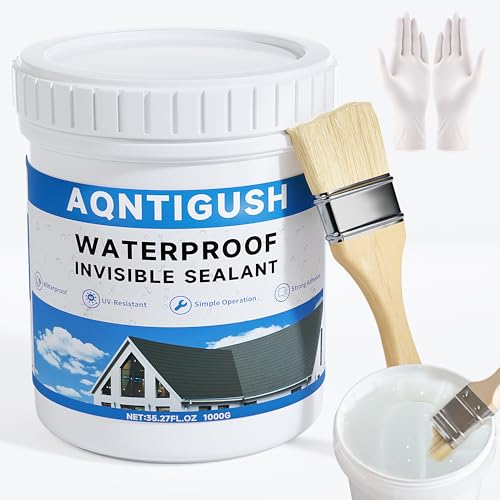
AQNTIGUSH presents a 35-ounce transparent sealant designed for indoor and outdoor use on roofs, walls, bathrooms, and other damp surfaces. The formula aims to provide an invisible barrier that remains clear after curing, facilitating maintenance of surface aesthetics while delivering moisture resistance. This option may complement other waterproofing steps in a comprehensive basement strategy.
MAXKSOKO Waterproof Membrane Band

MAXKSOKO offers a waterproofing membrane band designed for walls, corners, and floor transitions. The 98.4-foot roll provides a durable barrier that helps seal joints, seams, and edge areas that are prone to moisture infiltration. It is presented as suitable for basement waterproofing projects, showers, and other wet areas where a reliable membrane is beneficial.
Buying Guide: Key Purchase Considerations
When selecting basement wall waterproofing products, consider surface type, moisture level, and the desired duration of protection. For active leaks or hydrostatic pressure, crack repair kits and penetrating sealers should be paired with surface coatings for a layered approach. Below are essential factors and comparisons to guide a decision:
- Surface compatibility: Concrete, masonry, and stucco respond differently to coatings and sealants. Ensure the product is rated for the target substrate and for exterior or interior use as needed.
- Leak status: For ongoing leaks, use crack repair products (urethane infusions, quick-set foams) in combination with a waterproofing coating that can withstand hydrostatic pressure.
- Penetration vs. film-forming: Penetrating sealers densify and reduce porosity from inside the concrete, while film-forming coatings create a water-resistant surface layer. A combination often yields the best results.
- Cure time and application: Some products require curing periods or precise mixing; others set quickly. Follow manufacturer instructions to avoid trapping moisture or compromising bond strength.
- Durability and warranty: Look for products with long-term performance claims and warranties, especially for basement walls that face seasonal moisture.
- Prep and tools: Proper surface cleaning, curing, and priming (if required) are critical. Tools can range from brushes and rollers to spray equipment and caulking guns for injections.
- Maintenance: Consider whether you want a transparent sealant that preserves aesthetics or a colored paint that hides imperfections while providing waterproofing.
- Safety and environmental impact: For indoor use, prefer low-VOC formulas and water-based systems when possible to minimize fumes and environmental impact.
In practice, for best results, combine a crack repair method with a penetrative sealer or a protective paint/coating suitable for basement walls. This layered approach addresses existing cracks and new moisture ingress, providing a more robust barrier than a single product alone.