Cheaper chest freezers can deliver dependable cold storage without cluttering your budget. This guide reviews five low-cost models to help American shoppers compare capacity, energy use, and practical features. Each option is evaluated for apartments, garages, and small offices, with emphasis on reliability, ease of use, and placement flexibility.
| Product | Brand | Approx. Capacity | Notable Benefit |
|---|---|---|---|
| BLACK+DECKER 2.0 Cu. Ft. Compact Chest Freezer | BLACK+DECKER | 2.0 Cu. Ft | Removable basket for organization |
| 3.5 Cu.Ft Small Chest Freezer – Climate Choice | Climate Choice | 3.5 Cu. Ft | Seven temperature settings for versatile storage |
| PLENTORA 3.5 Cu.Ft Small Chest Freezer | PLENTORA | 3.5 Cu. Ft | Seven-level temperature control, quiet operation |
| Cosanta 4.5 Cu. Ft Chest Freezer | Cosanta | 4.5 Cu. Ft | Removable basket, energy efficient |
| EUHOMY 3.5 Cu.Ft Chest Freezer | E EUHOMY | 3.5 Cu. Ft | Wheels for mobility, compact footprint |
Introduction ends here. The following product sections highlight key features, with a focus on affordability, practical design, and everyday usability in American homes and small workplaces.
BLACK+DECKER 2.0 Cu. Ft Compact Chest Freezer
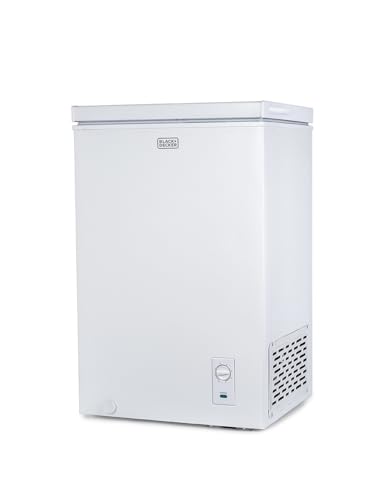
Compact depth and solid organization make this model a practical entry point for tight kitchens, basements, or garages. With a 2.0 cu. ft capacity, it holds essentials like frozen dinners, meats, and ice cream. A removable storage basket simplifies access to frequently used items. The unit’s small footprint helps conserve space while delivering dependable freezing performance for daily needs. The design emphasizes straightforward operation, making it suitable for apartments or spaces with limited corner room.
3.5 Cu.Ft Small Chest Freezer – Climate Choice

This compact chest freezer blends space efficiency with flexible temperature control. With seven adjustable settings spanning from -11.4°F to 10.2°F, it accommodates a range of frozen goods—from delicate items like berries to meats and prepared foods. A top-opening design offers easy access, while a removable basket helps with organization. Its 3.5 cu. ft capacity is well suited for apartments, shared offices, or dorms where square footage matters but reliable deep freezing is still needed.
PLENTORA 3.5 Cu.Ft Small Chest Freezer

PLENTORA offers a spacious 3.5 cu. ft interior with a focus on energy efficiency and quiet operation. The seven-level temperature control supports rapid cooling and long-term preservation, helping foods maintain flavor and nutrients. Its compact profile fits well in kitchens, basements, or garages, providing another affordable option for secondary storage. The model’s design emphasizes low noise and steady performance, which is advantageous for living spaces or shared work areas where disruption should be minimized.
5.0 Cu Ft Chest Freezer – BODACIOUS

This model increases capacity to 5.0 cu. ft while keeping energy usage in check with an efficient compressor and quiet operation. It includes a six-speed adjustable thermostat, a removable basket, and a defrost drain, supporting simple organization and maintenance. With its compact dimensions for a 5-cubic-foot unit, it remains suitable for narrow kitchens, laundry rooms, or garage spaces where extra frozen storage is valuable but space is still limited.
EUHOMY 3.5 Cu.Ft Chest Freezer

EUHOMY’s 3.5 cu. ft chest freezer emphasizes mobility and practicality. The design includes wheels for easy relocation and a small basket inside for organized storage. It features a drainage port for post-power outage thaw management and a 7-thermostat control for precise temperature settings. The compact footprint makes it suitable for apartments, dorm rooms, or garages, while the efficient compressor supports steady freezing without excessive energy use.
Buying Guide
Capacity and footprint
Assess how much frozen storage you need and where the unit will sit. Smaller apartments may favor 2–3.5 cu. ft models, while garages and family kitchens might justify 4–5 cu. ft or more. Verify exterior dimensions against cabinet space, doors, and stairways to ensure a smooth setup.
Energy efficiency
Look for models with energy-efficient compressors and low operating noise. Many entry-level freezers use R600a refrigerant, which can reduce power consumption. Check the claimed daily energy use and compare across sizes to estimate ongoing costs in your climate and housing situation.
Temperature control
Freezers with multiple thermostat settings offer flexibility for different foods and seasonal needs. Seven- or six-step controls provide precise freezing ranges, while fewer settings may be sufficient for basic storage. Consider models with fast-cooling features to lock in freshness quickly after shopping.
Organization and accessibility
Removable baskets, wire shelves, and top-door designs improve item access and organization. A drainage port is helpful for defrost management after power interruptions. Wheels or casters on some models increase mobility for cleaning or reconfiguration of space.
Defrost type
Manual defrost freezers tend to be cheaper and simpler, but continuous defrost models reduce frost buildup automatically. Decide whether you prefer manual maintenance or a quieter, low-frost operation in a frequently used area like a kitchen or office.
Build quality and warranty
Budget models should still offer solid door seals and stable bases. Examine user reviews for reliability patterns and check warranty terms for coverage on compressor and parts. Look for models with removable baskets and easy-fit components to extend usable life.
Placement considerations
Consider where the freezer will live. If you’re placing it in non-climate-controlled spaces, like a garage or basement, verify the operating temperature range specified by the manufacturer to ensure consistent performance across seasons.