Hatching eggs requires precise control of temperature, humidity, and turning. The following picks spotlight reliable incubators that balance easy use with hatch-friendly features, from built-in candling to automatic turning. Whether you’re a hobbyist or running a small operation, these models help optimize hatch rates while simplifying monitoring and maintenance.
Summary of Selected Products
| Product | Capacity | Key Feature | Brand |
|---|---|---|---|
| MATICOOPX 30 Egg Incubator | 30 eggs | Stable temperature, external water refill, built-in egg candler | MATICOOPX |
| MATICOOPX 20 Egg Incubator | 20 eggs | Stable temperature, external water refill, built-in egg candler | MATICOOPX |
| APDOE HatchPro 12 | 12 eggs | Precision digital temp & humidity, automatic turning, dual water bottles | Apdoe |
| KINDAUS Egg Incubator | 12-27 eggs | LED display, automatic turning, built-in egg candler | KINDAUS |
| Sailnovo 70 Egg Incubator | Up to 70 eggs | Large capacity, adjustable trays, automated humidity and turning | Sailnovo |
MATICOOPX 30 Egg Incubator

The MATICOOPX 30 Egg Incubator combines a circulating airflow system with a robust fan to maintain a stable temperature across the incubation chamber. A key convenience is external water refilling, which helps prevent interior temperature and humidity dips caused by lid openings. The built-in egg candler lets observers view embryo development without additional equipment. This model is well-suited for hobbyist setups that want reliable performance with straightforward maintenance.
MATICOOPX 20 Egg Incubator

This 20-egg version mirrors the 30-egg design philosophy with a focus on stable temperature via a strong fan-driven airflow and external water refilling. The built-in egg candler provides a convenient view of embryo development, reducing the need for extra inspection tools. Ideal for compact spaces, it offers reliable hatch support without overcomplication.
APDOE HatchPro 12

The APDOE HatchPro 12 emphasizes precision temperature and humidity control through a digital monitoring system. It features automatic egg turning every two hours, and a two-in-one humidity control system with dual external water bottles. The removable egg tray eases handling during the final days of incubation, making this model a versatile option for species including chickens, ducks, and quail.
KINDAUS Egg Incubator
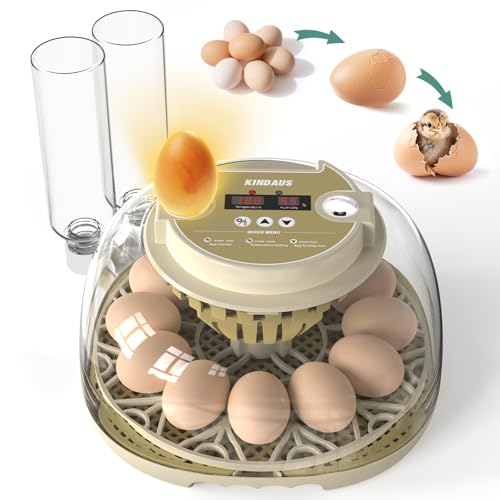
The KINDAUS incubator offers precise real-time readings on a bright LED display for temperature and humidity. Automatic egg turning reduces manual handling, while a 360° viewing lid with an included egg candler helps monitor embryo progress and identify infertile eggs efficiently. It accommodates both chicken and smaller poultry eggs, delivering straightforward operation for beginners and seasoned hatchers alike.
Sailnovo 70 Egg Incubator

The Sailnovo 70 Egg Incubator is designed for larger hatch projects, featuring a high-capacity tray arrangement and automated turning plus auto humidification. Its temperature control and a robust fan help maintain stability across many eggs, reducing the risk of uneven development. An integrated LED light and a built-in candling system support ongoing embryo checks without frequent lid openings, making it a strong option for classrooms and small farms.
Buying Guide: Key Factors To Consider
Choosing the right incubator depends on your needs, space, and the species you’re raising. The following considerations help compare models across budgets and usage scenarios:
- Capacity and space: Plan for the number of eggs you want to hatch at once. Larger incubators are efficient for classrooms or small farms, but require more space and power. Small models suit beginners or hobbyists.
- Temperature accuracy: Look for models with reliable sensors and stable airflow. Precision is critical for consistent hatch rates, especially with mixed species.
- Humidity control: External water refilling and adjustable vents reduce lid-opening losses. Humidity management is essential for larger eggs and longer incubation periods.
- Turner automation: Automatic turning mimics natural brooding and reduces manual labor. Some units rotate eggs at fixed intervals and stop before hatching to protect embryos.
- Candling and monitoring: Built-in candlers and LED displays help track development and maintain visibility without disrupting conditions inside the incubator.
- Maintenance and cleaning: Removable trays and accessible water systems simplify cleaning and sanitation, lowering disease risk.
- Durability and warranty: Look for sturdy construction and vendor support, especially if you plan regular, long-term use.
For beginners, starting with a model offering clear LED readouts, automatic turning, and external water refill can reduce setup complexity. For more advanced hobbyists, larger units with adjustable humidity modes and multi-species support can handle varied incubation needs. In all cases, ensure you have a suitable power setup and a draft-free location to maximize hatch success.