Gas-powered water heaters remain a strong choice for households seeking fast, endless hot water without electric reliance. This guide highlights top natural gas and propane models that balance flow, efficiency, and versatility for American homes. Each selection is categorized by installation type, heat output, and practical features to help you compare options at a glance.
| Product | Flow (GPM) | BTU | Install Type | Condensing |
|---|---|---|---|---|
| Rinnai RX199iN | Up to 11.1 | 199,000 | Indoor/Outdoor | Condensing |
| FOGATTI 170S | 7.5 | 170,000 | Indoor | Non-condensing |
| Rheem RTGH84DVLN3701171 | 8.4 | 157,000 | Indoor | Non-condensing |
| Rheem RTG-70DVLN-3 | 7.0 | 160,000 | Indoor | Non-condensing |
| VELPAX 4.74 GPM | 4.74 | 68,000 | Indoor | Non-condensing |
Rinnai RX199iN Condensing Tankless Water Heater

The RX199iN is designed for versatile placement, suitable indoors or outdoors with Versa Vent. It supports propane or natural gas via a Smart Sense gas control system and offers up to 11.1 GPM, accommodating multiple fixtures simultaneously. Its compact footprint fits tighter spaces, making it a practical choice for modern homes seeking energy efficiency. Key features include a user-friendly interface, Quick Flush for maintenance, and a high energy-efficiency factor (UEF .98). Optional WiFi control via Controlr module enhances remote monitoring and settings.
Sediment Buster Water Heater Tool

This UL Verified tool helps flush, clean, drain, and break up sediment clogs in electric or gas water heaters. It’s designed to extend heater life by removing mineral buildup, reducing inefficiencies, and supporting regular maintenance. Instructions and videos aid ease of use, making it a practical addition to ongoing water heater care.
FOGATTI Natural Gas Tankless Water Heater Indoor – 170S Series

FOGATTI’s 170S indoor model delivers strong performance with 170,000 BTU and 7.5 GPM, taking up much less space than traditional tanks. It provides instant hot water for multiple outlets, supporting multitasking households. The unit emphasizes precise temperature control with a four-stage combustion system and smart sensors to maintain stable outputs across varying flow rates and temperatures.
Rheem RRTGH84DVLN3701171, RTGH Series 8.4 GPM
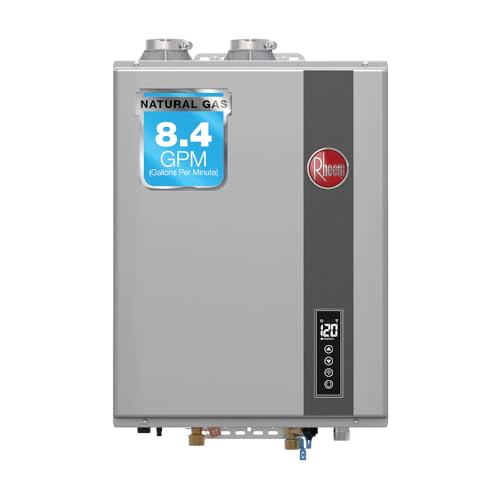
This indoor gas tankless heater delivers up to 8.4 GPM with 157,000 BTU, suitable for homes with multiple hot water needs. It features electric ignition and a compact design for indoor installation. Its efficiency, steady output, and dependable performance make it a solid non-condensing option for households prioritizing reliability in cold climates or higher demand scenarios.
Rheem RTG-70DVLN-3 Non-Condensing Indoor Tankless

With 7.0 GPM and 160,000 BTU, this indoor non-condensing unit is engineered for reliable hot water across 2–3 bathrooms. It’s designed for easy wall mounting by a qualified installer and emphasizes durable construction with efficient gas operation. Its compact cabinet fits tight utility spaces while delivering consistent temperatures for everyday use.
VELPAX Natural Gas Tankless Water Heater – 4.74 GPM
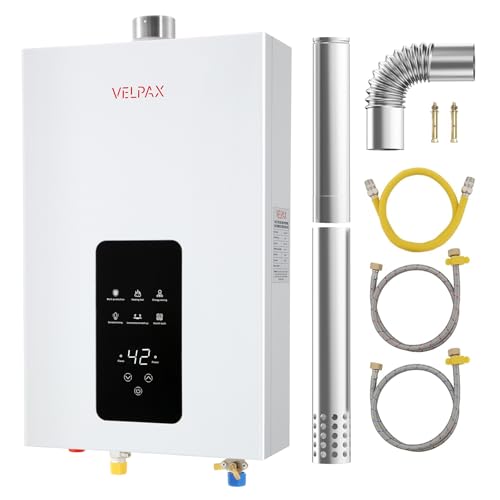
VELPAX’s 4.74 GPM unit targets compact spaces while delivering steady hot water for 2–3 points of use. It operates at up to 68,000 BTU per hour with a maximum temperature rise of 149°F, and includes a stainless steel body for durability. This model is designed for natural gas (LNG) and emphasizes energy-efficient on-demand heating with a digital display for precise adjustments.
Buying Guide: Key Purchase Considerations
- Flow rate and simultaneous usage: Choose a unit with enough GPM to cover showers, sinks, and dishwashers simultaneously. If your household frequently runs multiple hot-water tasks, opt for higher GPM and BTU ratings.
- Fuel compatibility and venting: Confirm whether your home uses natural gas or propane and ensure venting requirements align with installation plans (indoor vs outdoor, condensing vs non-condensing).
- Condensing vs non-condensing: Condensing models reuse exhaust energy for efficiency, often with higher upfront cost but lower operating costs. Non-condensing units are typically cheaper but may vent warmer exhaust and run with slightly lower efficiency.
- Space and installation: Indoor models require proper clearances and venting; outdoor units may need weather-rated components. Consider cabinet dimensions and wall-mount flexibility.
- Energy efficiency and longevity: Look for high UEF ratings and durable materials (stainless steel heat exchangers, corrosion-resistant interiors) to minimize wear and maintenance costs.
- Maintenance and serviceability: Features like Quick Flush, accessible service ports, and manufacturer support impact long-term reliability.
- Smart controls and maintenance tools: WiFi-enabled interfaces and maintenance tools (like flushing aids) can simplify monitoring and upkeep.
- Warranty considerations: Compare warranties on heat exchangers, burners, and labor to gauge long-term protection.
- Safety protections: Flame sensors, anti-freeze and overheat protections, and automatic shutoffs help prevent damage and improve safety during diverse climates.