Finding the right wood deck primer is essential for long-lasting adhesion, staining, and color depth. This guide reviews top primers designed to prep bare or worn wood, promote stain absorption, and provide a solid base for sealants and paints. Each primer is suited for outdoor decks and handles common deck challenges like moisture, wear, and exposure to sun. Read on to compare features, applications, and performance across five reliable products.
| Product | Brand | Why It Stands Out | Typical Use |
|---|---|---|---|
| Wood’n Primer (Light Wood) | Retique It | Improved adhesion; stain-friendly; mimics raw wood absorbency | Priming light or medium wood tones for staining |
| Multi-Purpose Primer (1 Gallon) | Liquid Rubber | Strong bonding; versatile on wood and concrete; fast-drying | General prep before coatings on wood or concrete |
| Marine Topside Primer (White) | TotalBoat | One-part, durable undercoat for marine finishes; high build with one coat | Fiberglass or wood surfaces above waterline |
| BEEST Multipurpose Primer (Gray) | BEEST | Ultra low odor; high adhesion on multiple substrates | Decks, concrete, wood, and other substrates |
| Marine Topside Primer (Gray) | TotalBoat | Durable, flexible undercoat for marine paints | Fiberglass or wood topside prep |
Note: All products listed are suitable for exterior wood decks and help maximize stain uptake, durability, and finish quality. Images and links point to product pages for further details.
Wood’n Primer – Light Wood (Retique It)

Retique It Wood’n Primer is designed to prime wood so stain absorption matches raw wood. Its newer formula emphasizes stronger adhesion and better compatibility with a wide range of stains, including penetrating options. It’s ideal for preparing light wood surfaces to achieve depth and contrast before staining or finishing with liquid wood products.
Key points include: stronger adhesion, compatibility with most stains, and a patented formula that mimics raw wood absorption to improve stain penetration. For decks with lighter tones, this primer helps achieve a natural, even base that enhances final color.
Liquid Rubber Multi-Purpose Primer (1 Gallon)

Liquid Rubber’s Multi-Purpose Primer is a fast-drying, water-based option that boosts adhesion on wood and concrete. It’s designed to prevent blistering and works on various substrates, including concrete and high-density polyethylene. Apply one to two coats as needed, then topcoat within 24 hours of tack-free readiness for best results.
TotalBoat Marine Topside Primer (White)

This one-part marine primer creates a durable undercoat for polyurethane or enamel systems. It seals effectively with a thin coat and is suitable for fiberglass, wood, and previously painted surfaces in good condition. It’s designed for use above the waterline and offers easy application by brush, roller, or spray.
BEEST Multipurpose Primer (Gray, 1 Gallon)
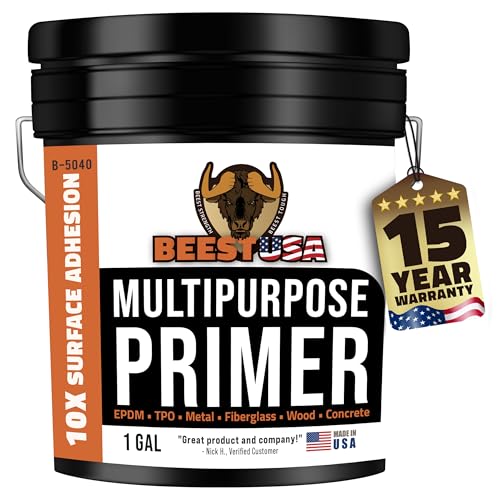
BEEST Multipurpose Primer offers high-adhesion properties with an emphasis on ease of use and environmental considerations. It’s formulated to bite into wood and other deck materials, reducing blistering and peeling once top-coated. The gray finish helps with even coverage when applying lighter sealants or paints later.
Wood’n Primer – Dark Wood (Retique It)

Retique It’s Dark Wood variant provides the same absorption-mimicking formula with a focus on richer tones. It primes surfaces to take on darker finishes with good depth, enabling natural-looking contrasts when paired with stain or liquid wood products. Its patented blend aims to deliver consistent penetration for a uniform final appearance.
Do It Best Exterior Oil-Based Wood Primer

Do It Best Exterior Oil-Based Wood Primer is a traditional option for exterior decks, emphasizing reliable adhesion and compatibility with oil-based finishes. While labeled broadly, it remains a common choice when converting bare wood or worn surfaces to a paintable base suitable for sealants and topcoats.
Buying Guide: Key Purchase Considerations
Surface compatibility: Choose a primer tested for wood and your intended finish. Some primers excel with water-based topcoats, others pair best with oil-based coatings. Consider the deck environment—exposure to sun, rain, and humidity may warrant a high-adhesion or moisture-tolerant formula.
Penetration vs. build: Primers vary in how much they penetrate wood vs. how much film they form. For rough or weathered boards, a primer with deeper penetration can improve stain uptake and color uniformity; for smooth, prepped surfaces, a film-forming primer can create a more uniform base.
Drying time and recoat window: Fast-drying primers enable quicker project completion. Check the recommended recoat window and ensure it aligns with your schedule and climate. In humid areas, longer cure times may affect topcoat timing.
Odor and safety: Some primers are low-odor or low-VOC, which can be important for outdoor use around living spaces. For households with sensitivities, prefer products marketed as low odor and environmentally friendly.
Coverage and primer thickness: Primers vary in coverage area per gallon. Note that rough or porous wood may require more coats to achieve a uniform finish. Plan for surface preparation steps like cleaning, sanding, and repairing damaged boards before priming.
Brand ecosystem and staining compatibility: If you plan to stain after priming, verify stain compatibility—some primers are specifically designed to enhance stain penetration and color depth, while others are best paired with paints or sealants.
Application method: Most primers support brush, roller, or spray application. For decks, rollers and brushes are common, but spray systems can save time for larger surfaces. Always follow safety guidelines for ventilation and surface preparation.