Finding a reliable whole-house gas tankless water heater means choosing a unit with enough flow to support multiple fixtures and a high-efficiency burner that minimizes energy use. Below are five top options that balance high flow, strong BTU ratings, and smart features to deliver on-demand hot water across an American home. Each entry includes key specifications and why it fits a whole-house gas system.
| Product | Brand | Max Flow (GPM) | BTU | Key Note |
|---|---|---|---|---|
| Rheem RTGH Series 8.4 GPM | Rheem | 8.4 | 157,000 | Indoor natural gas, 120 V electric ignition |
| APUS Natural Gas Tankless (6.8 GPM) | APUS | 6.8 | 140,000 | Smart Wi‑Fi app control; instant hot water |
| ThermoMate CZ422NG (5 GPM) | thermomate | 5.0 | 113,000 | Multi-point heating; advanced protections |
| NEW Rinnai RX199iN (11.1 GPM) | Rinnai | 11.1 | 199,000 | Indoor/outdoor versatility; propane or natural gas |
| GASLAND Gasmart E (7.6 GPM) | GASLAND | 7.6 | 199,000 | Compact, high efficiency; indoor installation |
Rheem RRTGH84DVLN3701171: 8.4 GPM Gas Tankless
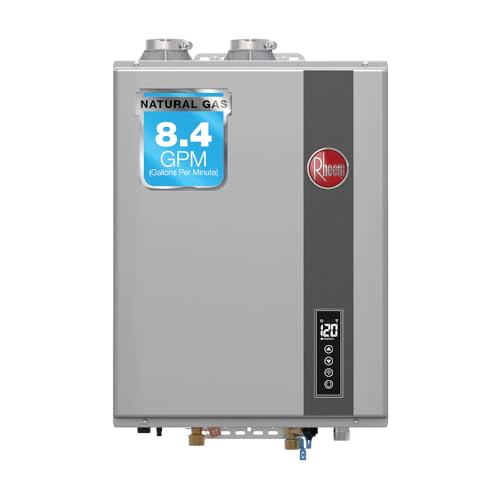
The Rheem unit delivers up to 8.4 GPM with a 157,000 BTU output, suitable for homes with multiple simultaneous hot water demands. It uses natural gas with an electric ignition and provides a broad temperature range from 100 to 140°F (default 120°F). Its indoor installation makes it a versatile choice for many layouts. The 120 V ignition simplifies wiring requirements. Suitable for families seeking strong flow without a bulky tank.
APUS 140,000 BTU Natural Gas Tankless
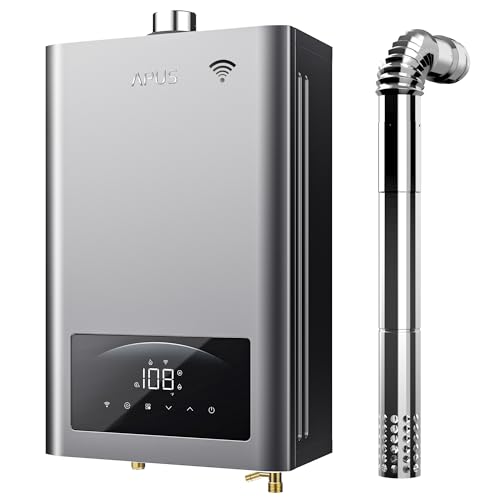
APUS offers 140,000 BTU with a maximum 6.8 GPM, designed to deliver instant hot water with minimal cold-water lag. Its exclusive single-circulation technology aims to reduce wait times and enhance energy efficiency, with a built-in booster pump to raise flow up to 130%, enabling two showers and two sinks to operate concurrently without temperature fluctuations. The system targets quick, reliable hot water across typical whole-home usage scenarios.
ThermoMate CZ422NG: 5 GPM, 113,000 BTU

The ThermoMate CZ422NG supports up to 5 GPM with 113,000 BTU and is designed for whole-house use with multi-point heating. It emphasizes precise temperature stability with rapid response to changing flow demands, delivering hot water with minimal fluctuation. The unit emphasizes safety with multiple protections including boil-dry, overheating, and flame-out protections, and it uses an oxygen-free copper heat exchanger for efficiency.
Rinnai RX199iN: 11.1 GPM, Condensing

Rinnai RX199iN offers up to 11.1 GPM, with 199,000 BTU, and supports indoor or outdoor installation via Versa Vent. It runs on either natural gas or propane and includes a Smart Sense gas control system. This model is designed for large households with high simultaneous hot water needs and emphasizes high efficiency (UEF) and a versatile control interface for ease of use.
GASLAND Gasmart E: 7.6 GPM, 199,000 BTU
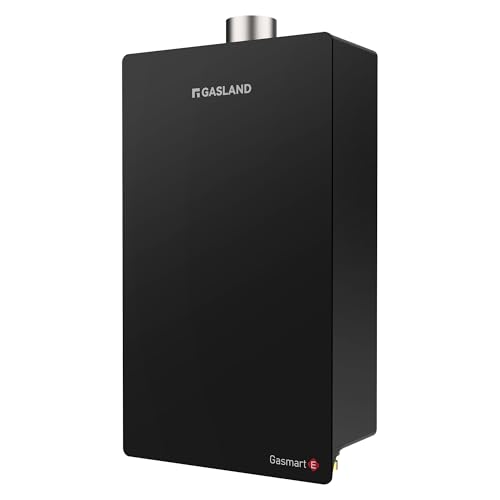
GASLAND Gasmart E delivers up to 7.6 GPM with a high 199,000 BTU input. It emphasizes energy efficiency with a robust UEF and features a compact, space-saving design suitable for indoor installation. Its on-demand performance makes it a practical choice for mid-sized homes seeking reliable hot water without storage tanks.
Buying Guide: Key Purchase Considerations for Whole-House Gas Tankless Water Heaters
- Flow rate (GPM) and simultaneous usage: Determine the number of fixtures that may run at once. Higher GPM units handle more showers, sinks, and appliances simultaneously, but sizing depends on climate and inlet water temperature.
- BTU and fuel type: Gas heaters rely on BTU ratings to determine hot water capacity. Match BTU to your climate and household demand; consider whether your home uses natural gas or propane.
- Ventilation and installation: Some models are designed for indoor installation, while others support indoor/outdoor placement. Check venting requirements and available space.
- Energy efficiency: Look for high UEF ratings and features like advanced modulation, pre-heat controls, and frost protection to reduce standby losses and energy waste.
- Control and compatibility: Smart controls and Wi‑Fi integration offer monitoring and scheduling benefits. Ensure compatibility with existing home systems if desired.
- Durability and warranty: Copper heat exchangers and protective features (freeze protection, flame-out, over-temperature) improve reliability. Review manufacturer’s warranty terms for long-term protection.
- Maintenance: Tankless systems require regular flushing to prevent mineral buildup. Check service requirements and accessibility for routine maintenance.
- Cost considerations: While initial cost varies, factor in venting, installation complexity, and potential engineering work for optimal performance.
When selecting a whole-house gas tankless water heater, balance flow needs with installation constraints and energy goals. The options listed provide varied capacities and features to fit different home sizes, climates, and usage patterns while focusing on on-demand hot water efficiency.