Protect every tap in your home with a dedicated whole house chloramine filter. This guide compares top options designed to reduce chloramine, chlorine, and related contaminants while preserving essential minerals. Learn which systems offer the best capacity, media, and longevity for demanding households, and how to choose the right model for your plumbing and water needs.
| Product | Brand | Capacity | Media Type | Notable Benefit |
|---|---|---|---|---|
| Tier1 Whole House Chloramine Filter | Tier1 | 450,000 gallons | Catalytic Coconut Shell Activated Carbon | Excellent chloramine reduction with NSF 61 certification |
| Tier1 Whole House Chloramine Filter | Tier1 | 300,000 gallons | Catalytic Coconut Shell Activated Carbon | Reliable performance and long-lasting media |
| iSpring WCB32C-GAC | iSpring | Whole-house system | GAC with 3-stage filtration | Effective chloramine, PFAS, and VOC reduction |
| Tier1 Chlorine Filter | Tier1 | 450,000 gallons | Acid-washed Activated Carbon | Chlorine and VOC reduction; improves taste and odor |
| HQUA WF3-01 3-Stage System | HQUA | 3-stage filtration | GAC + KDF media with carbon block | Reduces heavy metals, chloramine, and odors |
Tier1 450k Gallon Chloramine Filter

The Tier1 450,000-gallon chloramine filter uses advanced catalytic carbon designed specifically for chloramine reduction. It delivers filtration for all taps—drinking, cooking, showering, and bathing—while targeting chloramines, chlorine, hydrogen sulfide, VOCs, and THMs. The media is coconut shell catalytic carbon, NSF 61 certified and Prop. 65 compliant, offering long-lasting performance that does not soften water or reduce total dissolved solids.
Tier1 300k Gallon Chloramine Filter
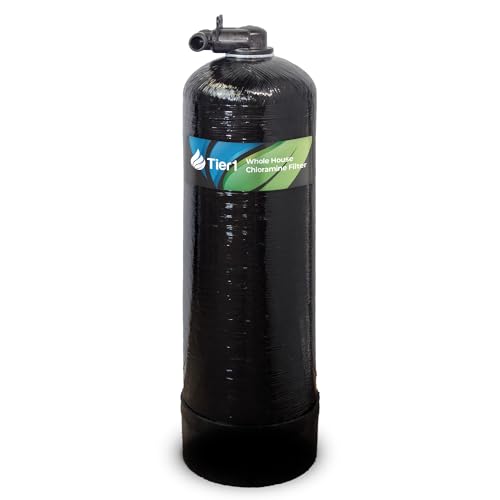
This Tier1 model mirrors the chloramine-focused design with a 0.5 cubic foot pre-filled catalytic carbon tank. It protects against chloramines, chlorine, hydrogen sulfide, VOCs, and THMs, enhancing taste and odor across the home. The coconut shell catalytic carbon media provides durable performance for up to 300,000 gallons and is NSF 61 certified, though it does not reduce TDS or soften water.
iSpring WCB32C-GAC Whole House Filter
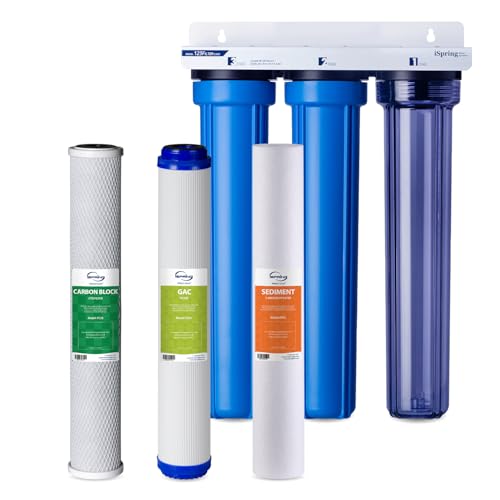
iSpring’s WCB32C-GAC delivers a comprehensive three-stage filtration approach for the whole house. The first stage uses a high-performance 5-micron sediment filter to remove particles down to 5 microns, prolonging subsequent filter life. The second stage uses granular activated carbon to address chlorine, PFAS, THMs, radon, chloramine, H2S, and odors. This system focuses on delivering clear water from every tap and across laundry and appliances.
Tier1 450k Gallon Chloramine Filter (Acid-Washed Carbon)

This Tier1 chlorine-focused model emphasizes taste and odor improvements while reducing chlorine, VOCs, and THMs across the home. It features an acid-washed coconut shell carbon media rated at 450,000 gallons. Note that this filter is optimized for chlorine and VOCs and does not reduce chloramines, but it contributes to cleaner indoor air by lowering vaporized chlorine in showers and warm-water usage.
HQUA WF3-01 3-Stage System

HQUA’s WF3-01 uses a three-stage setup to address multiple contaminants. The first stage offers a sediment filter to capture dirt and particulates, while the second uses a GAC/KDF blend to reduce heavy metals and chemicals. The third stage employs a catalytic carbon block that can reduce chloramine and VOCs, contributing to improved taste and odor and overall water safety at every point of use. The system is compatible with standard big blue housings for flexible installation.
Buying Guide: Key Considerations for Choosing a Whole House Chloramine Filter
When selecting a whole house chloramine filter, consider the following aspects to ensure you get the right balance of performance, longevity, and value:
- Chloramine reduction capabilities: Look for catalytic carbon media designed specifically for chloramine removal. Verify tested reductions and third-party certifications where possible.
- Capacity and replacement intervals: Compare gallon ratings and estimated replacement timelines. Higher capacity models reduce maintenance frequency, but ensure compatibility with your home’s water consumption.
- Media composition: Understand media layers (sediment, GAC, KDF, catalytic carbon) and how they work together to address chlorine, chloramines, VOCs, heavy metals, and odors.
- Flow and pressure considerations: Ensure the system matches your home’s flow rate and plumbing configuration. Some setups require standard housings or bracket-mounted installations.
- Certifications and safety: NSF/ANSI certifications (such as NSF 61) and safety compliance help ensure the product meets health and environmental standards.
- Taste and odor outcomes: Effective chloramine and chlorine reduction typically improves taste and smell, but personal preferences may vary based on residual minerals and water hardness.
- Installation and maintenance: Consider filter access, replacement part availability, and whether professional installation is preferred for optimal performance.
- Water quality context: If your water supply includes other contaminants (lead, PFAS, radon), prioritize systems with multi-stage filtration that addresses these additives.
Additional Insights
Chloramine-focused systems are specifically designed to neutralize chloramine compounds, which are more stable and harder to remove than chlorine alone. For homes with chloramine-treated municipal water, catalytic carbon media significantly improves filtration efficiency. Always verify that a chosen model aligns with your tap water composition and household water usage patterns to achieve the best balance of filtration quality and system lifespan.