Sealing a concrete garage floor helps reduce dust, resist stains, and extend the floor’s life against moisture and daily wear. The right penetrating or film-forming sealer can provide a durable shield for interior and exterior concrete surfaces, including garages, workshops, and driveways. This guide highlights five top-rated products and practical considerations to help you choose the best option for your space and climate.
Product overview (summary)
| Product | Brand | Type | Finish | Application Notes |
|---|---|---|---|---|
| Polar Dust Proof Concrete Sealer Clear | Polar Specialist Coatings | Acrylic sealer | Satin | Dust-proof; interior/exterior use; low viscosity for deep penetration |
| 1 Gallon Bricks & Exterior Surfaces | OAIEGSD | All-weather penetrating sealer | Natural | Zero-VOC; protects driveways, bricks, pavers; enhances color |
| CC Concrete Coatings SuperSeal 20WB | CC Concrete Coatings | Water-based acrylic sealer | Satin | Low VOC; safe and easy to use |
| Beest CS-9500 | BEEST | Silane/Siloxane penetrating sealer | Natural | Low VOC; breathable; long-lasting |
| DryWay Water-Repellent Sealer | RadonSeal | Penetrating silane/siloxane | Natural | Non-film forming; up to 5-year protection |
Choosing the right sealer depends on how you use the space, the climate, and whether you want a surface sheen or a completely matte, penetrating finish. The following sections review five products commonly used for garage floors, detailing how they behave and where they shine.
Polar Dust Proof Concrete Sealer: Dust-Free Floors

Polar Specialist Coatings offers a 100% acrylic dust-proof sealer designed for concrete and stone floors. The low-viscosity formula penetrates pores deeply for strong adhesion and a subtle satin sheen. Suitable for interior garages, workshops, kitchens, and light industrial spaces, it creates a durable, dust-free surface while maintaining a natural look. Application is straightforward, and the finish helps protect against ordinary wear and moisture intrusion without creating a heavy film.
OAIEGSD All-Weather Concrete Sealer

This exterior-oriented sealer from OAIEGSD is formulated to withstand rain, snow, and freeze-thaw cycles. It penetrates for water repellency, reduces the risk of cracking, and enhances the natural color of concrete and bricks. It’s a good choice for driveways, patios, pavers, and garage floors exposed to weather. Zero-VOC composition helps limit odors during application and curing, making it a practical option for blended indoor/outdoor spaces.
CC Concrete Coatings SuperSeal 20WB

SuperSeal 20WB is a water-based acrylic penetrating sealer with low VOC content. It’s known for chemical and stain resistance and easy application on a variety of porous surfaces, including concrete. The satin finish achieves a balanced look without excessive shine, making it a versatile option for garages that see oil, salt, and moisture exposure. Its safety profile makes it a popular choice for DIY projects and spaces that require regular maintenance.
BEEST CS-9500 Silane/Siloxane Sealer

CS-9500 is an impregnating sealer that preserves the natural look of concrete and masonry. It provides penetrating moisture protection with a breathable, non-film-forming finish. This makes it well-suited for garages and driveways where a low-odor, long-lasting solution is desired without changing the surface texture. The natural finish helps maintain the original appearance while improving resistance to de-icing salts and moisture intrusion.
DryWay Water-Repellent Sealer
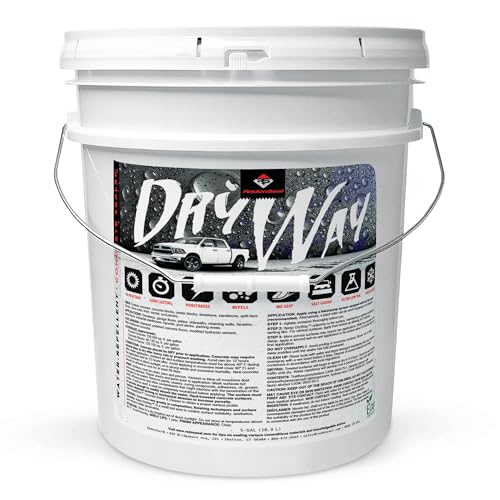
DryWay is a penetrating silane/siloxane sealer designed for a long-lasting, natural finish without film formation. It protects concrete, brick, block, and pavers from moisture intrusion while preserving traction and avoiding glossy sheens. It is suitable for high-traffic garages and exterior surfaces that require durable, low-maintenance protection for up to several years between resealing efforts.
Buying Guide: Key considerations for sealing a concrete garage floor
- Sealer type: Decide between penetrating sealers (silane/siloxane or acrylic) and film-forming sealers. Penetrating options generally offer better long-term moisture protection with minimal surface change, while film-forming sealers may provide a visible sheen and easier cleaning.
- Moisture and weather exposure: For garages with frequent moisture, rain, or winter salts, consider penetrating sealers like DryWay or BEEST for durable, non-film protection; for indoor, high-traffic spaces, acrylic sealers may be preferred for ease of maintenance.
- VOC content and odors: If indoor use is common, choose low-VOC or zero-VOC formulas to reduce fumes during application and cure time.
- Sheen and appearance: Decide whether you want a natural look or a subtle satin finish. Acrylic sealers typically add a sheen, while penetrating sealers maintain a matte, natural appearance.
- Maintenance and reapplication: Penetrating sealers may require less frequent resealing; film-forming sealers often wear in high-traffic zones and may need periodic reapplication to maintain protection.
- Surface preparation: For best results, clean the surface and repair cracks before sealing. A dust-free, dry surface improves sealer penetration and adhesion.
- Application method: Some products are brush- or roller-applied, while others are spray- or wipe-applied. Follow manufacturer instructions for curing times and environmental conditions.
- Environmental and surface compatibility: Validate compatibility with concrete porosity, coatings, or paints already on the surface to avoid adhesion issues or inconsistent finishes.