Finding the right drywall hole cutter for ceilings can simplify installing vents, wiring, or access panels. The following five tools are selected for precision, ease of use, and durability when cutting round holes in drywall and ceiling tiles. Each option offers adjustable pivot points, calibrated measurements, and robust blades designed for clean edges. This guide presents essential factors to consider, along with a quick comparison of top picks.
| Product | Brand | Model / Key Feature | |
|---|---|---|---|
| Msiud Drywall Circle Cutter | Msiud | Adjustable Pivot Point, 1/8″ to 5 mm calibration | Precise round holes in ceilings and walls |
| ToolPro Circle Cutter | TOOLPRO | 16″ circle capacity, precision blade | Large round openings with durable construction |
| Cocoarm Drywall Circle Cutter | Cocoarm | Replaceable blades, inch/metric scale | Consistent circles with replaceable blades |
| Walfront Drywall Circle Cutter | Walfront | Pivot point for accurate cuts up to 16″ | General drywall and ceiling material cutting |
| Seimneire 2-1/2″ Hole Saw | Seimneire | Bi-metal, 1.2″ depth, HSS teeth | Small to medium holes in drywall and related materials |
Msiud Drywall Circle Cutter
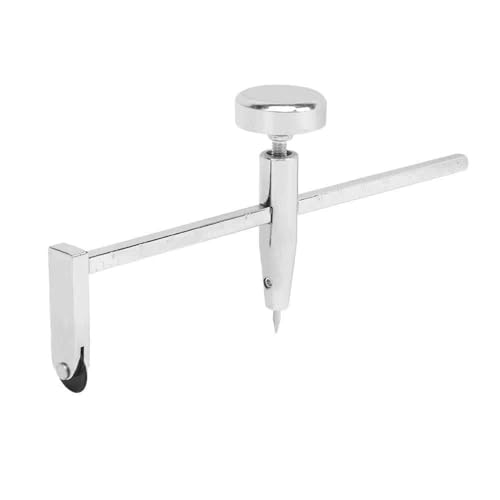
The Msiud drywall circle cutter features an adjustable pivot point for accurate round-hole drilling in drywall and ceiling tiles. Calibrated in inches and metric units (1/8 inch/5 mm scale), it supports precise measurements during marking and cutting. Its compact, durable design makes it suitable for ceiling work, with a steady steel shaft for clean, consistent circles. This tool is compatible with common drywall materials and is designed for easy operation with minimal overhead effort.
ToolPro Circle Cutter

The ToolPro Circle Cutter offers stainless steel shafting and a calibrated range up to 16 inches in 1/8-inch increments. A case-hardened blade ensures clean-cut holes, and the design emphasizes durability with a no-weld construction. This makes it well-suited for frequent use in remodeling or construction projects where precise circular openings are required in ceilings and walls.
Cocoarm Drywall Circle Cutter
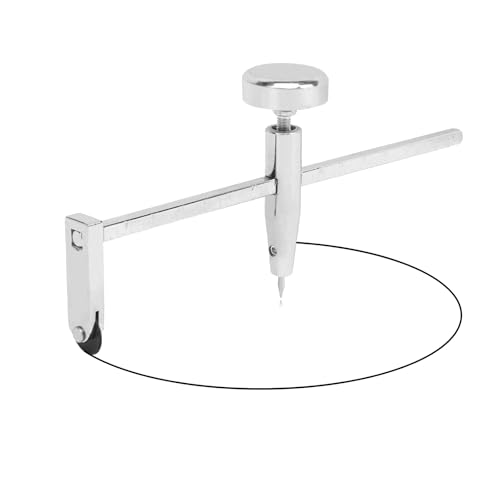
The Cocoarm circle cutter features an adjustable pivot point for uniform holes and includes replaceable cutting blades for extended use. With inch/metric calibration (1/8 inch/5 mm), it enables precise drilling and clean edges. The heavy-duty steel construction supports durability and long-term performance on drywall projects requiring consistent round openings.
Walfront Drywall Circle Cutter

The Walfront hole cutter emphasizes efficient and easy-to-use operation with an adjustable pivot point for precise cuts. English/metric calibrations provide 1/8-inch (5 mm) graduations to ensure accurate hole diameters, up to 16 inches. Its sturdy build supports reliable performance across drywall materials, making it a practical choice for ceiling installations and remodeling tasks.
Seimneire 2-1/2 Inch Hole Saw
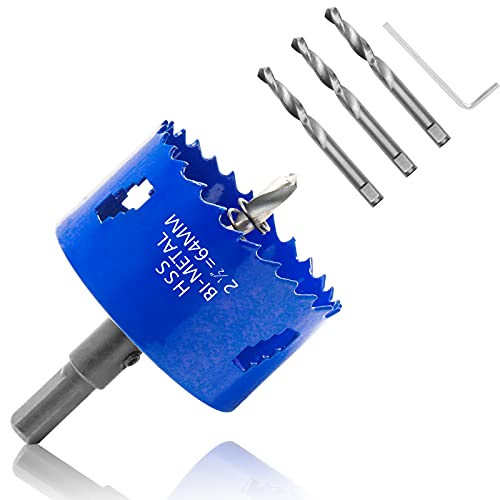
Seimneire’s 2-1/2 inch hole saw uses bi-metal construction with HSS teeth and a 1.2 inch cutting depth. It’s designed for smooth, controlled cuts in drywall, wood, plastic, and thin metal, with rust-resistant properties for repeated use. The kit includes a compatible arbor and center bits, supporting stable operation and consistent edge quality in ceiling work.
Buying Guide: Key Purchase Considerations
- Hole diameter range: Choose a cutter that covers the typical hole sizes you encounter, and look for adjustable pivots for precision in ceiling work.
- Blade material and durability: Bi-metal or hardened steel blades wear well on drywall and ceiling tiles; replaceable blades extend tool life.
- Calibrations and measurements: Inch and metric scales with fine increments (1/8″ or 5 mm) help achieve exact hole sizes and reduce rework.
- Cut depth and accessibility: For ceilings, consider cutting depth and ease of handling in overhead positions; deeper cuts may be needed for certain fixtures.
- Tool compatibility: Ensure the cutter fits your oscillating tool, drill, or power tool and that the shank size is compatible with your equipment.
- Edge quality and cleanup: A sharp, well-supported blade reduces ragged edges; look for designs that minimize movement and wobble during cutting.
- Durability versus cost: Higher-quality cutters may cost more upfront but save time and effort on larger projects.
- Versatility: Some cutters are better for small round holes, others for larger ceilings; consider a mix if you handle varying installations.
When choosing a drywall circle cutter for ceiling work, balance precision, durability, and tool compatibility with your existing setup. For frequent ceiling openings, a cutter with an adjustable pivot point, clear calibrations, and replaceable blades offers the best long-term value. If you regularly perform large-diameter cuts, ensure the tool supports the required diameter with a stable, rigid shaft.