Travel often means uncertain water sources. A reliable water filter bottle can deliver safe, great-tasting water anywhere you roam. This guide highlights five top options, spanning durable hard-sided and insulated stainless bottles to advanced filtration technology. Each pick emphasizes taste improvement, filtration strength, portability, and long-term savings over single-use bottles.
| Product | Brand | Capacity | Filtration Notes |
|---|---|---|---|
| Brita Hard-Sided Plastic Premium Filtering Water Bottle | BRITA | 26 oz | Activated carbon filter; reduces chlorine taste/odor; not a purifier |
| Brita Stainless Steel Premium Filtering Water Bottle | BRITA | 20 oz | Double-wall insulated; reduces chlorine taste/odor; not a purifier |
| LifeStraw Go Series (22 oz) | LifeStraw | 22 oz | Membrane microfilter; removes bacteria, parasites, microplastics |
| Philips Water Bottle with Filter (GoZero Everyday) | Philips | 40 gal/2 months | Activated carbon fiber filter; reduces chlorine; not a purifier |
| Survimate 5-Stage Water Bottle | SurviMate | varies by model | 5-stage filtration; NSF/ANSI 42&372 certified |
Brita Hard-Sided Plastic Premium Filtering Water Bottle

The Brita Hard-Sided 26 oz bottle provides a portable, BPA-free solution for travelers who want a lightweight filter bottle. It includes one activated carbon block filter designed to cut chlorine taste and odor and reduce particulates in drinking water. Note that this is a filtering bottle, not a water purifier. Its durable plastic construction makes it easy to carry through airports, buses, and hiking trails. Each filter is designed to last around two months or about 40 gallons, depending on water quality. This option appeals to travelers seeking a budget-friendly, easy-to-use bottle with familiar Brita filtration.
Brita Stainless Steel Premium Filtering Water Bottle
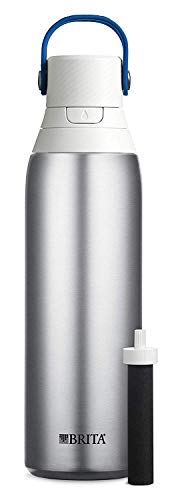
This 20 oz stainless steel Brita bottle pairs a double-wall insulated build with a filtration system to keep drinks cold while traveling. The filter reduces chlorine taste and odor and also lowers particulates in water, helping improve overall flavor. Its insulated design retains cold for a full 24 hours, making it ideal for longer travel days or commutes. It mirrors Brita’s sustainable messaging—replacing many single-use bottles with each filter—while delivering a more rugged option for travelers worried about temperature retention and durability.
Brita Stainless Steel Premium Filtering Water Bottle (Carbon)
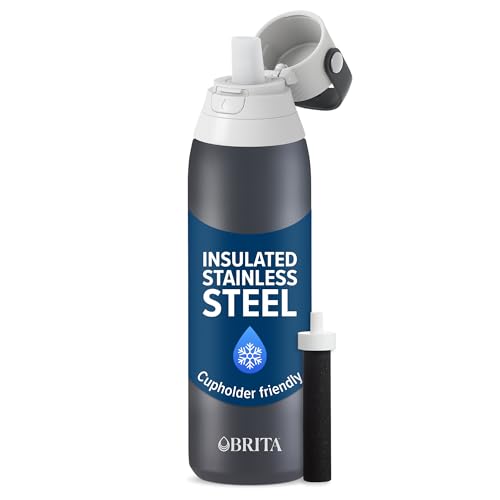
Another BRITA option in a carbon-focused variant emphasizes filtration with a 20 oz stainless steel bottle. Its double-wall insulation helps keep beverages cold for a day, a convenient feature during long flights or road trips. Like other Brita bottles, it works with a replaceable activated carbon block filter to reduce chlorine taste and odor, offering a simple way to improve tap water quality while away from home. This bottle suits travelers who prioritize a compact, insulated stainless design with reliable filtration.
LifeStraw Go Series Water Filter Bottle (22 oz)

LifeStraw Go Series stands out for its high filtration standard. The bottle is BPA-free and uses a membrane microfilter to block 99.999999% of bacteria, 99.999% of parasites, and 99.999% of microplastics, in addition to reducing chlorine and odors. Its design is ideal for travelers who anticipate sourcing water from airports, restrooms, or informal water points. The 22-ounce capacity balances portability with a useful supply, and the filter replacement cycle makes it a practical choice for frequent travelers and backpackers alike.
PHILIPS Water Bottle with Filter (GoZero Everyday)

The Philips GoZero Everyday bottle delivers a travel-friendly option with an activated carbon fiber filter designed to remove chlorine and particulates, improving taste and odor on the go. It is versatile for daily use and travel, and the 40-gallon (roughly 2 months) filter life provides a straightforward maintenance window for busy travelers. The bottle is made with 18/8 stainless steel, offering durable construction and a modern aesthetic that fits well in urban and outdoor travel contexts.
Survimate 5-Stage Water Bottle

The Survimate bottle emphasizes robust, multi-stage filtration with NSF/ANSI 42&372 certification. Its 5-stage filtration stack includes a coarse pre-filter, a 0.01 μm hollow fiber membrane, sediment PP membrane, purification beads, and activated carbon fiber. This configuration targets a broad range of contaminants, including chlorine, odors, heavy metals, sediment, and other impurities. The built-in compass on the cap adds outdoor usability for camping and hiking, broadening its appeal for travelers who combine urban itineraries with nature excursions.
Buying Guide: Key Purchase Considerations
- Filtration level and certification: For urban travel, bottles with carbon filters improve taste and odor, while higher-grade filters (like LifeStraw) target bacteria, parasites, and microplastics. Certification (where available) can indicate filtration credibility.
- Capacity and portability: 14–26 oz bottles strike a balance between weight and the amount of water you can carry. Insulated designs help maintain cold beverages on long travel days, while lightweight plastics reduce bulk.
- Durability and material: Stainless steel offers durability and temperature retention; BPA-free plastics reduce weight; both should be easy to clean and leak-proof for airport security checks and on-the-go use.
- Filter life and replacement costs: Consider how often you’ll refill and how often filters need replacement. Some brands emphasize long filter life (months or gallons) and accessible replacements in travel hubs.
- Taste impact versus purification needs: If you frequently encounter questionable water sources, prioritize a bottle with a higher filtration standard. For city use with reliable taps, carbon filters are often sufficient for taste and odor.
- Maintenance and ease of use: Look for simple one-handed sipping, clear indicator of when to replace the filter, and dishwasher-safe parts if you prefer easy cleaning.
- Travel scenario fit: Airport layovers, hotel stays, camping, and long excursions each benefit from different features—insulation for heat retention, compact design for small packs, and built-in navigation tools for off-grid travel.