Choosing the right wall patching compound can simplify repairs on drywall, plaster, wood, brick, and more. This guide highlights five reliable products and outlines when to use each one, based on features like dry time, finish, and exterior durability. Use the buying guide to compare qualities such as ease of use, sanding needs, and curing times to fit your project.
| Product | Brand | Key Strength | Best For |
|---|---|---|---|
| DAP DryDex Dry Time Indicator Spackling | DAP | Color-changing indicator; quick dry | Interior/exterior repairs; shallow patches |
| Red Devil ONETIME Lightweight Spackle | Red Devil | One-step repair; no sanding | Holes, cracks on various surfaces |
| DAP Wallboard Joint Compound | DAP | Ready-mixed; easy embedding of tape | Gypsum joints; nail heads |
| DAP Weatherproof Patching Compound | DAP | Weather-resistant; exterior suitable | Siding, trim, outdoor patches |
| DAP Fast ‘N Final Lightweight Spackling | DAP | One-step patch and prime; fast drying | Quick interior repairs with painting |
DAP DryDex Dry Time Indicator Spackling

DryDex is a latex polymer spackle formulated for interior and exterior surfaces such as drywall, plaster, wood, brick, and stone. It features a color indicator that goes on pink and dries white, confirming when the patch is ready to sand and paint within 1 to 5 hours. For repairs deeper than 1/8 inch, apply multiple layers with drying time between coats. This makes it a convenient option for visible wall repairs where color change helps avoid over-drying or under-waiting.
Red Devil ONETIME Lightweight Spackle

ONETIME Spackle provides effortless, one-step repairs for holes, cracks, and dents. It’s versatile for drywall, plaster, wood, and stucco, indoors and outdoors, making it a go-to for quick patch repairs. The formula is designed to minimize sanding and finish smoothly, ready for painting soon after application. This reduces the number of steps and cleanup needed on casual DIY projects.
DAP Wallboard Joint Compound
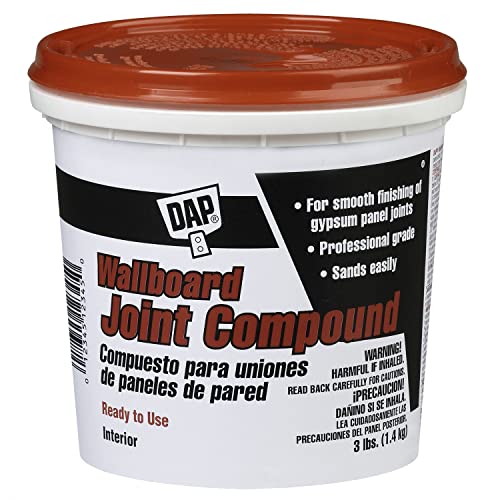
This ready-mixed joint compound is designed for interior gypsum panel joints and finishing. It is easy to use for embedding reinforcing tape, smoothing nail heads, and working with metal corner beads. The product sands smoothly to deliver a professional-looking result, making it suitable for ceilings and walls where a seamless finish is essential.
DAP Weatherproof Patching Compound

This all-purpose filler is designed for exterior use on fiber cement siding, PVC trim, vinyl siding, metal, composite, concrete, brick, and wood. Its acrylic latex formula with WeatherMax Technology performs under continuous exposure to the elements. The compound sands and paints well, and it fully cures to withstand rain within 24 hours, making it ideal for outdoor repairs where moisture exposure is a concern.
DAP Fast ‘N Final Lightweight Spackling

Fast ‘N Final combines patching and priming in one step, speeding up project completion. Its advanced microsphere technology yields an ultra-smooth finish that hides repairs effectively while preserving paint sheen. This spackle is low-odor and dries quickly, allowing painting within about 30 minutes in suitable conditions, making it well-suited for rapid turnaround projects.
Buying Guide: Key Considerations For Wall Patching
Choosing the right patching compound depends on surface type, climate, and finish requirements. Consider these factors when evaluating options:
- Drying and curing time: Faster cures enable quicker repainting but may require closer layering for deeper repairs.
- Surface compatibility: Some products are better for interior drywall, while others tolerate outdoor exposure or masonry.
- Finish and sanding: Ready-to-sand formulas reduce work; others may need multiple coats and sanding between layers.
- Ease of use: One-step patch-and-prime formulas save time; multi-step products may yield smoother surfaces but take longer.
- Moisture resistance: Exterior patches or damp environments benefit from weatherproof formulations.
- Paint compatibility: Choose a product that accepts standard paints without sheen changes or cracking.
For mixed projects—interior repairs that might later transition to exterior detailing—combine products strategically. Use a lightweight, quick-drying patch for small holes, then follow with a ready-mixed joint compound for joints and embedding tape on larger repairs. Exterior repairs should favor weatherproof patches that resist rain and UV exposure. Sandability and finish quality are essential for visible walls, so primers and paints should be compatible with the chosen patching compound.
Always follow product-specific instructions for layering depth, drying times, and surface preparation. Pre-clean surfaces, remove loose material, and consider a primer when needed to achieve a uniform finish. Safety and ventilation should be considered when sanding and applying any patching compound.