Choosing the right vent fan for a van or RV ensures comfortable interior climate, reduces humidity, and helps eliminate odors during travel. This guide highlights five reliable roof vent fans, detailing their airflow, noise levels, rain-sensor features, and installation considerations. Each option is well-suited for campers, trailers, and vans that demand steady ventilation with remote or automatic controls.
| Product | Brand | Key Feature | Airflow (CFM) |
|---|---|---|---|
| RV Vent Fan 14×14, 10-Speed | RVLOVENT | Rain sensor, remote, replacement screen | 1000 |
| MAXXAIR Maxxfan Deluxe | MAXXAIR | All-in-one with rain cover, 4 speeds | 900 |
| 2012 Air Max 14″ Vent | 2012 | Ultra low noise, rain sensor, remote | Unknown |
| RVMATE 14″ Remote Roof Vent | RVMATE | Remote control, in/out air, durable UV material | Not specified |
| Kohree 14″ Vent Fan | Kohree | Temperature sensor, 10 speeds, screen | 934 |
Below are five products selected for van and camper ventilation, organized with features, benefits, and setup notes to help you compare options quickly.
RV Vent Fan 14×14: 10-Speed With Rain Sensor
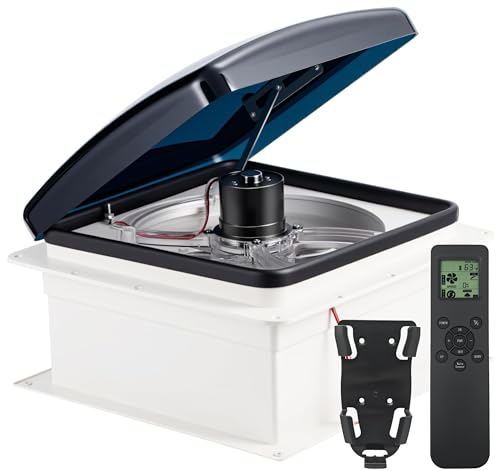
The RVLOVENT 14×14 roof vent fan delivers strong performance with a 1000 CFM maximum airflow, ideal for quickly exhausting hot air and humidity from a van or trailer. It includes a 10-speed remote control and a smart rain sensor that automatically closes the vent at the first sign of rain, protecting interior spaces. The unit features a UV-resistant PC cover for durability against sun exposure and an extra screen frame, providing a ready replacement if the original becomes dirty or damaged. This combination of power and automatic protection makes it suitable for larger vans or warmer climates where rapid ventilation is needed.
MAXXAIR Maxxfan Deluxe: All-In-One Ventilation

The Maxxfan Deluxe from MAXXAIR combines a vent, fan, and vent cover in one unit, offering a 12V DC system with four speed options and a built-in rain cover. This model focuses on comprehensive all-weather ventilation, with a reversible fan mechanism and thermostat to maintain comfortable temperatures inside the vehicle. A bug screen keeps insects out and is removable for cleaning. The design is compact enough to fit standard 14″ x 14″ roof openings, making it a versatile replacement option for many RVs and vans.
2012 Air Max 14″ Vent: Quiet, Rain-Sensing Ventilation

The 2012 Air Max 14″ vent focuses on ultra-quiet operation with a brushless motor rated for extended life. It supports remote control and rain-sensing functionality, which closes the cover during storms. The product enables dual control with four-speed settings and a reversible exhaust/intake function, allowing flexible airflow depending on whether you need to ventilate or vent moisture. Its curved blades and dynamic balance reduce wind noise, making it well-suited for bedrooms or bathrooms in RVs and vans where silent operation is valued.
RVMATE 14″ Remote Roof Vent Fan

The RVMATE 14″ roof vent offers remote-controlled air intake and exhaust with a 12V system. The remote lets you operate the fan from anywhere inside the van, with labeled controls for air in, air out, and off. The unit is constructed from UV-resistant plastic and includes putty tape to seal the frame against leaks, ensuring water protection when installed on a roof. This setup is a practical choice for hikers or travelers who want convenient control without needing to approach the vent manually every time.
Kohree 14″ Vent Fan: Temperature-Sensing & Quiet Operation

The Kohree 14″ vent fan emphasizes cooling efficiency with 934 CFM airflow and an integrated temperature sensor that automatically activates the exhaust when interior temperatures rise above 78.8°F. It includes 10 adjustable speeds and a quiet motor, keeping noise below 50dB in high-power mode. The kit covers standard 14″ x 14″ openings and provides screws and extra sealing tape for straightforward installation. A removable screen helps with cleaning and insect protection, making it a practical upgrade for smaller vans seeking reliable performance with low energy use.
Buying Guide: Key Purchase Considerations
- Airflow and room size: Higher CFM moves air more quickly, which matters in hotter climates or larger vans. Compare CFM ratings with interior volume to estimate ventilation effectiveness.
- Noise levels: Quiet operation improves comfort, especially in sleeping areas. Look for brushless motors and turbine blade designs to minimize sound.
- Rain and moisture protection: Rain sensors or built-in rain covers enable operation in variable weather without leaks. Verify water sealing and ease of cleaning the cover.
- Control options: Remotes, wall controls, and automatic sensors provide convenience. Consider whether you need remote access from multiple seats or a central control panel.
- Installation compatibility: Ensure the unit fits a standard 14″ x 14″ opening and check available sealants, mounting hardware, and whether a replacement screen is included or available.
- Durability and materials: UV-resistant housings and rust-proof components extend lifespan in sunny or coastal environments.
- Energy efficiency: Brushless motors and temperature sensors help conserve battery power in off-grid setups.
- Maintenance: Removable screens and accessible blades simplify cleaning and maintenance, preserving airflow and preventing clogs.
- All-in-one vs modular: All-in-one units combine vent, fan, and cover, simplifying installation, while modular options allow replacements of individual parts if needed.
When selecting a vent fan for a van, balance airflow needs with noise tolerance, weather protection, and installation ease. For hot climates or larger spaces, higher CFM fans with rain protection and remote control provide the most versatility. In smaller vans or tight spaces, quieter models with temperature sensors can improve comfort without introducing a noisy fan at night. Consider how you use your space—sleeping areas may benefit from quiet operation, while living zones may prioritize rapid air exchange.