For homes with two bathrooms, a reliable tankless water heater can deliver continuous hot water to simultaneous uses like showers, sinks, and appliances without the standby energy of traditional tanks. The following picks are well-suited for 2-bathroom configurations, balancing flow, efficiency, and ease of installation. Each product highlights the capacity, installation considerations, and notable features to help you compare quickly.
| Product | Key Benefit | Typical Use |
|---|---|---|
| SIVUATEK 18kW Tankless Electric | High flow up to 3–4 points | Whole-home or multi-point |
| Westinghouse 14kW 240V | Smart controls and reliability | Shower + sink pairing |
| EcoSmart ECO 11 | Compact, energy-efficient | Small homes or point-of-use |
| Rheem 18kW 240V | Advanced modulation, durable | Shower + multiple fixtures |
| Nessxa 4500W | Under-sink convenience | Single or multi-point on demand |
Notes: All models listed are electric and designed for on-demand hot water. When selecting a unit for two bathrooms, consider peak simultaneous demand, incoming water temperature, and electrical service capacity (breaker size and wire gauge). Professional installation is recommended for electrical and plumbing connections.
18kW SIVUATEK Tankless Electric — 2-Power, Whole-Home On-Demand
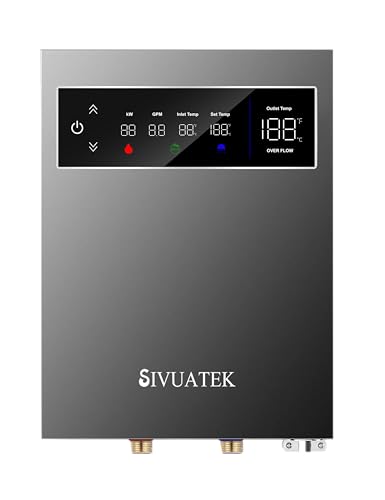
Model: 18kW, 240V. This unit uses self-modulating power for efficiency and supports on-demand hot water for whole-house use with up to 99% thermal efficiency. It is designed for multiple usage points, accommodating two bathrooms with simultaneous demand. It requires two 40-amp breakers and standard 3/4″ water connections. The compact cabinet fits under sinks or on walls, helping apartment or small home layouts save space.
Key features include self-modulating power, strong on-demand performance, and LED indicators for monitoring. Installation should follow electrical codes and local requirements. This model is ETL certified, ensuring adherence to safety standards.
Westinghouse 14kW 240V Smart Tankless Heater
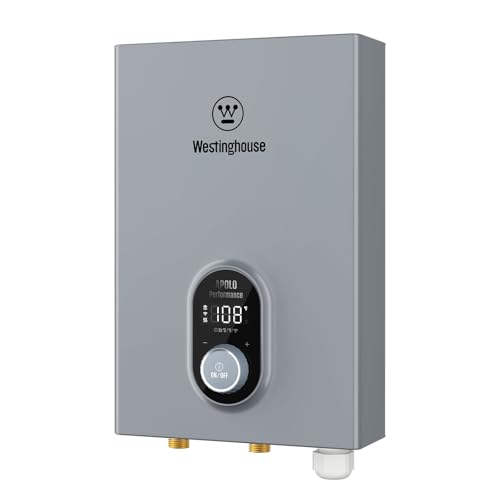
Model: 14kW, 240V. Features include external digital thermostat control with LED display, advanced self-modulation, and durable copper immersion heating elements. It’s designed to adjust power to meet hot water demand and is field serviceable. With a typical flow capacity suitable for 1 shower and 1 sink, it’s a practical choice for two bathrooms with moderate demands. Installation requires careful electrical planning and proper venting where needed.
EcoSmart ECO 11 Electric Tankless Water Heater

Model: 13kW at 240V. This compact unit emphasizes space saving and energy efficiency, claiming ~90% smaller footprint than traditional tank heaters. It uses patented self-modulating technology to match hot water output with demand. While designed for smaller homes or point-of-use installations, it can support two bathrooms if water temperature and flow are within its 1–2 fixture range. Ideal for wall mounting in tight spaces.
Rheem 18kW 240V Tankless Electric Water Heater
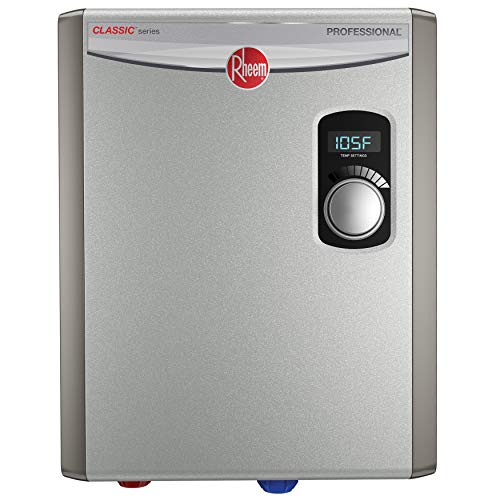
Model: 18kW, 240V. Offers external digital thermostatic control with LED display and self-modulation to adjust power according to demand. Features durable copper immersion heating elements and field serviceability. Flow rate reaches up to about 4 GPM, making it suitable for simultaneous use across a shower and sink in a two-bath setup. Installation should align with electrical capacity and plumbing arrangements to maximize efficiency.
Nessxa Tankless Water Heater Electric 4500W
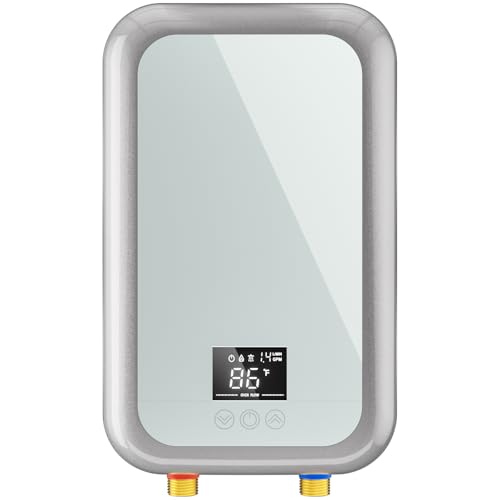
Model: 4500W, 110V. Designed for under-sink or point-of-use installation, delivering instant hot water with a digital display and 86–131°F temperature range. It supports compact spaces and is IPX4 rated for splash resistance. This unit is best for single-point or smaller simultaneous-demand situations, such as a bathroom sink or kitchen area where space is at a premium.
Buying Guide: Key Purchase Considerations
- Flow needs: For two bathrooms, look for units that can handle multiple fixtures simultaneously. Units in the 14–18 kW range often balance performance and installability for two-bath homes, while multi-point or smaller units work well as complementary heating points.
- Electrical service: Verify breaker size (commonly 40–60 Amps) and wire gauge. Some homes require electrical upgrades to support higher kW models. Always consult a licensed electrician.
- Temperature control: Digital thermostats, remote control, and smartphone compatibility provide precise temperature management and comfort. Consider units with 1-degree adjustment accuracy when possible.
- Space and installation: Wall-mounted, compact designs save space and simplify installation in tight areas like under-sink cabinets or utility closets.
- Durability and maintenance: Look for copper elements, stainless outlets, and serviceability. ETL or similar safety certifications indicate conformity with safety standards.
- Water temperature rise: Warmer incoming water reduces output. If you experience very cold incoming water, consider higher kW ratings or staged installation to spread demand.
- Remote and smart features: Wi-Fi or voice control can improve convenience, especially for multi-point households where centralized management matters.
- Quiet operation and footprint: Check noise levels and installation footprint to ensure the unit fits your space and lifestyle.