Choosing the right sump pump for a septic system ensures reliable pumping, protects basement spaces, and prevents backflow issues. This guide highlights five strong options that balance performance, durability, and automatic operation. Each pump is designed to handle solids, resist corrosion, and operate with automatic float switches for hands-off maintenance. Read on to compare features, materials, and suitability for septic tanks and below-grade installations.
| Product | Brand | Flow (GPH) | Discharge | Key Strength |
|---|---|---|---|---|
| FOTING 1HP | FOTING | 6000 | 1-1/2″ NPT | Heavy duty, auto with tethered float |
| VIVOHOME 1 HP | VIVOHOME | 5220 | 2″ NPT | Automatic with adjustable float |
| Acquaer 3/4HP | Acquaer | 6400 | 2″ NPT | Clog-resistant and durable |
| Aquastrong 1HP | AQUASTRONG | 5283 | 2″ NPT | Stainless steel housing, robust impeller |
| Zoeller 98-0001 | Zoeller | 72 GPM | 1-1/2″ discharge | Reliable submersible with integral float |
Product selections focus on models suitable for septic systems, basement basins, and effluent handling. Each listing includes an image, a link to the Amazon product page, and the core features that affect performance in challenging wastewater scenarios.
FOTING 1HP Submersible Sump Pump
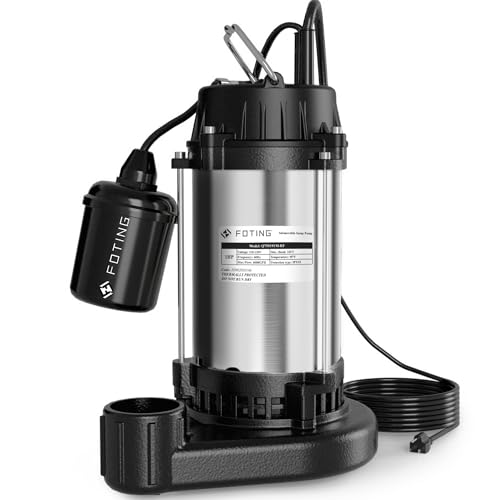
The FOTING model features a 1HP PSC motor capable of moving up to 6000 GPH with a vertical lift up to 32 feet. Its heavy-duty cast iron and stainless steel construction supports endurance in septic-tump environments. The design emphasizes an anti-clogging flow path and a standard 1-1/2 inch discharge. Automatic operation is provided by a tethered float switch, and a 10-foot power cord facilitates easy installation. It’s suitable for basements, sump basins, and septic tanks where solids may be present.
VIVOHOME 1 HP Submersible Sewage Pump

The VIVOHOME pump uses a high-efficiency motor with a 5220 GPH flow rate and a maximum head of 24 feet. It supports automatic operation via a float switch and provides a 14.4-foot power cord plus a piggyback plug for manual override. Overheat protection guards the motor, and the design aims for reliable operation in typical residential basements and septic configurations. It’s compatible with challenging waste flows but should be kept fully submerged within the sump to prevent damage.
Acquaer 3/4HP Submersible Sewage Pump

This 3/4 HP unit delivers up to 6400 GPH with a 2″ NPT discharge and a maximum lift around 29 feet. The pump is designed for long service life in residential sewage systems and includes an auto/manual float switch for convenient operation. The cast-iron casing and a non-clogging impeller aid reliability in septic and sump-pit environments. Proper handling cautions apply: do not lift by the power cord, and ensure correct submersion for automatic operation.
AQUASTRONG 1HP Sewage Sump Pump

The AQUASTRONG 1HP pump offers 5283 GPH with a 2″ NPT discharge and a stainless steel motor housing for corrosion resistance. It includes an adjustable tether float switch for automatic turning on and off as water levels rise and fall. A rugged cast-iron base with an anti-clog impeller supports solids handling. This unit is designed for basement sewage and other below-grade drainage tasks, with an emphasis on durability and steady flow in tough environments.
Zoeller 98-0001 Flow-Mate Sump Pump

Zoeller’s 98-0001 is a compact, reliable option with a 1/2 HP motor and integral float switch. It’s designed for residential sump pits or septic tanks and features a 1-1/2 inch discharge, capable of passing solids up to 1/2 inch. Performance reaches approximately 72 GPM at a 5-foot head with a shut-off head around 23 feet. The unit emphasizes dependable operation and straightforward installation in smaller or standard sump basins.
Buying Guide: Key Purchase Considerations
- Flow rate and head: For septic tanks, choose a pump with a high GPH rating and sufficient lift height to move wastewater from the basin to the septic line, especially if the line is uphill or distant.
- Solid handling: Look for a non-clog or vortex impeller and a discharge size that matches common solids in household waste. Many models specify 2″ NPT or similar catering to solids up to 1-2 inches in diameter.
- Construction materials: Cast iron and stainless steel housings resist corrosion and abrasion from sewage and effluent, improving longevity in harsh environments.
- Automatic operation: A tethered float or mechanical float switch enables hands-off pumping and reduces risk of overflow or dry running.
- Electrical and safety: Verify a grounded power cord length, thermal protection, and proper submersion depth. Never lift pumps by cords; use handles when provided.
- Warranty and service: Reputable brands with accessible support help with parts and maintenance, which is important in septic applications.
- Maintenance considerations: Check for clog-resistant designs and easy access for cleaning the impeller area to minimize downtime in critical drainage periods.
- Installation context: For septic tanks and basins, ensure the pump is rated for effluent rather than only clean water, and confirm compatibility with the basin size and outlet piping on site.
When evaluating options, compare the combination of flow capacity, maximum head, material durability, and automatic features. For septic-tank use, prioritizing clog resistance and solid handling capacity helps prevent jams and service interruptions during heavy drainage events. If space is limited, consider compact models with proven reliability and integrated float mechanisms.