Sticky traps offer a pesticide-free, low-muss solution for monitoring and reducing common indoor pests. This guide compares five highly rated options designed to catch insects, spiders, crickets and small rodents. Each product emphasizes easy placement, long-lasting adhesive, and safe use around families and pets. Read on to see how these glue boards perform across different spaces, from kitchens to garages, and how to choose the right trap for your situation.
| Product | Brand | Notes |
|---|---|---|
| Catchmaster Max-Catch Mouse & Insect Glue Trap 36pk | Catchmaster | Bulk, pesticide-free, versatile for insects and rodents |
| Trapper Max Glue Traps 12 | Trapper Max | Non-toxic, flat or folded use |
| LULUCATCH Cricket Insect Glue Traps – 6 Pack | LULUCATCH | Large, perforated sheets; safe, non-toxic |
| Catchmaster Crawling Pest & Insect Glue Traps 12-Count | Catchmaster | Annual-use, no bait necessary |
| Catchmaster Spider & Insect Glue Traps 45-Pk | Catchmaster | Indoor use, extensive coverage |
Catchmaster Max-Catch Mouse & Insect Glue Trap 36pk

The Max-Catch line is designed to attract multiple pests without bait. For best results, leave the trap paper-on to allow pests to acclimate, then place along suspected pathways. The traps are pesticide-free and can last up to a full year under normal conditions, offering year-round monitoring and control in homes and workspaces. This bulk option is suitable for immediate, widespread coverage in larger homes or facilities where pests are a recurring concern.
Trapper Max Glue Traps 12
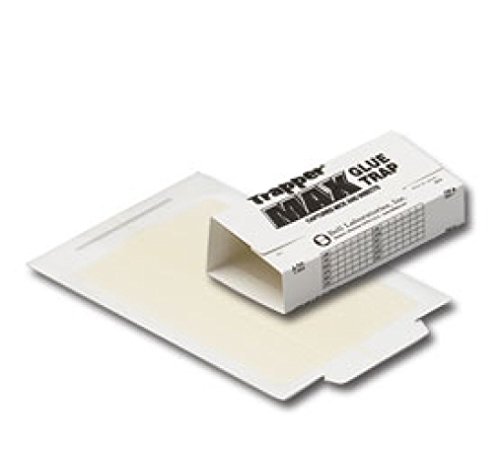
Trapper Max offers a non-toxic approach with a large 4.5″ x 6.5″ glue surface (board overall 5.25″ x 7.75″). It can be used flat or folded, allowing placement in tight spaces where rodent or pest activity is observed. The design emphasizes ease of use and long-lasting adhesion, making it a practical option for households facing persistent pest issues without bait or chemicals.
LULUCATCH Cricket Insect Glue Traps – 6 Pack

These large, 5″ x 10″ glue boards are perforated to allow partial use and are designed to maximize catch rates for crickets, roaches, beetles, spiders, and other crawling pests. The traps employ ultra-strong, non-toxic adhesive and remain effective in varied temperatures, including cooler indoor environments. They are pet- and child-safe when used as directed and are suitable for use in kitchens, basements, and garages.
Catchmaster Crawling Pest & Insect Glue Traps 12-Count

This 12-pack is designed for year-round monitoring and control of insects, including spiders, crickets, roaches, and ants. The traps are ready to use without bait, and the paper-on setup helps pests acclimate to the trap before contact with the adhesive. The product is pesticide-free and intended for long-term indoor use, particularly along walls and pathways to capture intruders.
Catchmaster Spider & Insect Glue Traps 45-Pk

Designed for indoor use, these traps address a broad spectrum of pests, including spiders, insects, crickets, roaches, and other crawling bugs. The traps are pesticide-free and built for long-term monitoring, with the option to fold into a tunnel to protect the glue from dust and debris. They are suitable for homes, garages, and sheds where pest activity has been observed along common travel routes.
Catchmaster Cricket XL Giant Glue Boards 6-Pk

Cricket XL Glue Traps are designed to attract crickets specifically, with a discreet profile that hides trapped insects from view. The boards are pesticide-free and provide up to a year of use under normal conditions. They are suitable for indoor spaces like kitchens, basements, and entryways where cricket activity is common, and they can be folded for easier placement in tight corners or along baseboards.
Buying Guide: Key Purchase Considerations
- Target pests: Choose traps formulated for the insect or rodent species you observe most often. Some glue boards are better for crickets and roaches, while others handle mice and small rodents.
- Adhesive strength and size: Larger boards with strong adhesive increase catch rate but may be harder to fit in tight spaces. Perforated designs let you use partial boards as needed.
- Placement strategy: Place traps along walls, baseboards, and known pathways. Leave traps in place for several days to assess activity before moving or replacing.
- Safety and materials: Look for pesticide-free, non-toxic boards for homes with kids and pets. Check whether the trap can be folded into a tunnel to protect the glue from dust.
- Longevity and replacement: Consider whether the boards are designed for year-long use or require periodic replacement to maintain effectiveness.
- Cost and bulk options: Bulk packs are cost-effective for widespread problems, while smaller packs can be ideal for targeted monitoring in a single room.
- Monitoring vs. extermination: Glue traps primarily monitor pest activity and reduce numbers gradually; for heavy infestations, integrate with broader pest management strategies.
Sticky traps offer a straightforward, chemical-free approach to indoor pest management. By selecting appropriate boards and placing them strategically, homeowners can gain visibility into pest activity and reduce populations over time while maintaining a safer living environment.