Rats can exploit the smallest openings in homes, garages, and sheds. Steel wool is a widely used, affordable barrier that rodents struggle to chew through, especially when combined with sealants or foam. This guide reviews select steel wool-based products designed to block entry points, around pipes, vents, and holes, helping you create durable rodent barriers. We highlight features, versatility, and practical use to support an informed purchase for American homes and workspaces.
A quick summary of five recommended products follows. The table lists key details to help you compare at a glance.
| Product | Brand | Key Use | Best For |
|---|---|---|---|
| Steel Wool Mice Control, 2 Pack | Alabrocon | Hole filling and barrier | Indoor/outdoor gaps, vents, siding |
| Xcluder Rodent Control Fill Fabric | Xcluder | Permanent barrier, fill fabric | Extensive openings, long-term seal |
| Rodent Barrier Kit, 3PCS Steel Wool Included | PAMAZY | Combination steel wool + foam | Medium to large gaps, versatile kit |
| MaPorch Steel Wool Mouse Hole Filler | MAPORCH | Hole filler, wall/gap defense | Pipes, walls, and around fixtures |
| Klfte Steel Wool For Mice Control | Klfte | Rodent barrier | Gaps and holes in home/garage |
Steel Wool Mice Control, 2 Pack

Brand: Alabrocon. This product provides a flexible steel wool barrier that can be cut to fit holes and gaps in walls, vents, drains, and siding. The kit emphasizes protection against mice and a range of small animals entering through openings. Users are advised to wear gloves when cutting to avoid cuts. The steel wool is designed to clog gaps in various locations across indoor and outdoor settings, including garages, kitchens, attics, and plumbing areas. Compatibility with additional sealants enhances its deterrent effect on rodents and insects alike.
Xcluder Rodent Control Fill Fabric Kit

Brand: Xcluder. This kit uses a stainless steel wool fill fabric combined withpoly fiber material to create a permanent barrier that mice, rats, and other pests cannot gnaw through. The package includes a 4-inch x 5-foot roll of fill fabric, shears, and sturdy work gloves. The design focuses on eco-friendly, durable solution aimed at long-term rodent exclusion, ideal for gaps and openings across buildings, from walls to foundations to vents.
Rodent Barrier Kit with Foam Sealant
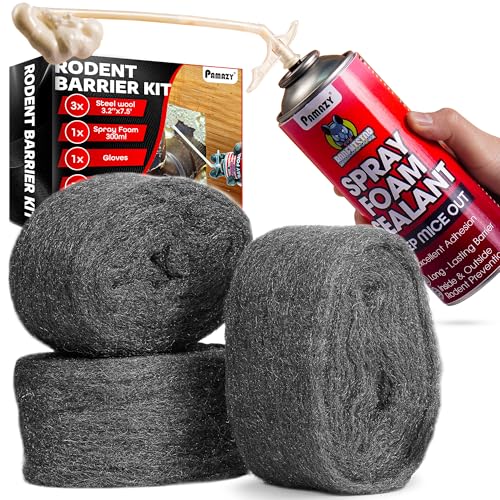
Brand: PAMAZY. This kit blends premium steel wool with spray polyurethane foam for a durable, long-lasting seal. The foam expands to fill large holes while the inner steel wool provides a robust barrier against chewing. The setup targets medium to large entry points around pipes, vents, and gaps in walls, making it versatile for multi-point protection in homes or garages. The product emphasizes a comprehensive approach to rodent exclusion by combining mechanical and chemical sealing strategies.
MaPorch Steel Wool Hole Filler

Brand: MAPORCH. This 3.2 inch by 7.5 ft roll offers durable steel wool designed for holes around pipes, walls, and vents. It emphasizes flexible, bendable material that can be cut and shaped to fit irregular gaps. The product highlights long-lasting rodent defense, suitable for both indoor and outdoor use, helping to create a barrier around entry points in kitchens, attics, and garages.
Klfte Steel Wool For Mice Control

Brand: Klfte. This 3.2″ x 12 ft wool offers robust rodent barriers for homes and garages. It can be cut to fit gaps and around fixtures, with a focus on non-corrosive materials that resist degradation and maintain chew resistance. The set encourages glove use during handling and emphasizes flexible application for varied openings, from pipes to vents and wall gaps.
Buying Guide
Key considerations help determine which steel wool solution best fits your needs:
- Gap size and shape: For irregular holes, choose a flexible wool that can be shaped and cut to fit precisely. For large openings, combine wool with foam sealants for a tight, expandable fill.
- Durability and chew resistance: Look for high-quality stainless steel wool or dense wool blends that resist chewing and do not degrade easily when exposed to moisture.
- Indoor vs. outdoor use: Screened vents, pipes, and exterior gaps require weather-resistant materials; indoor gaps may benefit from additional sealants or fabric barriers for ease of installation.
- Safety and handling: Wear gloves when cutting or handling steel wool to prevent cuts and avoid rust on skin. Ensure proper disposal of used wool and foam residues.
- Multi-point strategy: For best results, pair steel wool with foam sealants or a mechanical barrier to prevent gnawing and ensure a thorough seal around entry points.
- Maintenance: Periodically inspect seals, especially around plumbing, vents, and exterior walls, and replace worn or compressed wool as needed.
Additional Considerations And Perspectives
Different households may have varying priorities, such as ease of installation, long-term durability, or environmental impact. Steel wool is a practical, cost-effective component of a broader rodent control plan, often used alongside traps, preventive sanitation, and exclusion techniques. In spaces with moisture or humidity, rust-resistant options, like stainless steel wool, are preferable for longer service life. For renters or DIY enthusiasts, pre-packaged kits with accessories (gloves, scissors) simplify the process, while permanent fabric barriers provide a more enduring solution for frequent entry points.