Choosing the right stainless steel fermenter is essential for consistent, high-quality fermentation at home. This guide highlights five well-regarded options, spanning capacities from 7.5 to 16 gallons. Each product emphasizes durable 304 stainless steel, easy cleaning, and features designed to reduce contamination risk and improve fermentation control. Read on to compare design, capacity, and practical considerations for your brew setup.
| Product | Brand | Capacity | Notable Feature |
|---|---|---|---|
| VEVOR Fermentation Tank 8 Gallon | VEVOR | 8 gallons | Conical base with tight-seal lid |
| Anvil Stainless Steel Bucket Fermenter | Anvil | 7.5 gallons | Coned bottom with rotating racking arm |
| VEVOR Fermentation Tank 16 Gal | VEVOR | 16 gallons | Large mouth, conical bottom, yeast/slurry valves |
| VEVOR Pressure Fermenter 15 PSI | VEVOR | 16 gallons | Pressure capable, cooling coil for temperature control |
| Chapman UniVessel 14 Gallon | Chapman UniVessel | 14 gallons | Ready-to-use, straightforward cleaning |
VEVOR Fermentation Tank 8 Gallon

The VEVOR 8 Gallon fermentation tank is fully constructed from food-grade 304 stainless steel, including the barrel body, handles, inner lining, clasps, and lid. With a 0.5 mm wall thickness, the unit is designed to resist deformation while remaining easy to clean due to minimal dirt accumulation. A silicone sealing ring provides a double-layer seal in the lid, complemented by a high-elasticity clasp to prevent leaks and blocks entry from pests. An optional exhaust pipe on the lid enables sterile, breathable fermentation by releasing gas while preventing backflow.
Anvil Stainless Steel Bucket Fermenter — 7.5 Gallon

Designed for practical home brewing, this Anvil fermenter uses 304 stainless steel with a coned bottom and a rotating racking arm. The conical design helps separate sediment from beer, facilitating cleaner transfers and clearer final products. This model emphasizes durability and ease of use, supporting reliable, repeatable fermentation for small to medium batches.
VEVOR Fermentation Tank 16 Gal

The 16-gallon VEVOR fermentation tank provides a larger capacity with a wide mouth for easier transfers and cleaning. It features a conical bottom to promote sediment collection and has yeast slurry and beer valves for straightforward yeast removal and bottling. The entire unit is built from 304 stainless steel with a 0.5 mm wall thickness, matching the durable, corrosion-resistant design common to premium homebrew gear. A silicone sealing ring ensures airtight sealing, and the clasp keeps the lid secure during agitation or movement.
VEVOR Pressure Fermenter 15 PSI
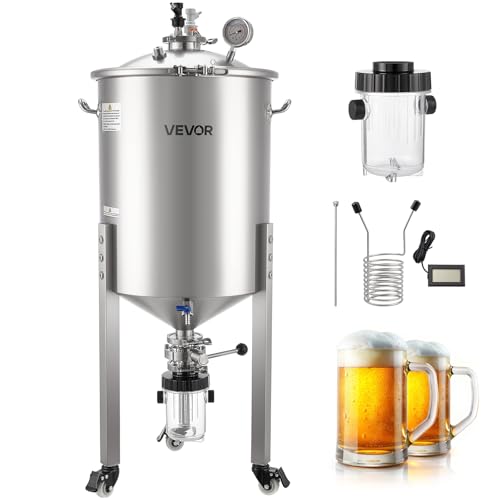
This all-in-one stainless steel conical fermenter supports pressure fermentation up to 15 PSI. Real-time pressure monitoring helps maintain stable secondary fermentation and deeper flavors. It includes a cooling coil to connect to a chiller for precise wort temperature control and a built-in thermometer ranging from 32–104°F (0–40°C). The 304 stainless steel construction and 0.5 mm wall thickness ensure durability and ease of cleaning, meeting food-contact standards while reducing oxidation risks during fermentation.
Chapman UniVessel 14 Gallon
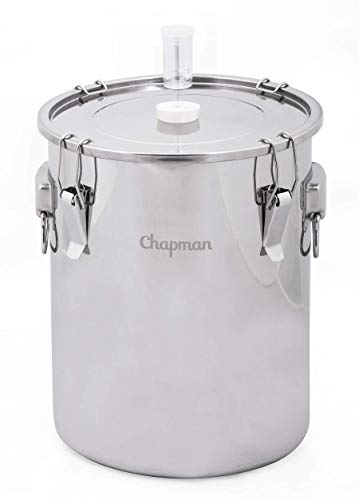
The Chapman UniVessel 14-gallon fermenter is ready to use and easy to clean, designed for 10-gallon batches with ample headspace. It emphasizes straightforward operation and reliable fermentation, making it a practical option for brewers seeking simplicity without sacrificing stainless steel durability. The 14-gallon size suits mid-range batches, balancing efficiency with space requirements in typical home breweries.
Buying Guide: Key Considerations For Stainless Steel Fermenters
When selecting a stainless steel fermenter, consider capacity, conical bottom design, and features that impact fermentation performance and cleaning efficiency.
- Capacity and batch size: Match the controller capacity to your typical batch size. Smaller batches are more manageable for beginners, while 12–16 gallon models suit more serious hobbyists who brew larger runs.
- Conical bottom and valves: A conical bottom helps separate sediment and yeast from the beer. Models with dedicated yeast slurry and beer valves simplify transfers and bottling, reducing sediment carryover.
- Material quality and wall thickness: Food-grade 304 stainless steel is standard for durability and corrosion resistance. A thicker wall (0.5 mm or more) adds durability but can influence weight and cost.
- Sealing and ingress protection: Airtight lids and reliable gaskets protect against oxidation and contamination. Consider evaporative losses and pest barriers if the vessel will sit during fermentation.
- Temperature control: Some units offer cooling coils or compatibility with external chillers, which helps manage fermentation temperature and flavor development, especially for specialty beers.
- Cleaning and maintenance: Look for smooth internal surfaces and simple disassembly. Cleaning ease reduces the risk of residual contaminants that impact flavor.
- Portability and setup: Heavier, large-capacity fermenters require sturdy shelving or carts. Handles and lifting hooks should facilitate safe handling during transfers.
- Compatibility with accessories: Racking arms, valves, taps, and temperature monitoring devices can enhance workflow. Ensure clamps, valves, and gaskets are included or readily available separately.
For American home brewers, these stainless steel fermenters provide reliable performance across a range of batch sizes and budgets. Prioritize models with conical bottoms and well-sealed lids for cleaner beer and easier maintenance. If you plan to experiment with temperature-sensitive recipes, consider a unit with a cooling coil or compatibility with a separate chilling system. Regardless of choice, proper sanitation and regular maintenance will maximize fermentation consistency and beer quality.