Finding a soundproof enclosure for a generator helps reduce outdoor noise and protects equipment from the elements. This guide reviews five popular options, highlighting build quality, ventilation, weather resistance, and compatibility with common generator sizes. Each product is selected for American homeowners and outdoor setups like yards, RV parks, and garages.
Summary of Featured Products
| Product | Brand | Key Benefit |
|---|---|---|
| Stainless Steel Generator Box for Outside/RV/Truck/Trailer | peastorm | Durable stainless steel construction with ventilation openings |
| LUNTHINK Generator Quiet Box | LUNTHINK | High-density sound insulation and dual-layer air flow design |
| Generator Box, Hudson SD Aluminum Quiet Box | Generic | Aluminum shell with fire-proof noise absorption and built-in fan |
| Fsehyue Aluminium Generator Toolbox | Fsehyue | Fully sealed, heavy duty with weather protection and lockable design |
| [New Upgraded] 900D Heavy Duty Generator Cover | JIAHOO | Waterproof 900D fabric with universal fit and venting front |
Stainless Steel Generator Box for Outside

The peastorm Stainless Steel Generator Box is designed for exterior use on RVs, trucks, and trailers. Its stainless steel shell emphasizes durability and long service life in diverse climates. Ventilation openings around the enclosure provide airflow to prevent overheating while keeping out rain and debris. The lockable metal shell adds a layer of security for stored generators. Suitable for mid-sized outdoor units, this enclosure focuses on rugged build and weather resistance for frequent outdoor use.
LUNTHINK Generator Quiet Box

The LUNTHINK generator box emphasizes acoustic performance and weather resilience. It is built to accommodate generators up to 39.4″ x 35″ x 35.4″ and uses high-strength steel with a double-layer air flow design. The top features high-density fire-proof sound-absorbing material that mitigates noise transfer. Venting on both sides supports air convection, while water drainage at the lower air inlet helps manage moisture. The enclosure is designed to withstand various weather conditions, including snow and wind, making it suitable for harsher environments.
Generator Box, Hudson SD Aluminum Quiet Box

This interior space-focused enclosure uses SD aluminum for durability and lighter weight, easing handling and installation. It offers a roomy interior of 39.4″ x 32″ x 31.7″ to fit most heavy-duty and portable generators. Fire-proof sound-absorbing cotton lines front and sides to reduce audible noise, while a louvers-based vent system and built-in cooling fan help prevent overheating and maintain generator performance during extended use. The design targets quieter operation without compromising airflow.
Fsehyue Aluminium Generator Toolbox

The Fsehyue toolbox is built to withstand tough outdoor conditions with a fully sealed structure that blocks rain, dust, and sediment. Its 29.5″ L x 19.7″ W x 23.6″ H footprint suits many standard generators while remaining portable enough for on-the-road storage. The enclosure doubles as a theft deterrent and emphasizes reliability for long-term outdoor use. The design supports easy access for maintenance with secure locking options to ensure contents stay protected during travel or storage in exposed areas.
[New Upgraded] 900D Heavy Duty Generator Cover
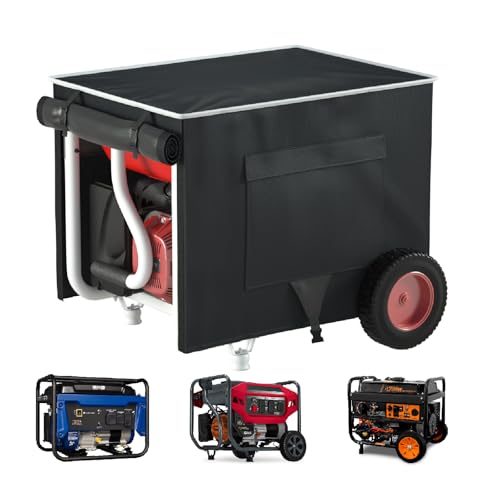
The JIAHOO 900D heavy duty cover focuses on all-season protection with IP64 waterproofing from the exterior fabric. Its 32″ x 24″ x 24″ dimensions suit a broad range of generators in the 5000W-10000W class. The material’s durability extends service life, and the cover includes a front side opening for ventilation and heat dissipation. A built-in storage pocket provides space for essential tools, creating a practical balance between protective coverage and accessibility. Do not use it with a running generator.
Buying Guide: Key Purchase Considerations
- Size and compatibility: Measure your generator’s dimensions to select an enclosure that fits securely without restricting airflow. Check inner clearance for air intake and exhaust paths.
- Material and durability: Stainless steel and aluminum offer corrosion resistance and strength. Consider weather exposure (rain, snow, UV) when choosing a material.
- Ventilation and cooling: Look for multiple vents, louvers, and, if possible, built-in fans. Proper airflow prevents overheating and extends generator life.
- Noise reduction: Acoustic insulation, fire-proof sound-absorbing materials, and double-wall designs improve quiet operation, particularly in residential areas.
- Security and accessibility: Lockable doors or panels deter theft while allowing easy maintenance access. Consider locking mechanisms that are weather-sealed.
- Weather sealing: Fully sealed enclosures protect against rain, dust, and debris. Ensure gaskets and drainage are included to manage moisture buildup.
- Portability and installation: Some enclosures are heavy but easy to move with handles or wheels. Verify compatibility with mounting options on your vehicle or fixed location.
- Maintenance: Look for removable panels or modular designs that ease cleaning, filter replacement, and inspection of the generator and cooling components.
- Security vs. ventilation trade-off: Higher security can sometimes limit ventilation—prioritize models that balance both based on your climate and noise sensitivity.
- Warranty and support: Check warranty length and the availability of replacement parts or panels, especially for weather-exposed installations.
As you compare options, balance the enclosure’s noise reduction with its ability to keep the generator cool and dry. For installations near living spaces or campsites, prioritize sound insulation and compact footprint, while rural or industrial sites may benefit from larger, more rugged enclosures with superior airflow and theft protection.