Transform a loud, echo-filled room into a controlled, studio-ready space with high-density acoustic panels. The following selections emphasize effective sound absorption, easy installation, and durable materials suitable for home studios, professional spaces, and broadcasting setups. Each option offers a balance of performance, design, and value to help you choose the best fit for your space and workflow.
| Product | Brand | Key Benefit | Intended Use |
|---|---|---|---|
| 24 Pack Pyramid Acoustic Panels | SD SODOCT | High absorption with unique pyramid design | Home studios, offices, theatres |
| Audiosoul 52 Pack Acoustic Panels | audiosoul | Dense foam for consistent absorption | Control rooms, recording booths |
| Knightsacoustic 96 Pack Panels | Knightsacoustic | High-density panels with strong resilience | Professional studios, control rooms |
| ZonaSonic 48 Pack Pac | ZonaSonic | Self-adhesive, high-density foam | WALL mounting, quick setup |
| NEPIS 20 Pack Acoustic Panels | NEPIS | High NRC and easy installation | Home studios, offices |
SD SODOCT 24 Pack Pyramid Acoustic Panels

These pyramid-shaped acoustic foam panels are engineered to absorb a broad range of frequencies, reducing echo and reverberation for a quieter, more balanced room. With a high Noise Reduction Coefficient (NRC), they help deliver clearer recordings and more accurate monitoring in studios, home theaters, and offices. The panels are crafted from top-grade acoustic foam, combining durability with safety thanks to flame-retardant properties. They are also Climate Pledge Friendly, reflecting eco-conscious production. The distinctive pyramid design increases surface area for improved diffusion and absorption while adding a modern aesthetic to any space.
Audiosoul 52 Pack Acoustic Panels
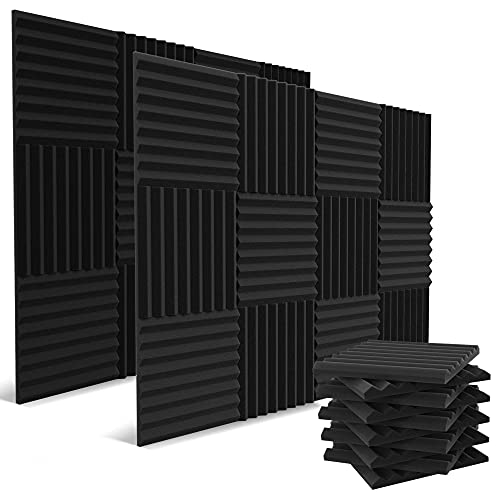
Audiosoul’s 52-pack acoustic panels focus on professional sound absorption to reduce reverberation and unwanted background noise without blocking sound paths. Their dense, consistent foam quality supports reliable performance across various studio environments, including control rooms, radio studios, and recording booths. The approach emphasizes reducing standing waves and flutter, contributing to a cleaner listening environment. The panels are designed to be durable and resilient, ensuring long-term performance in busy studio settings while delivering more comfortable, less stressful acoustic conditions.
Knightsacoustic 96 Pack Sound Proof Panels

Knightsacoustic offers a large 96-pack of 1 x 12 x 12 inch high-density acoustic foam panels designed to absorb sound effectively and minimize echoes. The panels preserve their shape after compression and recover quickly within hours, ensuring a consistent performance in busy environments. Their high-density construction provides strong elasticity and durability, enabling reliable sound management for studios, control rooms, and broadcast spaces. These panels are well-suited for spaces that require precise, professional-grade acoustic treatment without the complexity of bespoke installations.
ZonaSonic 48 Pack Pyramid Self-Adhesive Panels

This ZonaSonic set features 48 self-adhesive high-density acoustic panels designed for easy installation on walls, doors, ceilings, or windows. The panels use 35 kg/m³ density to absorb a range of high and low frequencies, reducing echoes and reverberations for clearer sound. The upgraded dual-sided adhesive eliminates the need for extra tools or sprays, enabling quick coverage of larger spaces. Their quick expansion after unpacking makes them a practical choice for rapid studio setup or temporary rooms needing acoustic treatment.
NEPIS 20 Pack Acoustic Panels

NEPIS presents a 20-pack of 12 x 12 x 0.4 inch high-density acoustic panels designed to deliver strong NRC performance. The foam combines high-density material with easy peel-and-stick installation, enabling straightforward mounting on walls, doors, ceilings, or windows. These panels aim to reduce noise across a variety of frequencies, improving clarity for live broadcasts, recording sessions, and immersive listening environments. The self-adhesive design minimizes installation time and mess, making NEPIS a practical option for both home studios and office spaces needing sound treatment.
Buying Guide: Key Purchase Considerations
- Acoustic performance metrics: Look for NRC (Noise Reduction Coefficient) and STC (Sound Transmission Class) ratings to gauge how well panels absorb or block sound across frequencies.
- Panel density and thickness: Higher density and thicker panels generally absorb more effectively, especially for low-frequency rumble common in rooms with larger volumes.
- Design and aesthetics: If the panels will be visible in a living or working space, consider shapes (pyramid, wedge, triangle) and decorative options (art panels, wood-style finishes) that align with the room’s style.
- Adhesion and installation: Self-adhesive panels save time and reduce installation complexity. For temporary setups, look for panels with reliable adhesive that won’t damage walls.
- Fire resistance and safety: Flame-retardant materials improve safety in occupied spaces, especially in studios and home theaters. Check certifications where available.
- Scale and coverage: Compute the total surface area to be treated. Larger rooms may require multiple packs or higher-density panels to achieve even, effective coverage.
- Durability and maintenance: Panels should resist humidity and wear in busy rooms. Durable foams maintain shape and performance after compression and relocation.
- Eco-friendly features: Climate Pledge Friendly or low-odor, low-emission materials can be important for studios where air quality and comfort matter.
- Cost vs. value: Compare packs by panels per pack, thickness, density, and adjacency needs. Sometimes more smaller panels yield better coverage and aesthetics than a few large ones.
When selecting panels, consider your room’s size, ceiling height, and typical recording or monitoring scenarios. For multi-use spaces, a combination approach—dense panels at early reflections points plus decorative or larger coverage in remaining areas—often yields the best balance of performance and appearance.