Choosing a solar roof ventilator can dramatically improve attic cooling, reduce humidity, and cut energy costs. This guide highlights five top-rated solar attic fans, detailing performance, durability, and best-use scenarios to help homeowners, garage owners, and small business spaces pick the right model. All options rely on solar power, enabling off-grid operation and eco-friendly airflow management.
Summary of selected products
| Product | Brand | CFM (approx.) | Key Benefit | Roof Type Fit |
|---|---|---|---|---|
| 25W Solar Roof Vent Fan with 8-Inch Removable Roof Vent | SwellishColor | Up to 240 | Durable build, pest protection | Home, Garage, Warehouse |
| Solar Attic Fan 32W 1600CFM | DC HOUSE | 1600 | High airflow, off-grid operation | Homes, Garages, Workshops |
| iLIVING HYBRID Ready Smart Thermostat Solar Roof Attic Exhaust Fan | iLiving | 1150 | Smart thermostat control, adjustable panel | Homes, Larger spaces |
| Hon&Guan Solar Attic Fan with Thermostat, 40W | Hon&Guan | 2000 | Thermostat modes, adjustable angle | Homes, Garages |
| VEVOR 42W Solar Attic Fan, 2800 CFM | VEVOR | 2800 | Smart control with remote, temperature/humidity sensing | Attics, Garages |
25W Solar Roof Vent Fan With 8-Inch Roof Vent

The SwellishColor 25W roof vent fan combines a durable 25W monocrystalline solar panel with an IP68 waterproof brushless DC motor. It delivers up to 240 CFM for attic cooling while minimizing energy costs. Its galvanized steel frame and corrosion-resistant coating resist environmental wear, and the reinforced aluminum mesh helps keep pests out. With a removable 8-inch vent, installation can be tailored to standard roof layouts and reduces heat buildup in residential and commercial spaces alike.
Key features include energy-efficient solar operation, high weather resistance, and long service life. The system is designed for eco-conscious users seeking a reliable attic exhaust fan that performs well in varying sunlight conditions. The product emphasizes both airflow performance and durability, making it a practical choice for homes, garages, and small warehouses. Consider this option when you want a strong, simple solar solution with protective mesh and robust construction.
Solar Attic Fan 32W 1600CFM High Airflow
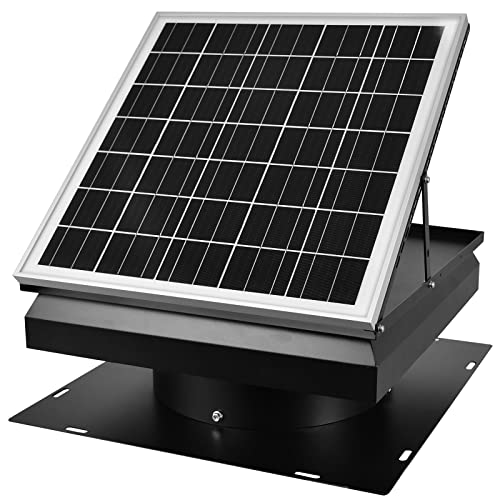
The DC HOUSE 32W solar attic fan offers 1600 CFM of airflow, engineered to operate off-grid with no electrical wiring. It activates at sunrise and powers down at dusk, leveraging premium monocrystalline solar panels. The design aims to significantly lower attic temperatures—up to about 30°F—while reducing AC strain. It’s suitable for home attics, garages, and workshops, and pairs well with existing vents for enhanced overall airflow. The unit is built for durability in a variety of climates, with a weather-resistant housing to withstand wind and rain exposure.
Highlights include an off-grid operation model, strong airflow, and a simple install profile that suits many building types. This option is ideal for users prioritizing high CFM output and energy independence, especially in sunny conditions. When choosing between capacities, consider attic size and current ventilation to determine if 1600 CFM meets your cooling needs.
iLIVING HYBRID Ready Smart Thermostat Solar Roof Attic Exhaust Fan

This iLiving model combines solar power with smart thermostat control, offering adjustable solar panel angles and a 40W, 1150 CFM output. It cools spaces up to 2900 square feet and is designed to respond to temperature settings within a practical range (50°F-122°F). Features include IP68 waterproof motor and a generous 15-year warranty, making it a robust choice for larger homes or workshops needing automated climate management and reliable performance across seasons.
Key considerations include the value of automation, the flexibility of the adjustable solar panel, and long-term warranty coverage. The hybrid capability supports energy savings while providing optional smart control for precise airflow management. Assess whether a larger coverage area and thermostat integration align with your roofing setup and cooling goals.
Hon&Guan Solar Attic Fan With Thermostat, 40 Watt
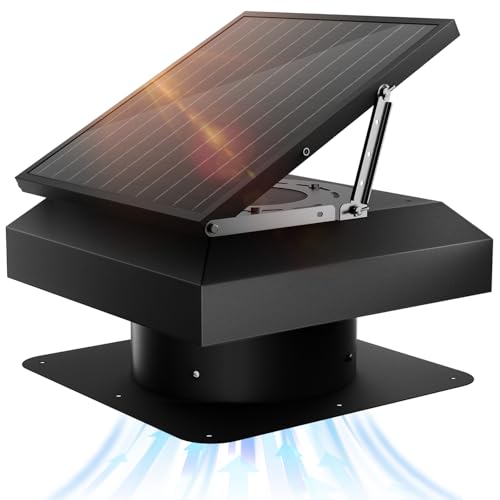
The Hon&Guan solar attic fan delivers up to 2000 CFM and cools spaces up to 2500 square feet. It features a thermostat-based two-mode operation and adjustable orientation (0-70 degrees) to optimize solar exposure. An AC/DC adapter option enables continuous operation beyond daylight hours, though the primary mode remains solar-powered. The unit uses a sturdy galvanized steel housing with an aluminum mesh guard to deter pests, and it is designed for reliable performance in varied weather conditions.
Consider this option when you need reliable daytime cooling with flexibility for extended operation. The dual-mode function and adjustable mounting angle support different attic geometries, while the protective mesh adds a layer of protection for birds and insects. If you anticipate needing a constant airflow day or night, this model offers practical adaptability.
VEVOR 42W Solar Attic Fan, 2800 CFM

The VEVOR 42W model uses a MPPT regulator to maximize sunlight conversion for rapid attic cooling, delivering up to 2800 CFM. A smart temperature and humidity controller provides steady climate conditions year-round, while a remote enables control from up to about 10 meters away. All-weather operation includes 24/7 cooling through day and night hours, with a brushless DC motor designed for low noise. It suits metal and masonry roofs and is designed for larger attic spaces, garages, or RV storage areas that require strong airflow and remote access control.
Key advantages include high CFM output, intelligent environmental sensing, and remote operability. This option is ideal for users who want aggressive cooling and modern control features, including automatic shutoffs for safety. Compare this model with others when you need the maximum airflow and the convenience of remote adjustments.
Buying Guide: Key Considerations For Solar Attic Fans
- Airflow capacity (CFM): Match CFM to attic size. Larger spaces require higher CFM to achieve noticeable cooling.
- Power source and efficiency: Solar panels should provide ample energy under typical sun conditions. MPPT regulators maximize efficiency, especially in marginal sunlight.
- Durability and weather resistance: Look for IP ratings, corrosion-resistant housings, and protective grilles to deter pests and debris.
- Thermostat and control options: Built-in thermostats automate operation. Hybrid systems or remote controls offer convenience for larger spaces.
- Installation considerations: Roof vent size, mounting angle, and compatibility with existing vents influence ease of installation and performance.
- Noise and motor quality: Brushless DC motors are typically quieter and longer-lasting, improving user comfort in occupied spaces.
- Warranty and service life: Longer warranties indicate confidence in durability; check coverage details for motors, panels, and housings.
- Energy savings and environmental impact: Solar operation eliminates ongoing electricity costs and reduces carbon footprint, aligning with eco-conscious goals.
- Maintenance needs: Screens, meshes, and housings should be inspected periodically for wear, debris, or pest intrusion.
- Roof compatibility: Some models suit metal roofs, others work better with shingle or flat roofs. Verify base dimensions and installation kit compatibility.
When selecting a solar roof ventilator, consider attic size, climate, and the desired balance between automation and manual control. For smaller spaces with intense sun, a high-CFM model with reliable solar performance is advantageous. For larger attics or sheds, a smart thermostat-enabled or remote-controlled unit provides broader management capabilities. Finally, weigh durability and warranty against initial installation effort to choose a model that offers consistent performance over time.