For households seeking a dependable off-grid power solution to safeguard a refrigerator during outages, solar powered generators offer a practical blend of portability, capacity, and clean energy. This guide reviews five capable models, highlighting key outputs, battery capacity, and solar-panel integration. Each option supports 110V outlets and multiple USB/DC ports, enabling you to keep perishables cold while running essential devices during emergencies, camping trips, or remote work setups. The selections below emphasize reliability, safety features, and efficient solar charging to help you choose the right match for your refrigerator and lifestyle.
| Product | Brand | Battery / Capacity | Solar Panel Included |
|---|---|---|---|
| Apowking 300W Portable Solar Generator | Apowking | 220Wh | 40W Included |
| SinKeu 300W Portable Solar Generator | SinKeu | 260Wh | 40W Included |
| EF ECOFLOW Delta 2 Max | EF ECOFLOW | 2048Wh expandable | Solar Panel Optional |
| ZeroKor Portable Power Station | ZeroKor | 146Wh | 40W Included |
| Powkey 200W Portable Solar Generator | powkey | 146Wh | 40W Included |
Apowking 300W With Panels

The Apowking 300W kit pairs a compact power station with a 40W foldable solar panel. Its 220Wh battery supports several devices simultaneously, including two 110V AC outlets, USB ports, and a DC car output. The system is designed to operate quietly without fans, which helps maintain a calm environment during power interruptions. The 300W peak capability accommodates common home appliances, and the 60000mAh battery delivers portable energy for short outages, camping, or remote locations. The solar panel’s 24% efficiency improves performance under partial sun, increasing reliability when light is inconsistent.
SinKeu 300W Portable Solar Generator

The SinKeu 300W model combines a 260Wh battery with a 40W solar panel to deliver extended outdoor power. It offers two AC outlets (110V), several USB ports, and DC options to support laptops, routers, small refrigerators, and other essentials. With quick recharge cycles and a robust lithium pack, it suits camping, road trips, or home backup. The system emphasizes multi-output versatility, including USB-C PD charging, ensuring fast compatibility with modern devices. The foldable solar panel enhances portability for travelers and emergency preparedness.
EF ECOFLOW Delta 2 Max

The Delta 2 Max from EF EcoFlow represents a high-capacity, expandable power center. It supports rapid charging, including up to 1000W solar input when combined with AC charging, enabling an 80% charge in about 1 hour. A 10-year-rated LFP battery offers thousands of cycles, and the system can be expanded with additional solar-powered batteries to scale up capacity. This model is well-suited as a home backup for refrigerators, freezers, and other essential appliances, especially during extended outages. Its safety features and robust power management help protect sensitive electronics.
ZeroKor 100W Panel Power Station
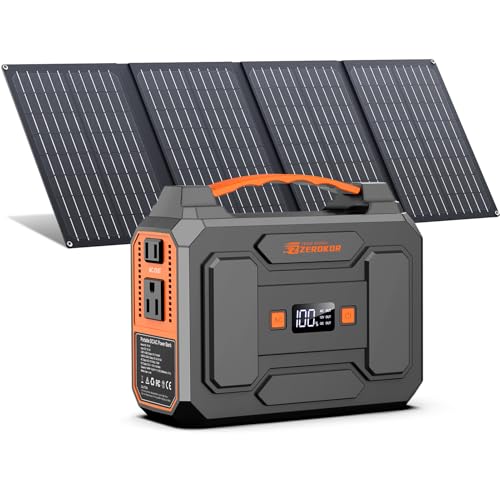
ZeroKor offers a compact 100W-capable power bank with a foldable 40W solar panel. Weighing light and featuring multiple charging options, including AC outlets, USB ports, and a car DC port, this kit is ideal for lightweight setups, camping, and emergency use where space and weight matter. It supports safe operation for small electronics and can assist with keeping a fridge or mini-fridge running during short outages, though larger appliances may approach its limits. The included solar panel enhances portability for travelers and hikers seeking off-grid reliability.
Powkey 200W Portable Solar Generator
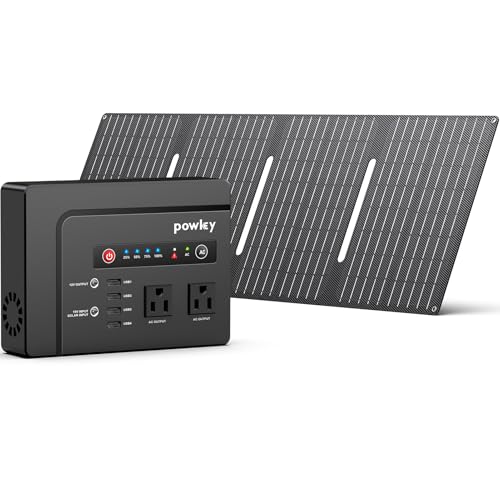
The Powkey 200W system pairs a 146Wh battery with a 40W solar panel, delivering reliable power for essential devices, including two 110V AC outlets and multiple USB ports. The generator’s seven-output configuration supports simultaneous charging of phones, laptops, cameras, and small appliances while preserving energy for a refrigerator during short outages. Its lightweight design and clear status indicators help users monitor charging and discharging. The unit’s Pure Sine Wave output protects sensitive electronics, making it a strong option for off-grid living and emergency readiness.
Buying Guide: Key Considerations For Choosing A Solar Generator For A Refrigerator
- Power capacity and peak versus continuous output: A refrigerator typically requires a stable baseline, with a startup surge. Look for models offering at least 150-300W continuous power and 600-1000W peak to handle startup loads safely.
- Battery type and total capacity: Lithium-based packs with higher watt-hours (Wh) extend run times during outages. Prioritize units with 200-600Wh for shorter outages and 1000Wh+ for longer disruptions.
- Solar panel compatibility and efficiency: Panels with higher conversion efficiency perform better in limited sunlight. Consider kits with 20–24% efficiency and multiple panel options for faster recharging.
- Port configuration: For refrigerators and essential devices, ensure at least two 110V AC outlets, plus USB-C and USB-A options. A DC car outlet can also help with vehicle-related charging.
- Portability and weight: If you need mobility, prioritize lighter units with compact dimensions. A balance between weight and capacity improves usability for camping or travel.
- Charge time and recharging methods: Assess how quickly the unit recharges from solar and AC sources. Faster recharge helps restore fridge power after outages more rapidly.
- Safety features: Look for Overload, Overcharge, and Short-Circuit protection, as well as low-noise operation and battery management system (BMS) safeguards to protect electronics.
- Expandability: If you anticipate longer outages, prefer systems that allow adding extra solar panels or additional battery modules to scale capacity.
- Warranty and support: Longer warranties and reputable brands reduce risk and improve long-term reliability for critical household uses.
In choosing a solar generator for a refrigerator, prioritize a model that offers a reliable baseline output, sufficient capacity to cover startup surges, and portable charging options. The five products reviewed here provide a spectrum of capacities, panel inclusions, and outlet configurations to suit different outage durations and outdoor scenarios. Consider your typical outage length, available space, and how many devices you need to support simultaneously to guide your selection.