Choosing the right solar attic fan can significantly reduce cooling costs while protecting roof structures from excess heat. This guide highlights five top options, detailing performance, installation considerations, and durability. Each product below is evaluated on solar efficiency, airflow, weather resistance, and ease of use to help you decide which model fits your attic size and climate.
Summary of Selected Products
- iLiving Hybrid Ready Solar Roof Attic Exhaust Fan — 1150 CFM, 40W, Smart Thermostat, IP68 motor
- DC HOUSE Solar Attic Fan 32W — 1600 CFM, Weatherproof, off-grid operation
- Hon&Guan Solar Attic Fan — 2000 CFM, 12″ diameter, dual modes
- OmniPV Solar Attic Fan — 1600 CFM, 40W, thermostat, low noise
- GROWNEER 40W Solar Attic Fan — 2000 CFM, smart thermostat, remote control
iLiving Hybrid Solar Attic Fan With Smart Thermostat

Brand: iLiving
Features: Smart Thermostat control from 50°F to 122°F with Enable/Disable, IP68 waterproof brushless motor, 15-Year Warranty, Adjustable solar panel (0°/15°/30°/45°), 40W, 1150 CFM, capable of cooling up to 2900 square feet.
DC HOUSE Solar Attic Fan 32W 1600CFM
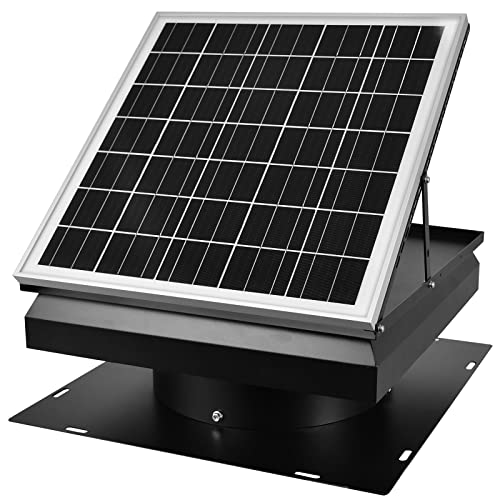
Brand: DC HOUSE
Features: Solar energy powered with premium monocrystalline panels, off-grid operation, automated sunrise activation and dusk shutdown, 1600 CFM airflow, designed to reduce attic temperatures up to 30°F, compatibility with existing vents for enhanced whole-house airflow, suitable for homes, garages, RVs, greenhouses.
Hon&Guan Solar Attic Fan With Thermostat
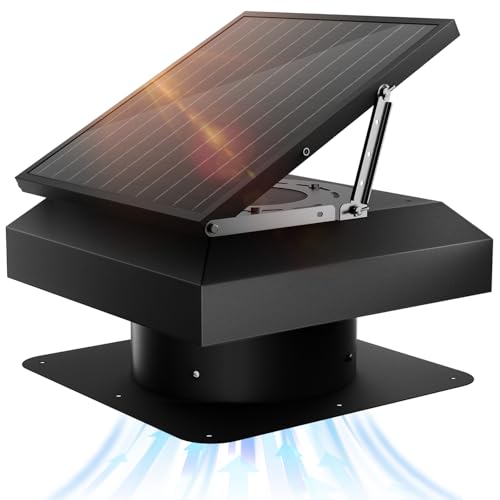
Brand: Hon&Guan
Features: Up to 2000 CFM, cools up to 2500 sq ft, 12″ diameter, multi-angle adjustment (0-70°), 24/7 operation with AC/DC adapter, two modes (energy-saving and performance), auto-start thermostat adjustable between 68–113°F, no battery backup required.
OmniPV Solar Attic Fan — 40 W, 1600 CFM

Brand: OmniPV
Features: 40 W solar panel, 1600 CFM output, weatherproof build, low-noise brushless DC motor, integrated thermostat for auto on/off, waterproof design suitable for diverse settings like homes, greenhouses, and garages.
GROWNEER 40W Solar Attic Fan With Smart Thermostat
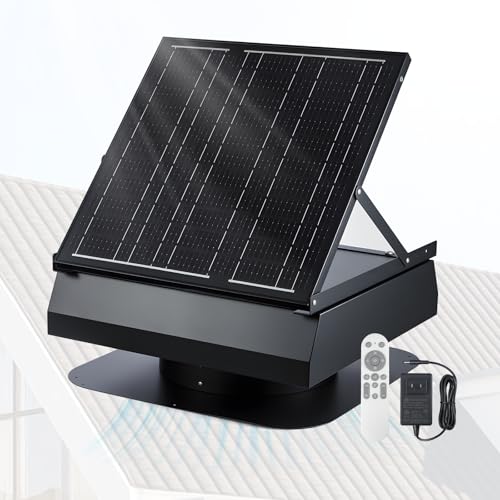
Brand: GROWNEER
Features: 40W solar panel, 2000 CFM, smart thermostat, 24/7 operation with remote control, 2000 sq ft cooling capability, waterproof design, suitable for attics, sunrooms, warehouses, and factories, remote range up to 30 meters.
Buying Guide
Key considerations help determine the best solar attic fan for your space:
- Airflow (CFM) vs. attic size: Larger attics require higher CFM. Look for models offering 1400–2000+ CFM for typical homes, while smaller spaces can work with 1000–1500 CFM.
- Solar panel quality and efficiency: Monocrystalline panels offer strong performance. A higher wattage panel generally improves daytime cooling, especially in hot climates.
- Thermostat and controls: Built‑in thermostats automate cooling when temperatures rise. Some models include remote controls or smart thermostats for fine-tuned operation.
- Weather resistance and durability: IP ratings (e.g., IP68) and corrosion-resistant housings extend life in humidity and rain-prone areas.
- Installation considerations: Roof pitch, mounting space, and compatibility with existing vents affect installation time and cost. Some units offer adjustable angles for optimal sun exposure.
- Noise and motor type: Brushless DC motors tend to be quieter and more durable than standard motors; check decibel ratings if coastal or residential noise is a concern.
- Energy savings and off-grid reliability: Solar-only operation reduces electricity use, but consider hybrid adapters or night running options if you need 24/7 ventilation.
- Maintenance: Look for easily accessible components, warranty length, and available spare parts to minimize downtime.
Choosing among these options involves evaluating attic size, climate, and how you want the fan to integrate with existing ventilation. For hot, sun-drenched regions, higher CFM paired with a smart thermostat can maintain cooler attic temperatures during peak sun hours. In milder climates, a solar fan with reliable night operation can continue to vent moisture and improve HVAC efficiency without increasing energy costs.