Protecting households from fire hazards starts with reliable smoke detectors. This guide highlights top-performing, battery-powered and photoelectric models available today, emphasizing fast response, low false alarms, and long-lasting durability. Each pick caters to different living spaces—from bedrooms to living rooms and small apartments—so you can choose detectors that balance sensitivity, battery life, and ease of maintenance. Below is a quick overview of the five selected models and their standout features to help you compare at a glance.
| Product | Brand | Highlights | Type |
|---|---|---|---|
| 2 Pack Smoke Detector, Photoelectric Sensor Battery-powered Fire Smoke Alarm | XUK | 85 dB alarm, low battery warning, LED indicator, quick 0.08s response | Photoelectric, Battery-powered |
| Fire Alarms Smoke Detectors, Photoelectric Sensor Smoke Alarm Battery Operated | RenseCum | 10-year lifespan, ultra-low standby power, low false alarms | Photoelectric, Battery-powered |
| First Alert Smoke Alarm, Battery-Operated Detector | First Alert | Precision Detection, Front-access battery replacement | Photoelectric, Battery-powered |
| Kidde Smoke Detector, 10-Year Battery Powered | Kidde | 10-year sealed battery, easy installation | Photoelectric, Battery-powered |
| SHYEEH Smoke Alarm, 10-Year Lifespan | SHYEEH | Fast response, ultra-low standby power, 85 dB siren | Photoelectric, Battery-powered |
These options prioritize fast detection of slow-burning fires, reliability over time, and user-friendly maintenance. When choosing, consider room size, ceiling height, kitchen proximity, and whether you prefer standalone units or interconnected systems for higher safety coverage. The following sections provide in-depth details for each model, including how they perform in real-world scenarios and what makes them stand out in today’s market.
2 Pack Smoke Detector With Photoelectric Sensor

Built with an advanced photoelectric sensor, this XUK model prioritizes early detection of slow-smoldering fires, such as upholstery or electrical faults. The sensor’s design minimizes false alarms while maintaining rapid response times. A red LED flashes during alarm events, and the unit emits a powerful 85 dB alert to ensure occupants wake up quickly. Battery operation simplifies installation in rooms where hard-wiring isn’t feasible, and the device is well-suited for living rooms, bedrooms, and other common areas. The model emphasizes long standby life and efficient power consumption, helping minimize maintenance over time.
Key advantages include:
– Advanced photoelectric sensing for slower, smoldering fires
– High-sensitivity detection with fast response
– Clear LED indicators and loud audible alert for wake-up effectiveness
Considerations:
– Battery-powered units may require periodic battery checks and replacements
– Placement should follow manufacturer spacing guidelines to optimize coverage
Fire Alarms Smoke Detectors With Dual Photoelectric Sensor
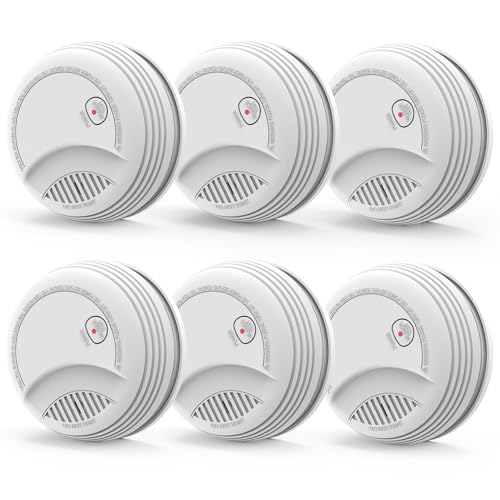
This model from RenseCum features dual-sensor photoelectric technology designed to detect slow-burning fires with high sensitivity and a long service life. A 9V battery design provides reliable power, while the integrated chip delivers rapid and accurate alerts. The unit is designed for low standby power consumption and can extend operational life significantly, making it ideal for owners who want security without frequent maintenance. It’s suitable for bedrooms, living rooms, and home offices where early detection matters most.
Key advantages include:
– Dual-sensor photoelectric technology for improved detection
– Long lifespan and low false alarm rate
– High-capacity battery paired with ultra-low power consumption
Considerations:
– Requires proper disposal as it uses replaceable batteries
– Ensure proper ventilation around the device to avoid nuisance alarms
First Alert Battery-Operated Smoke Alarm

First Alert’s SMI100 is a battery-powered detector designed for easy installation and straightforward maintenance. It emphasizes precision sensing to reduce nuisance alarms while maintaining reliable early warning. The unit features a front-access battery compartment, enabling quick replacements without removing the detector from its mounting. This model is well-suited for bedrooms, living areas, and smaller apartments where quick setup and reliable operation are essential.
Key advantages include:
– Precision detection to minimize cooking nuisance alarms
– Front-access battery replacement for convenience
– Battery-operated design for flexible placement
Considerations:
– Regular testing is advised to ensure reliability
– In multi-room homes, consider a mix of detectors for comprehensive coverage
Kidde 10-Year Battery Powered Smoke Detector

This Kidde model emphasizes a never-change 10-year battery design, eliminating routine battery replacements for the life of the detector. It includes a bright 85 dB alarm and red LED indicators that flash in sync with the alarm. The device is independently tested to UL standards, reducing false alarms often caused by cooking and everyday smoke. Its 4-inch compact form can fit into tighter spaces, making it suitable for smaller rooms and apartments where space is at a premium.
Key advantages include:
– 10-year sealed battery for maintenance-free operation
– Clear 85 dB alarm with LED indicators
– Compact design for small spaces
Considerations:
– The 10-year battery life is non-serviceable; replacement requires upgrading the unit after the lifespan ends
– Placement should maximize coverage and minimize false alarms in kitchens or near cooking surfaces
SHYEEH 10-Year Lifespan Smoke Alarm

SHYEEH’s MY-S05 offers a long-lasting 10-year lifespan, backed by an external photoelectric sensor that enables rapid response to smoke. The device emphasizes efficiency with a standby current under 10μA, aiding battery longevity. It provides a loud 85 dB alert and a rapidly flashing red LED when activated, ensuring visibility and audible notification across a typical bedroom or living area. The unit is designed for straightforward installation with stable operation over the decade-long life span.
Key advantages include:
– External photoelectric sensor for fast detection
– Ultra-low standby power to extend battery life
– Loud alarm with flashing LED for clear alerts
Considerations:
– Ensure compatibility with room layout to maximize sensor coverage
– Installation height and mounting guidelines should be followed for optimal performance
Buying Guide: Key Purchase Considerations And Comparisons
Choosing the right smoke detector involves balancing detection speed, reliability, and maintenance. Here are core factors to consider and how the highlighted models compare:
- Detection technology: Photoelectric sensors are generally better for slow, smoldering fires, such as upholstery or electrical fires, and are known for fewer nuisance alarms compared with ionization types. All models listed here use photoelectric sensing, aligning with common safety preferences.
- Power source: Battery-powered units offer flexible placement and easier installation, ideal for spaces without hard-wired connections. Several options in this guide feature 10-year sealed batteries, reducing maintenance but limiting battery replacement, while others require periodic checks or replacements.
- Alarm loudness and alert indicators: Look for a minimum of 85 dB alarm for effective awakening in bedrooms. LED indicators help users confirm alarm status at a glance, especially in dim rooms.
- Longevity and reliability: Models with a decade-long battery or lifespan reduce the frequency of replacements and overall maintenance. This is especially advantageous for renters or homeowners seeking low-effort safety devices.
- Ease of installation and maintenance: Front-access battery compartments, simple mounting options, and clear testing options contribute to straightforward upkeep and consistent performance.
- False alarm minimization: Firms employ intelligent filters and multi-sensor approaches to cut down on false alarms caused by cooking smoke or steam. When evaluating, consider how often false alarms occur in your living space and choose accordingly.
- Placement strategy: For optimal coverage, install detectors on every level, inside sleeping areas, and near hallways to create immediate alerts. Avoid placing detectors too close to kitchens or bathrooms where humidity and steam could trigger nuisance alarms.
In summary, for households prioritizing long-term, low-maintenance safety with strong detection capabilities, models with 10-year sealed batteries and high-sensitivity photoelectric sensors are strong candidates. If you require easy on-site maintenance and easy battery changes, opt for detectors with front-access compartments and replaceable batteries. Finally, assess combination detectors that also monitor for carbon monoxide if you want broader protection in a single device.