Choosing the right silicone sealant is essential for maintaining a safe, leak-free fish tank. The following guide highlights top silicone sealants that are safe for fish, provide strong adhesion to glass, and withstand freshwater or saltwater environments. Each product below is designed to form a flexible, durable bond without introducing harmful chemicals into the aquarium.
| Product | Brand | Type | Notes |
|---|---|---|---|
| SELSIL Aquarium Silicone Clear Sealant | Selsil | 100% silicone, solvent-free | |
| DaToo Aquarium Silicone Sealant Clear | DaToo | 100% silicone, solvent-free | |
| SELSIL Aquarium Silicone Sealant Clear (2 Pack) | Selsil | 100% silicone, solvent-free | |
| Seal/Fix Aquarium Silicone Sealant | Seal Fix | 100% silicone, solvent-free | |
| Clear Aquarium Silicone Sealant (ASI) | ASI | High modulus, non-slump |
Below are five selected products—the most relevant options for aquarium sealing and maintenance—presented with concise details to help you compare quickly and choose with confidence.
SELSIL Aquarium Silicone Clear Sealant

SELSIL Aquarium Silicone Clear Sealant delivers high elasticity and a strong bond on glass without primers. It is solvent-free and fish-safe, conforming to ISO 11600 standards. The product is suitable for both freshwater and saltwater aquariums and remains flexible across temperature ranges, resisting ozone and UV exposure. These attributes help prevent cracking, pulling, or discoloration while maintaining a clear, transparent seal on seams and joints.
DaToo Aquarium Silicone Sealant Clear Type
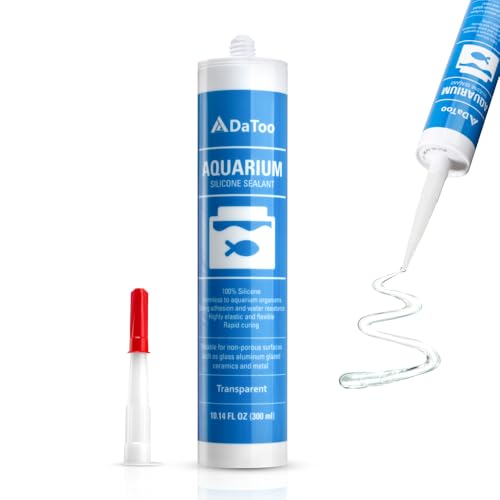
DaToo’s silicone sealant is a 100% silicone polymer formula with no solvents, isocyanates, or harmful chemicals. It provides strong adhesion on glass with no primer and offers excellent water resistance for both freshwater and saltwater tanks. The product is designed for fast curing and flexible application, reducing leaks and easing tank construction and maintenance.
SELSIL Aquarium Silicone Sealant Clear, 2 Pack

This 2-pack variant from Selsil emphasizes high elasticity and safety for both freshwater and saltwater ecosystems. It remains non-toxic once cured and provides a reliable, flexible bond suitable for glass bonding tasks like sealing seams or patching leaks. Its solvent-free composition helps maintain water quality and fish safety during application and curing.
Seal/Fix Aquarium Silicone Sealant

Seal/Fix Aquarium Silicone Sealant emphasizes a safe underwater environment with no solvents, additives, or fungicides. It provides a durable, leak-proof seal that can be applied to glass seams and tank accessories. The formula cures quickly when exposed to air, forming a skin within minutes and a full cure within 24 hours, making tank re-filling faster.
Clear Aquarium Silicone Sealant (ASI)
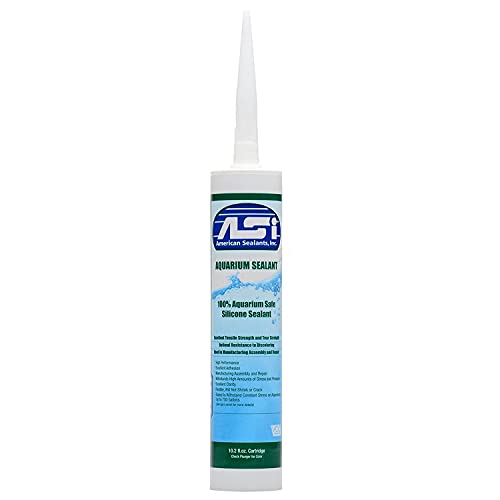
ASI’s Clear Aquarium Silicone Sealant is a high-modulus, non-slump sealant designed for glass bonding in aquatic environments. It adheres well without primers and remains stable under continuous immersion. When cured, it is non-toxic to fish and suitable for vertical surfaces due to its non-slump properties, helping maintain neat, durable seals on tanks and accessories.
Buying Guide: Key Purchase Considerations
- Fish Safety and Solvent Content: Prioritize 100% silicone polymer formulas that are solvent-free and explicitly labeled fish-safe. This minimizes the risk of toxins leaching into the water during curing and over time.
- Cure Time and Handling: Consider your project timeline. Fast-curing formulas reduce tank downtime but may require careful handling, especially in larger aquariums. Some products cure fully within 24-48 hours, while others offer skin formation in minutes.
- Adhesion And Substrates: Most aquarium sealants bond well to glass without primers, but check for compatibility with additional non-porous surfaces like aluminum or ceramic if you’re mounting hardware or creating custom enclosures.
- Elasticity And Temperature Tolerance: A highly elastic bond helps prevent cracking or discoloration as temperatures shift or as the tank settles. Look for ozone and UV resistance for longer-lasting seals in bright or outdoor-adjacent installations.
- Water Type Compatibility: Ensure the product is suitable for freshwater and/or saltwater use. Some formulas are explicitly designed for both environments, delivering reliable performance across diverse aquariums.
- Application Surface: Some sealants are formulated to resist sagging on vertical surfaces, which is beneficial for tall tanks or aquariums with complex shapes. Non-slump formulations maintain an even bead along vertical seams.
- Packaging And Availability: If you need multiple tubes or a backup, consider a two-pack option. Availability from trusted brands with clear safety standards reduces guesswork during maintenance.
- Non-Toxic Cure State: After curing, verify that the product is non-toxic to aquatic life. This ensures long-term safety for fish, invertebrates, and plants inside the tank.
- Ease of Cleaning Up: Quick skin formation allows for tidy cleanup if you need to adjust or remove sealant before full cure. Always follow manufacturer instructions for cleanup and disposal.
These considerations help ensure a durable, fish-safe seal that stands up to daily aquarium conditions, temperature shifts, and routine maintenance. When selecting a silicone sealant, prioritize clear, elastic, solvent-free formulations with explicit fish safety and compatibility for both freshwater and saltwater environments.