Roof ventilation fans improve indoor comfort by removing heat, moisture, and odors from living spaces, attics, and even RVs. This guide highlights five top choices with varied power, energy efficiency, and installation options. Each option is evaluated on airflow, durability, and ease of use to help you select the right model for your needs.
Summary of selected products:
| Product | Brand | Key Feature |
|---|---|---|
| LTNIASL 505 High Airflow Ceiling Fan | LTNIASL | 200 CFM, corrosion-resistant, quiet operation |
| 25W Solar Roof Vent Fan (8-Inch) | SwellishColor | Up to 240 CFM, solar-powered, weatherproof |
| Master Flow ERV6 1500 CFM Power Roof Vent | Master Flow | Up to 1500 CFM, thermostat/humidistat |
| RVLOVENT 14×14 Roof Vent | RVLOVENT | 1000 CFM, rain sensor, remote |
| Master Flow ERV4 1000 CFM Roof Vent | Master Flow | Up to 1000 CFM, energy-efficient |
LTNIASL 505 High Airflow Ceiling Fan
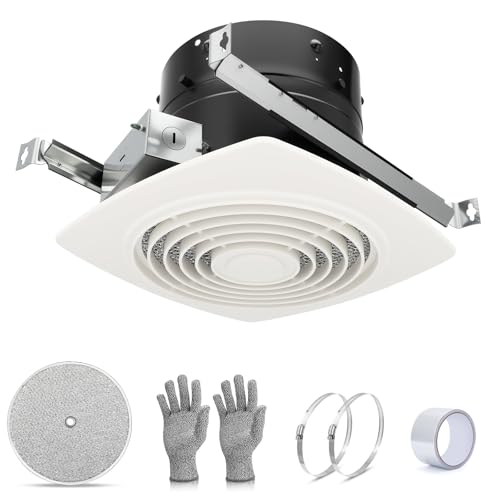
The LTNIASL 505 is designed to move substantial air with 200 CFM, suitable for bathrooms, kitchens, and general ceiling ventilation. The copper-wound motor emphasizes efficiency and durability, while the electrophoretic coating on the duct guards against corrosion in steamy or oily spaces. A white ABS grille pairs with an aluminum grease filter for easy maintenance and better indoor air quality.
25W Solar Roof Vent Fan With 8-Inch Removable Roof Vent

This solar-powered attic vent delivers up to 240 CFM cooling and uses a 25W monocrystalline panel with an IP68 waterproof, brushless DC motor. The system is built with galvanised steel and corrosion-resistant coating, plus reinforced aluminum mesh to deter pests. It operates independently of the electrical grid, offering a green option for eco-conscious homes and workshops.
Master Flow GAF 1500 CFM Powered Roof Mount Attic Fan

Engineered for larger attic spaces, the ERV6 delivers up to 1500 CFM to quickly move hot air. It includes a HT1 thermostat/humidistat for responsive cooling when needed, enhancing comfort and potentially lowering energy costs in climates with fluctuating temperatures. The galvanized steel construction adds long-term durability.
RV Vent Fan 14×14 by RVLOVENT
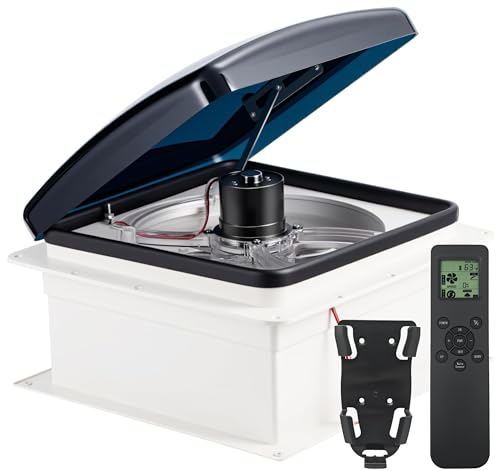
Designed for RVs, this 14×14 vent offers 1000 CFM with a 10-speed remote and a smart rain sensor. The included extra screen frame provides a ready replacement, and the UV-resistant PC cover protects the unit from sun exposure, ensuring dependable performance on the road or in a camper. It’s suitable for rapid air exchange while controlling moisture and odors.
Master Flow GAF 1000 CFM Black Power Roof Mount

This power roof vent provides reliable attic ventilation with up to 1000 CFM and is designed for spaces up to 1600 sq ft. Its galvanized steel construction supports steady performance, while the ERV4 model reduces energy use compared with standard vents, contributing to overall home efficiency.
Buying Guide
Key considerations when choosing a roof ventilation fan include airflow (CFM), space size, and climate. A higher CFM is typically better for larger attics or garages, while smaller rooms can get by with lower airflow.
Energy efficiency and operating costs matter. Solar-powered or thermostat-controlled units reduce electricity use and optimize when the fan runs, providing savings over time. Look for units with energy-efficient motors and durable housings to withstand heat, humidity, and debris.
Installation and compatibility are important. Some models are designed for ceiling mounting, others for through-wall or roof mounting. Assess whether the unit fits existing openings, ducting, and whether installation requires professional help. For RVs, weatherproofing and water resistance are critical, along with remote control convenience and rain protection features.
Durability and maintenance should guide your choice. Corrosion-resistant coatings, rust-proof grilles, and washable or replaceable filters extend the unit’s life. Consider maintenance access when choosing a model with easy-grab screws or twist-lock assemblies.
Noise and comfort can affect daily living. Some fans run quietly, particularly models with efficient motors, making them suitable for bedrooms or study spaces. If noise is a concern, review decibel specifications or look for models advertised as “ultra-quiet.”
Additional features worth evaluating include smart rain sensors, automatic shutoff in rain, remote controls, and dual-function intake/exhaust modes. For larger spaces, pairing multiple vents or selecting a higher-CFM unit with a thermostat can maintain comfortable temperatures and humidity levels.
Compatibility across spaces matters. A combination of attic, kitchen, and bathroom ventilation often requires different airflow profiles. Solar vents offer independence from electrical infrastructure but may depend on sunlight and weather patterns. Through-wall or ceiling installations may require ducting or caps, so plan for a complete venting system rather than a single device.