Choosing a reverse osmosis (RO) system for well water requires evaluating contaminants, mineral balance, and installation needs. The following selections are geared toward well-water sources, featuring multi-stage filtration, remineralization options, and trusted brand performance. Each model below is evaluated for ease of installation, filtration capabilities, and long-term maintenance to help you decide which RO system best fits your home.
| Product | Brand | Stage Count / Type | Key Benefit for Well Water |
|---|---|---|---|
| iSpring RCC7AK | iSpring | 6-stage; AK remineralization | Remineralization adds minerals and balances pH for well water richness. |
| Waterdrop G3P600 | Waterdrop | 8-stage; tankless | Comprehensive filtration with smart features and lead-free materials. |
| EXPRESS WATER RO5DX | EXPRESS WATER | 5-stage | Affordable, reliable filtration; straightforward DIY installation. |
| Waterdrop WD-T3-M | Waterdrop | 9-stage; remineralization | Mineral-infused water with advanced filtration for well water constituents. |
| APEC ROES-PHUV75 | APEC WATER | 7-stage; pH+ and UV | Alkaline remineralization plus UV for additional disinfection. |
Note: The list below focuses on systems with proven filtration depth, remineralization options, and compatibility with well-water contaminants like high mineral content, chlorine byproducts, and heavy metals. Each product section includes a direct, clickable link to its Amazon listing for convenience, followed by a concise feature overview based on the official product descriptions.
iSpring RCC7AK 6-Stage RO System With AK Remineralization

The iSpring RCC7AK features a six-stage filtration sequence with a patent-pending AK stage for remineralization, designed to restore essential minerals and balance pH in filtered water. The top-mounted design offers straightforward installation from above the sink, reducing under-sink access issues. A transparent first-stage housing allows users to monitor sediment buildup for timely changes. This system aims to deliver clean, mineral-balanced water suitable for well-water use, with monitoring-friendly components to support maintenance schedules.
Waterdrop G3P600 Tankless RO System

The Waterdrop G3P600 is an eight-stage, tankless RO system certified for multiple standards (NSF/ANSI 58, 372, 42, and FCC). It reduces a broad range of contaminants, including lead, chlorine, PFAS, and more, while offering a smart display faucet that shows water quality and filter life. Its compact design and certifications appeal to well-water setups requiring robust filtration and real-time monitoring of system health.
Express Water RO5DX 5-Stage RO System

The Express Water RO5DX provides a five-stage filtration process designed to remove a high percentage of contaminants, including lead, chlorine, fluoride, PFAS/PFOs, and arsenic. It is positioned as an accessible DIY installation, with a complete kit that includes a faucet and multiple filters. This makes it a practical option for well-water households seeking effective contaminant reduction with user-friendly setup and ongoing maintenance.
Waterdrop WD-T3-M Remineralization RO System
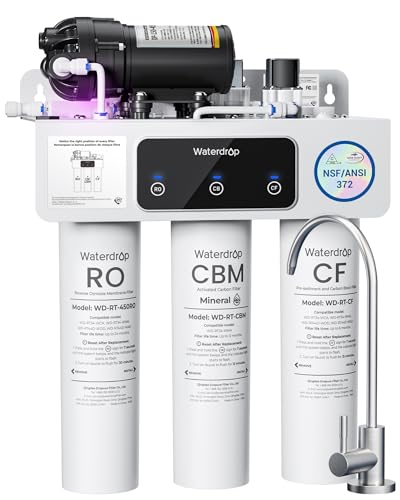
The WD-T3-M is a nine-stage undersink RO system that includes remineralization to restore minerals and improve taste. It reduces heavy metals and contaminants such as chlorine and PFAS, with a plug-in requirement for operation. Its advanced filtration and mineral-enhancement features make it suitable for well-water scenarios where mineral content and taste balance are concerns, while the LED indicators aid maintenance awareness.
APEC ROES-PHUV75 Essence Series 7-Stage with UV

The APEC ROES-PHUV75 Essence Series combines seven stages of filtration, pH+ remineralization, and UV disinfection to address a wide range of well-water concerns. It targets arsenic, chlorine, and heavy metals, while UV sterilization adds an extra layer of microbial protection. This model is designed for households seeking highly thorough filtration with enhanced mineralization and disinfection capabilities.
Buying Guide: Key Purchase Considerations For Well Water
- Contaminant profile: Identify the main well-water concerns (high TDS, lead, arsenic, PFAS, bacteria) to target with the right stage configuration and remineralization options.
- Stage depth and remineralization: For hard or mineral-rich water, systems with a remineralization stage help restore essential minerals and improve taste and pH balance.
- Tank vs. tankless: Tankless models save space and often offer advanced monitoring, but ensure power and installation compatibility. Tanked systems are typically more forgiving for ground water with variable flow.
- Certification and safety: Look for NSF/ANSI certifications (e.g., 58, 372, 42) and third-party testing to verify contaminant reduction claims and material safety.
- UV and additional disinfection: If well water is at risk of microbial contamination, UV-enabled systems provide an extra layer of protection beyond filtration alone.
- Installation and maintenance: Assess DIY friendliness, filter replacement intervals, and available replacement parts to estimate long-term costs and effort.
- Water waste and efficiency: Check the drain ratio (e.g., 1:1 or better) to minimize water waste, a practical consideration for households using well water.
- Water taste and mineral balance: Remineralization stages improve taste and provide minerals, which can be especially important for water sourced from wells with low mineral content.