Choosing the right railing for basement stairs involves balancing safety, durability, and style. The options below highlight sturdy metal and wood railings designed to handle daily use, including households with children, seniors, or guests with mobility needs. Each entry focuses on installation practicality, load capacity, and compatibility with basement environments, from industrial lofts to cozy, finished basements.
| Product | Brand | Length | Material Type | Key Benefit |
|---|---|---|---|---|
| 12FT Indoor Black Iron Railings | CAVAOSEY | 12FT | Metal/Iron | High load capacity; rust-resistant; industrial look |
| SDNBHT Industrial Stair Railing (6ft) | SDNBHT | 6ft | Aluminum | Corrosion resistant; easy wall mounting |
| Purife 7 FT Wooden Stairs Handrails | Purife | 7 FT | Natural Beech Wood | Warm aesthetic; sturdy wood grip; heavy-duty brackets |
| 12FT Black Iron Railing (Indoor) | VZNEK | 12FT | Metal/Iron | Stable support; smooth grip; rust-resistant finish |
| Thsgrt 4 Feet Aluminum Hand Rail | THSGRT | 4 Feet | Aluminum | Non-rusting; DIY friendly; versatile mounting |
Note: This guide presents five practical options for basement stairs, prioritizing safety, durability, and installation versatility, so you can find a solution that fits your space and budget without compromising on style.
12FT Indoor Black Iron Railings By CAVAOSEY

These railings are designed to endure heavy daily use and offer a modern, industrial edge. They boast a load capacity over 500 pounds, making them suitable for households with children, seniors, or individuals with mobility concerns. The high-temperature electrostatic painting process yields a smooth, rust-resistant finish that minimizes maintenance. The square tube design presents a slim, contemporary silhouette that remains unobtrusive on stairways in basements that lean toward industrial decor.
Key features include a sturdy metal frame, rust-resistant coating, and a clean square profile that works well with concrete or wooden basement walls. Installation typically involves securing the sections to wall brackets or posts, ensuring a stable, long-lasting grab rail for basement stairs that may see seasonal changes in humidity.
SDNBHT Industrial Stair Railing (6ft)

This wall-mounted handrail is made from aluminum with a black powder-coated finish, delivering corrosion resistance and a smooth grip. With a 1.25-inch diameter and 1.5 mm thickness, it can support up to 440 pounds and installs easily on wood, brick, or concrete walls using expansion screws. The industrial design integrates well with basements that favor a utilitarian or modern aesthetic, while providing reliable traction and a sturdy feel for daily stair use.
The mounting options accommodate various stair layouts, including straight runs and right-angle turns. For households prioritizing quick installation and a durable outdoor-rated finish, this model offers a versatile choice, though it is most commonly used indoors in basements and entryways.
Purife 7 FT Wooden Stairs Handrails

This option blends warmth and practicality with a natural beech wood handrail, finished to be smooth to the touch. The 7-foot length provides ample continuous grip along longer basement stairs, while the accompanying heavy-duty metal brackets deliver strong support up to 400 pounds. The wood’s organic texture can complement traditional or rustic basement interiors and pairs well with wooden railings or trim. Modern wall grab bar styling keeps edges rounded for comfort without sacrificing aesthetics.
Key considerations include wood maintenance, the need for appropriate brackets, and compatibility with existing wall studs or mounting surfaces. The product line emphasizes a balance between a comfortable handhold and durable brackets, ensuring safety for elderly or frail users while maintaining a classic, homey feel in basements that favor natural materials.
12FT Black Iron Railing By VZNEK
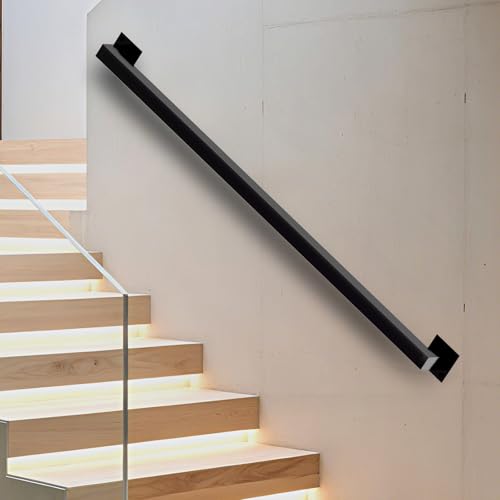
Designed for indoor use, this 12-foot black iron railing offers a sleek, industrial aesthetic with the assurance of high load-bearing capacity. The product emphasizes a smooth grip and rust-resistant finish achieved via a high-temperature electrostatic process, suitable for basements exposed to cool, damp environments. The slim, square tube design helps maximize space on narrow basement stairs, while maintaining a contemporary vibe that harmonizes with other metal accents and modern finishes.
Consider this option if you want a visually striking railing that resists wear and requires minimal upkeep. The design is compatible with concrete or wood walls commonly found in basements, and the 12-foot length provides flexible installation along longer stair runs or multi-landing basements.
Thsgrt Aluminum Hand Rail (4 Feet)

This aluminum handrail is designed for quick, DIY installation and versatile mounting. The 4-foot length suits shorter basement stair runs or landings, while the aluminum construction provides corrosion resistance and a lightweight yet sturdy feel. The product emphasizes an easy assembly with a sectional design that can be joined to create longer continuous runs, making it a practical choice for basements that require flexible layout changes or future hallway expansions.
Key factors include installation complexity, compatibility with existing brackets, and the potential to combine multiple sections for longer stairs. Aluminum’s non-rusting profile is advantageous in basements with higher humidity or occasional water exposure, reducing maintenance needs over time.
Buying Guide: Key Purchase Considerations For Basement Stairs Railings
- Safety and Load Capacity: Look for railings rated to support at least 440–500 pounds for typical residential use. Consider additional support if multiple family members have mobility concerns, or if the basement stairs see heavy traffic.
- Material And Durability: Metal railings (iron/steel/aluminum) offer high durability and a contemporary look, often with rust-resistant finishes. Wooden railings provide warmth and classic charm but may require more maintenance and protection against moisture.
- Installation And Mounting: Wall-mounted rails are common in basements to avoid floor obstruction. Check if mounting requires brackets, wall studs, or concrete anchors. DIY-friendly options are available with modular sections for longer runs.
- Style And Fit: Industrial, modern, rustic, or traditional styles should align with your basement’s design. A slim profile helps maximize stairway width, while a robust grip enhances comfort and safety.
- Maintenance: Consider environmental factors like humidity, temperature fluctuation, and exposure to moisture. Rust-resistant finishes and sealed wood can reduce upkeep in basement environments.
- Length And Configuration: Measure stair length, number of landings, and turn angles. Some products come as sections that you can combine for continuous runs, while others are pre-lengthened and ready to install.
- Budget And Warranty: Compare price points across alloys and wood. Look for warranties that cover corrosion, finish wear, or bracket integrity for long-term reliability.
- Accessibility And Aesthetics: For households with elderly or disabled members, prioritize smooth, rounded edges and comfortable handholds. Choose finishes that resist scuffs and fingerprints for basement areas that see frequent foot traffic.
These considerations help ensure you select a railing that not only meets safety requirements but also complements your basement’s design. Whether you prefer the industrial vibe of iron railings or the warmth of wood, a well-chosen railing system enhances both safety and aesthetics in basement stairways.