Choosing insulation for 2×4 walls requires balancing thickness, moisture resistance, and overall thermal performance. This guide reviews five practical options that align with typical 2×4 framing, focusing on common R-values, installation ease, and suitability for interior or exterior applications. Each product is presented with its key features to help you compare performance, air sealing potential, and climate suitability.
| Product | Brand | Approximate Coverage | Key Benefit |
|---|---|---|---|
| Owens Corning R-13 Kraft Faced | Owens Corning | 1312.5 ft² | Efficient 2×4 wall insulation with kraft facing |
| Owens Corning R-19 Faced | Owens Corning | 1280 ft² | Higher R-value for thicker walls |
| SmartSHIELD -20mm Reflective | INSULATION MARKETPLACE | 25 ft rolls | Radiant barrier with high reflective efficiency |
| AES 400sf White Reflective Foam | AES | 400 ft² | Thin, moisture-resistant radiant barrier |
| R-8 Duct Wrap Insulation | AES | 100 ft² | Radiant barrier for ducts with high reflectivity |
Owens Corning R-13 Kraft Faced Insulation

This Kraft Faced fiberglass batt is designed for 2×4 walls, offering a practical balance between cost and performance. The product is described as kraft faced with a moisture barrier suitable for exterior surfaces, and it comes in bundles that provide a total of 1312.5 square feet. It suits retrofit or new construction where standard depth cavities are present and framing requires a reliable, code-supported insulation solution.
Owens Corning R-13 Kraft Faced Insulation For 2×4 Walls

Designed to fit 2×4 walls, this product provides a compact solution with a Kraft facing and a moisture barrier. Packaged in two bundles of five bags, it covers a substantial square footage for walls that demand a reliable moisture-resistant barrier. It is suitable for exterior wall assemblies where a moisture barrier is beneficial for protecting interior finishes.
SmartSHIELD -20mm Reflective Insulation Roll

This foam-core radiant barrier roll provides a high R-value with one layer and can be used as a radiant barrier, vapor barrier, and thermal insulation. The product is engineered to reflect up to 95% of radiant energy, contributing to condensation control and overall energy efficiency. Its foam core allows for flexible installation in various wall configurations and indoor or outdoor applications.
R-8 HVAC Duct Wrap Insulation
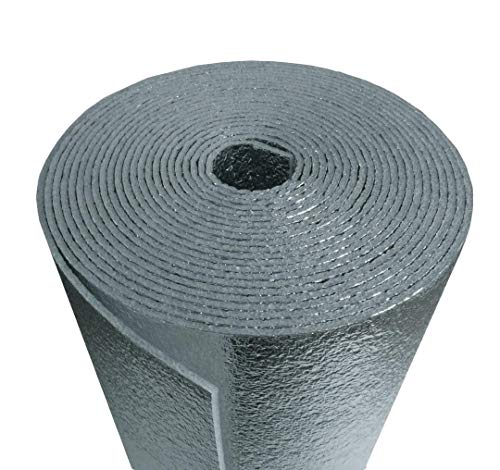
Although marketed for ducts, this reflective foam core insulation can be used in wall assemblies where air ducts are present or where a radiant barrier is desired. It offers a R-value around 15.62 to 21.10 depending on layering, with moisture-resistant and non-flammable properties. Its flexible form allows for shaping around irregular spaces in 2×4 wall cavities and adjacent framing.
SmartSHIELD Reflective Insulation (3mm)

This relatively thin reflective insulation provides a radiant barrier with a vapor barrier and sound barrier properties. Its compact thickness makes it suitable for narrow wall cavities or retrofit projects where space is at a premium, offering improved energy performance without significantly reducing interior room size.
SmartSHIELD 1.5mm Reflective Insulation (100 ft)

A thick, durable reflective insulation option with a foam core designed to reduce radiant energy transfer. It provides a balance of moisture resistance and energy efficiency for 2×4 wall assemblies, capable of reducing heating and cooling loads when installed in appropriate layers and wrapped with proper vapor barriers where required.
Buying Guide: Key Considerations For 2×4 Walls
- R-value and wall depth: 2×4 walls typically accommodate lower profile batts. Consider products that maximize insulation within cavity constraints without overfilling, which can hinder installation or reduce effectiveness.
- Moisture management: In climates with high humidity or exterior walls, moisture barriers help prevent condensation and mold. Kraft-faced batts and moisture-resistant reflective barriers are common choices.
- Radiant barrier needs: In hot climates or roofs with direct sun exposure, radiant barriers can significantly reduce cooling loads. Reflective foil products are particularly effective when installed with proper air gaps and ventilation.
- Air sealing synergy: Insulation alone does not seal leaks. Pair with vapor barriers, house wraps, or spray foams in gaps around outlets, wiring, and studs to optimize performance.
- Installation practicality: Consider product forms that fit standard 2×4 cavities and ease of cutting or fitting around outlets. Some reflective barriers add value with minimal thickness, while batts provide robust insulation in many scenarios.
- Code compliance and local climate: Check local building codes for minimum R-values in 2×4 walls and moisture control requirements. Climate zone dictates the most cost-effective and durable option.
- Long-term performance: Look for products with moisture resistance, fire ratings, and compatibility with existing framing. Durable facings and coatings improve longevity in exterior or semi-exposed locations.