The right primer is essential for adhesion, finish, and durability when painting plastics. This guide highlights five reliable primers from respected brands, optimized for airbrushing or spray application and suitable for a range of plastic surfaces—from miniatures and scale models to garden furniture. Each product is evaluated on coverage, drying time, adhesion, and ease of use to help you decide which primer best fits your project.
Summary of chosen products
| Product | Brand | Format | Finish | Best For |
|---|---|---|---|---|
| Vallejo Surface Primer Color — White | Vallejo | 60 ml bottle | Matte | Airbrushing and figurines |
| Rust-Oleum 209460 Plastic Primer Spray | Rust-Oleum | Spray can | Matt/ Durable | Plastic surfaces and tricky plastics |
| Tamiya Gray Fine Surface Primer L | TAMIYA | 180 ml spray can | Gray Matte | ABS & Styrene and metal parts |
| JENOLITE Plastic Primer Aerosol — White | JENOLITE | 400 ml | White | Hard plastics and exterior use |
| Polar All Surface Primer Matte White | Polar Specialist Coatings | 2 x 13.5 fl oz | Matte White | Multi-surface indoor/outdoor prep |
Below you’ll find five detailed product sections, each with a concise description, key features derived from the product details, and practical notes for optimal results on plastic surfaces.
Vallejo White Surface Primer For Models

Vallejo’s White Surface Primer is designed for airbrushing on models and figurines, delivering a matte finish and fast drying times. The primer emphasizes adhesion on prepared, degreased surfaces and is compatible with thinning and flow improvers for smoother coats. It’s part of a broader Vallejo primer range that is particularly popular among hobbyists and model makers for consistent film formation and ease of use. When priming, apply in light coats and allow each layer to dry before additional passes to avoid paint buildup.
Key features: acrylic formulation, fast drying, compatible with airbrushing gear, can be diluted with Vallejo thinner or flow improver, stands up to subsequent topcoats after a few hours of curing.
Rust-Oleum Plastic Primer Spray

Rust-Oleum’s Plastic Primer Spray is formulated for rapid, even coverage on hard-to-paint plastics. It bonds well with polypropylene, polystyrene, epoxy resins, PVC, fiberglass, and some 3D-printed filaments, making it a versatile choice for a variety of plastic projects. Following priming, you can topcoat with any Rust-Oleum finish for a durable, cohesive result. The spray format supports quick coverage of larger surfaces and is suitable for both indoor or semi-outdoor projects with proper ventilation.
Key features: fast bond to challenging plastics, durable finish, compatible with Rust-Oleum topcoats, ideal for diverse plastic substrates.
TAMIYA Gray Fine Surface Primer L

TAMIYA’s Gray Fine Surface Primer is a versatile choice for ABS and Styrene plastic model parts, and it’s also suitable for metal parts if needed. Gray primers are particularly beneficial when painting lighter colors over dark bases, helping to reveal underlayers and reduce the need for multiple coats. This spray primer is popular for model work due to its fine spray pattern and compatibility with a broad range of paints. For best results, apply evenly and avoid heavy coats that can obscure detail.
Key features: good suitability for ABS/Styrene, supports dark-to-light color transitions, suitable for metal parts, designed for model finishing precision.
JENOLITE Plastic Primer Aerosol — White

JENOLITE’s White Plastic Primer is a high-quality option designed for plastic surfaces, offering durable adhesion for topcoats both indoors and outdoors. Its formulation targets hard-to-paint plastics and provides a reliable base for garden furniture and other hard plastic items. The 400 ml can size supports broader coverage and a consistent spray pattern. For exterior projects, ensure good ventilation during application and allow adequate curing time before applying paint or sealants.
Key features: strong surface adhesion to plastics, indoor/outdoor use, suitable for hard-to-paint plastics, robust can size for extended sessions.
Polar All Surface Primer Matte White
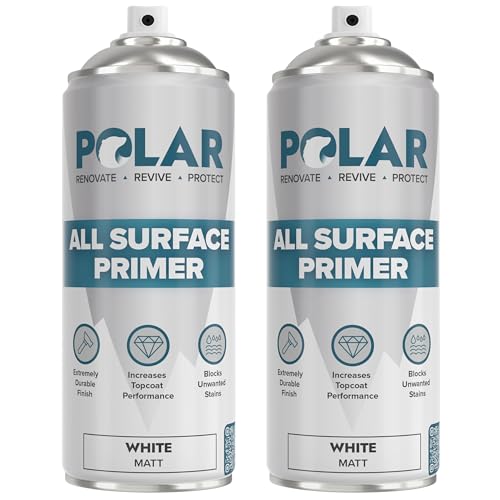
Polar Specialist Coatings offers the All Surface Primer as a high-build white primer suitable for multipurpose use on wood, metal, plastic, MDF, and more. Its gap-filling properties help smooth minor imperfections while providing a solid base for topcoats. The all-surface claim makes it a convenient option for mixed-material projects, such as furniture that combines wood and plastic components. When applying, use light, even passes to maximize adhesion and minimize coating buildup.
Key features: high-build formula, multi-surface compatibility, filler properties for minor imperfections, solid adhesion across varied substrates.
Buying Guide: key considerations for choosing plastic primers
- Substrate compatibility: Some plastics respond best to specific primers (ABS, Styrene, Polypropylene, PVC, etc.). Check the product notes for recommended surfaces.
- Finish and color: White and gray primers are common; gray primers can help with dark colors, while white primers work well for bright or light topcoats.
- Application method: Spray cans offer convenience for larger areas; airbrush-specific primers are ideal for fine detail on miniatures.
- Adhesion and coverage: High-adhesion formulations reduce the need for multiple coats. Consider primers with fillers for minor surface imperfections.
- Drying and handling: Look for fast-drying options if you plan to proceed to painting the same day, but allow sufficient cure time before topcoats.
- Dilution and compatibility: Some primers can be thinned with compatible thinners or flow improvers to optimize spray pattern and film formation.
- Indoor vs outdoor use: Exterior-ready primers should resist weathering, while interior primers focus on surface finish and adhesion for indoor projects.
- Brand ecosystem: If you already use a brand’s paints, primers from the same line can offer predictable color and finish compatibility.
- Ventilation and safety: With spray primers, ensure proper ventilation and use a mask or respirator as recommended by the product guidelines.
- Pricing and volume: Larger cans may offer better value for large projects; smaller cans may be preferable for hobbyists working on minis.