For homes with steps, thresholds, or uneven entrances, a portable ramp can restore independent access. This guide highlights five reliable options designed for doorways, stairs, curbs, and thresholds, prioritizing safety, portability, and load capacity. Each ramp is evaluated for non-slip surfaces, ease of use, and suitability for common home layouts. Use the buying guide at the end to compare features and choose the best ramp for your needs.
| Product | Brand | Capacity | Length | Notes |
|---|---|---|---|---|
| VNN Portable Wheelchair Ramp 4FT | VNN | 600 lbs | 4 ft | Double non-slip surface; folds for storage |
| FACHNUO 2 Feet Portable Ramp | FACHNUO TOOL | 800 lbs | 2 ft | Extended rails; visible safety features |
| TaiH Leo 8 Feet Ramp | TaiH Leo | 800 lbs | 8 ft | Multiple length options; sturdy hinge |
| Support Way 3FT Ramp | Support Way | Not stated | 3 ft | Quick-Lock; portable and compact |
| WHALEMOTOR 4FT Ramp | WHALEMOTOR | 600 lbs | 4 ft | Transition plates included |
VNN Portable Wheelchair Ramp 4FT

The VNN 4FT wheelchair ramp is designed for step heights of 4 to 12 inches. It features a double non-skid aluminum surface and folding design to increase friction and stability. A weight capacity of up to 600 lbs is stated, and included screws allow secure mounting on wooden platforms. Unfold and place to bridge door thresholds or home steps. Buyers should consult the guide for size suitability to avoid overloading and ensure proper use. Normal sinking during movement is noted, with rebound behavior expected after use.
FACHNUO 2 Feet Portable Wheelchair Ramp

FACHNUO’s 2-foot ramp provides up to 800 lbs capacity with a 24″ x 29.2″ unfolded size. It includes extended rails and reflective strips for enhanced visibility, plus a frosted non-slip surface. The hinge design supports stable use on home steps and doorways, with safety features at both ends to prevent falls. While compact, the ramp is intended for moderate rise heights and users should verify step height and length compatibility prior to purchase.
TaiH Leo 8 Feet Wheelchair Ramp

The TaiH Leo 8 ft ramp is designed to handle 8″ to 24″ step heights, with a total weight around 55 lbs. It includes a frosted surface for slip resistance and a safety hinge design. The ramp offers multiple length options and claims easy setup with a safety lock to prevent slipping when fixed to the ground. It suits homes needing longer access ramps for higher thresholds or vehicle loading scenarios, and supports up to 800 lbs.
Support Way 3FT Portable Ramp

Support Way offers a 3 ft portable ramp with quick-lock latches for fast setup and a foldable design for easy storage. It addresses 3 to 9 inch height gaps at doorways and thresholds, making it suitable for in-home and on-the-go use. Build features include rust-resistant hinges and raised side rails to reduce slips, with smooth top and bottom transition plates for compatibility with wheelchairs, walkers, scooters, and pets. No installation is required—unfold, lock, and use.
THDUGG 3FT Portable Wheelchair Ramp

THDUGG’s 3FT ramp supports 3″–9″ step heights with a maximum capacity of 800 lbs. It features a double non-slip design with a black frosted surface and rubber anti-slip pads on the top transition plate. The ramp is foldable and includes handles for carrying. The design emphasizes safety and stability, including reflective strips and side rails to minimize missteps, especially in dim lighting or outdoor use.
Gardhom 5FT Ramp For Home Steps

Gardhom’s 5 ft ramp provides up to 800 lbs capacity (600 lbs recommended) with a foldable design. It emphasizes double anti-slip protection through a black frosted surface and rubber anti-slip pads on the top transition plate. The unfolded size is 60″ x 29.2″ x 2″ with a folded footprint of 30″ x 14.5″ x 6.3″. The ramp’s weight is substantial at around 33 lbs, requiring consideration for storage and portability in smaller spaces.
Nuvium 4FT Portable Ramp With Handle
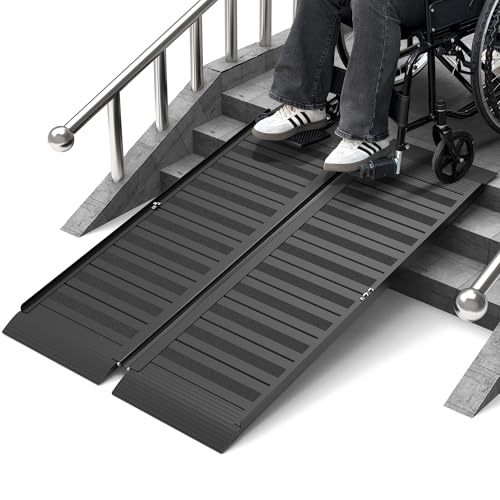
Nuvium’s 4 ft ramp is designed for doorways, thresholds, and steps with an 800 lb capacity. It includes protective baffles on both sides and extended guide rails to secure the ramp on the ground. The ramp surface features anti-slip strips plus rubber pads for additional grip. Its versatility supports manual wheelchairs, mobility scooters, walkers, trolleys, or even baby strollers, making it suitable for varied environments and users.
Buying Guide: Key Purchase Considerations
- Load capacity: Choose a ramp rated for at least the weight of the user and the equipment (wheelchairs, scooters, walkers). If possible, select a ramp with a higher tolerance to account for additional gear.
- Ramp length and rise: Longer ramps reduce slope and improve safety for higher steps. Verify the height difference at the entry to select an appropriate length (and note the product’s recommended height range).
- Surface and traction: Look for textured or frosted non-slip surfaces, and consider additional side rails or top/bottom transition plates to prevent slips and shifting.
- Portability and storage: Folding, hinged, or interlocking designs simplify transport. Check weight and folded dimensions to fit storage spaces and vehicle trunks.
- Installation: Some ramps require no installation, while others may include mounting hardware. Decide between quick-access options and permanent fixtures based on home use and placement needs.
- Durability and build: Aluminum ramps are lightweight and corrosion-resistant, but verify hinge quality, rail strength, and frame stability for long-term reliability.
- Intended use: Consider whether the ramp will be used primarily at home, in a vehicle, or both. For doorways and thresholds, ensure smooth transitions to minimize jostling.
- Safety features: Reflective strips for visibility, anti-slip surfaces, and side rails help prevent falls, particularly in low-light conditions.
When selecting a ramp, assess your doorway or threshold dimensions, the expected daily use, and any storage constraints. Comparing the five highlighted options can help identify ramps with the best balance of safety features, portability, and load capacity for typical home scenarios.