Finding a reliable, quiet, and energy-efficient portable air conditioner for a camper trailer can transform your RV trips. This guide highlights five top options designed for RVs, trailers, and similar mobile living spaces, with practical features like quiet operation, energy efficiency, and simple installation. Each pick is evaluated for cooling capacity, noise levels, and ease of use to help you compare performance across scenarios and climates.
Summary of chosen products
| Product | Brand | BTU / Heating | Key Benefit |
|---|---|---|---|
| Countrymod 12V DC RV Air Conditioner 10000 BTU | Countrymod | 10,000 BTU | Inverter design, energy efficiency |
| TOSOT 16000 BTU GO Cool RV Air Conditioner | TOSOT | 16,000 BTU cooling / 12,500 BTU heating | WiFi control, all-weather performance |
| Ivation 6,500 BTU Camper Air Conditioner | Ivation | 6,500 BTU | Over-the-sill installation, quiet operation |
| RV Air Conditioner, 12V 10000 BTU Rooftop | outequip | 10,000 BTU | Rooftop, low-profile, battery-powered option |
| Countrymod 11,000 BTU RV Air Conditioner | Countrymod | 11,000 BTU | Inverter design, efficient cooling |
Countrymod 12V DC RV Air Conditioner 10000 BTU

The Countrymod 10000 BTU RV air conditioner uses a 300–900W inverter design that enables rapid cooling with adjustable compressor speed. It emphasizes energy efficiency, claiming around 0.3 kWh per hour, which can extend battery life up to roughly ten hours. With a low noise profile of 45–55 decibels, it distributes cold air evenly to minimize direct blowing. This unit is suited for RVs, trailers, and similar small spaces where quiet, energy-smart cooling is essential, especially when off-grid or on battery power.
TOSOT 16000 BTU GO Cool RV Air Conditioner

The TOSOT GoCool 16,000 BTU camper AC unit is designed for larger RVs up to about 600 sq ft, with heating capacity of 12,500 BTU. It supports smart WiFi control via the Gree+ app, enabling remote management and monitoring. Its all-weather performance handles outdoor temperatures from 23°F to 115°F, with indoor control ranges keeping comfort consistent. This model is ideal for longer trips or areas with wider temperature swings and a need for hands-free operation.
Ivation 6,500 BTU Camper Air Conditioner
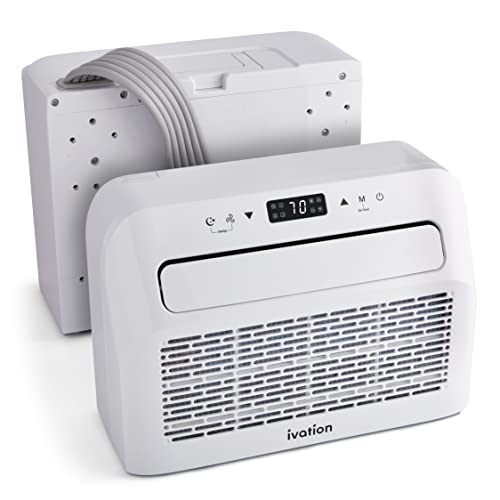
The Ivation 6,500 BTU unit is designed for RVs, campers, and vans, combining cooling, fan, and dehumidification. It uses a saddle-mounting window sill and shockproof dampers to reduce noise and vibration, promoting a peaceful interior. The split design allows the compressor portion to sit outside, reducing heat inside the living space. A large LED display and timer features support straightforward temperature control, sleep modes, and scheduling for energy-conscious operation.
RV Air Conditioner, 12V 10000 BTU Rooftop

This rooftop unit delivers 10,000 BTU cooling with a 4,500 BTU heater option for mild warmth, suitable for small to mid-sized RVs and trailers. It emphasizes durability with UV-stabilized ABS housing, EPDM foam gaskets, and a zinc-coated condenser to withstand varied weather. The unit is designed for mobile use, offering a compact profile and reliable cooling for off-grid or campground environments, while maintaining ease of installation and maintenance.
Countrymod 11,000 BTU RV Air Conditioner

The Countrymod 11,000 BTU model uses an inverter-based design to optimize cooling output with variable-speed operation. It has similar energy-saving traits to the 10,000 BTU variant, consuming around 0.3 kWh per hour and offering extended battery life. The unit is engineered for RVs and trailers, delivering quiet cooling with evenly distributed cold air and a focus on comfort across a range of RV layouts and occupancy levels.
Buying Guide: Key Purchase Considerations
- Rooftop vs. window vs. through-wall: Rooftop units save interior space but require roof installation; window or through-wall designs may ease installation in smaller trailers but can impact window functionality and exterior clearance.
- BTU rating and space fit: Match cooling capacity to your RV size and insulation. Overrating can waste energy; under-rating results in inadequate cooling during peak heat.
- Energy efficiency: Look for inverter or variable-speed compressors and low hourly power consumption (ideally well under 1.5 kWh per hour). This extends battery life when off-grid.
- Noise levels: Target units in the 40–55 dB range for quiet operation, especially if you sleep near the unit. Noise reductions often come with proper mounting and vibration dampening.
- Smart controls and app integration: WiFi or app-enabled units offer remote temperature adjustments, timers, and monitoring, which can be convenient for campsite setup and energy management.
- Heat pump capability: For all-season use, consider units with heat pumps or auxiliary heating to maintain comfort during shoulder seasons.
- Installation and maintenance: Check for compatibility with your RV’s electrical system (12V or 120V), required mounting space, and the availability of replacement parts or service support.
- Power source compatibility: 12V DC options are available for off-grid use, but most higher BTU models require AC power; plan battery capacity and generator use accordingly.
- Durability and weather resistance: Units designed with UV-resistant housings and protective gaskets withstand outdoor camping conditions and road trips.
- Warranty and after-sales support: A solid warranty and accessible support can be crucial for RV equipment exposed to travel wear and remote camping.
When selecting a portable air conditioner for a camper trailer, prioritize a balance of cooling needs, energy efficiency, and the practicality of installation. For extended trips in warm climates or larger RVs, higher BTU units with heat pump options and smart controls offer the best versatility. For smaller spaces or off-grid adventures, inverter-driven, 10,000 BTU models with battery-friendly consumption can be a smarter fit.