When choosing a plastic adhesive or solvent weld, you need products that deliver strong bonds, fast results, and compatibility with common plastics. This guide highlights top plastic-bonder and epoxy options, focusing on quick-setting formulas, syringe delivery for precise application, and durable cures. Each product section provides key features and practical tips to help you pick the right adhesive for repairs, bumper work, or model building. A quick comparison table below summarizes the featured items to jumpstart your decision.
| Product | Type | Application |
|---|---|---|
| J-B Weld 50139 Plastic Bonder | Syringe Adhesive | Thermoplastics, coated metals, composites |
| J-B Weld 50133 Plastic Bonder Syringe | Syringe Adhesive | DIY plastic repairs, dents, bumper work |
| J-B Weld 33120H SuperWeld | Cyanoacrylate Glue | Instant bonds on tough-to-bond surfaces |
| Plastruct Plastic Weld | Solvent Cement | Plastic model and hobby projects |
| J-B Weld ClearWeld | Clear Epoxy Syringe | Clear bonds on metal, tile, plastics, glass |
J-B Weld Plastic Bonder Body Panel Adhesive and Gap Filler

The J-B Weld Plasticbonder is a quick-set, two-part urethane adhesive designed to form strong, lasting bonds across a range of plastics and composites. The 1:1 mixing ratio simplifies preparation, and the formula cures to a hard, durable bond with a tensile strength around 3770 psi. With a set time of about 15 minutes and a handling time suitable for sanding after 30 minutes, it’s well-suited for body panel repairs, bumper gaps, and dent filling on thermoplastics and coated surfaces. The adhesive’s versatility extends to carbon fiber composites and even concrete in some mixed-material projects.
J-B Weld Plastic Bonder Structural Adhesive Syringe
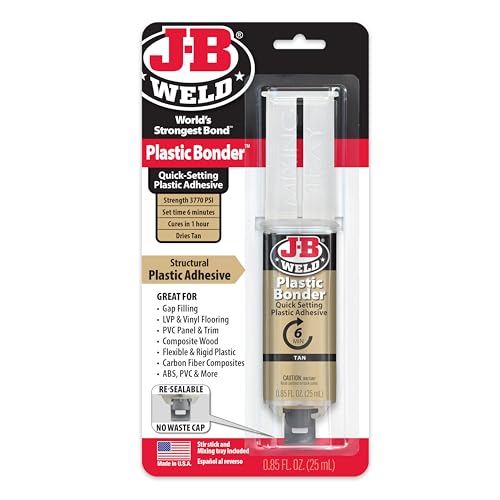
This tan-plasticbonder syringe version emphasizes quick setting and a reliable 1:1 mix. It’s designed for DIY repairs, dent filling, bumper work, and other plastic bonding tasks. The syringe packaging helps prevent drying out and leakage, enabling multiple uses. After mixing, expect a 15-minute set and a 30-hour cure, with a tensile strength of about 3770 psi. The product is tailored for long-lasting bonds on various plastics and is especially useful where a durable, gap-filling repair is needed.
J-B Weld 33120H SuperWeld Glue

SuperWeld is a cyanoacrylate glue formulated for rapid bonding on multiple surfaces, including challenging plastics. It’s ideal for quick fixes where an instant bond is required and can be used on items that professionals typically repair, such as models, fixtures, or small automotive plastics. The applicator tip enables pinpoint application, reducing mess and enabling precise spots. It bonds in seconds, making it a go-to for fast, temporary-to-permanent repairs depending on the plastics involved.
Plastruct Plastic Weld with Applicator
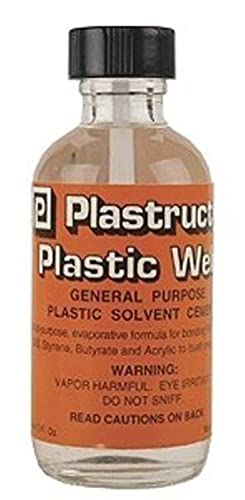
Plastruct Plastic Weld is a solvent cement specifically designed for plastic-to-plastic bonds, with an applicator for precise placement. It’s particularly well-suited to plastic model builders and hobbyists who require immediate bonding and quick tackiness. The 2-ounce bottle provides a compact, user-friendly option for frequent use, delivering a tacky surface quickly and enabling strong, watertight bonds in compatible plastics. It’s best used on clean, dry surfaces for best results and clean joints.
J-B Weld ClearWeld 5 Minute Set Epoxy Syringe

ClearWeld is a clear, quick-setting two-part epoxy designed for surfaces including metal, tile, most plastics, ceramic, glass, and wood. The syringe packaging ensures a precise 1:1 mix and a user-friendly resealable cap to prevent drying out. It sets in about 5 minutes and cures in roughly an hour, producing a clear bond suitable for visually sensitive repairs. With a tensile strength around 3900 psi, it’s a solid choice for projects where a transparent bond is important and the joint remains structurally strong.
Buying Guide: Key Purchase Considerations
What to look for in plastic bonding adhesives
Adhesive type matters. Syringe-based two-part systems (urethane or epoxy) are excellent for gap filling and durable bonds on a variety of plastics, including rigid and coated plastics. For quick, spot bonding, cyanoacrylate glues work well, but they can become brittle in high-stress applications. Solvent cements like Plastic Weld are ideal for model builders who want a strong, seamless joint but require compatible plastics and careful handling.
Setting time and cure profile
Consider the project timeline. Quick-set formulas (5–15 minutes) allow for rapid prototyping and immediate handling, but may require longer cure depending on material and thickness. Syringe packaging helps with neat mixing and reduces waste. For structural bonds, plan for a longer cure period (several hours to 24 hours) to achieve maximum strength.
Bond visibility and aesthetics
Clear or tan formulations affect the final look. ClearWeld provides a transparent bond ideal for visible joints, while plastic bonder in tan or black can blend with darker plastics or automotive panels. Choose based on whether joints will be seen or hidden by paint, trim, or decals.
Material compatibility and applications
Match the adhesive to the plastics you’re working with. Thermoplastics, coatings, carbon fiber composites, and metals may react differently to urethane, epoxy, or cyanoacrylate glues. For bumper repairs or dent filling, a high-strength urethane system is often preferred. For small, precise repairs, a fast-setting cyanoacrylate or epoxy syringe can be advantageous.
Application and handling considerations
Ease of use matters in real-world repairs. Syringes reduce waste and improve mix accuracy. Look for a resealable cap, tacky surfaces that allow alignment before full cure, and a sealing method that minimizes air exposure. Proper ventilation and protective gear are advisable when working with solvents and fast-setting adhesives.
Durability and environmental resistance
Assess tensile strength and cure conditions. High PSI values indicate robust bonds, but environmental exposure (heat, moisture, UV) can influence long-term performance. For automotive or exterior plastics, choose products tested for outdoor durability and weather resistance.
Safety and shelf life
Always follow label directions. Some formulations require curing times in specific temperatures and can emit fumes during curing. Keep adhesives away from children and store in a cool, dry place to maintain viscosity and efficacy over time.