On-demand electric water heaters offer instant hot water without a bulky tank. In this guide, five top options blend compact design, energy efficiency, and reliable performance for American homes. Each product below supports point-of-use needs or whole-house setups, helping you choose the right size and features for your kitchen, bathroom, or utility room.
Summary Table Of Chosen Products
| Product | Brand | Key Feature |
|---|---|---|
| Rheem 6.5kW 240V Point Of Use | Rheem | Compact, continuous flow, precise temperature control |
| EcoSmart ECO 11 | EcoSmart | Self-modulating, space-saving, very efficient |
| Rheem 18kW 240V Tankless | Rheem | Higher flow, durable copper elements, digital control |
| Rheem 11kW 240V Tankless | Rheem | Self-modulating, compact, straightforward temp control |
| 14kW SIVUATEK 240V | SIVUATEK | High power, two-use-point capable, ETL certified |
Rheem 6.5kW Point Of Use Electric Water Heater

Rheem’s 6.5kW point-of-use unit is designed for under-sink or localized installation. Its continuous on-demand hot water capability helps maintain a steady output when you need it, with temperature monitoring and controlled flow to ensure performance remains within about one degree of the set point. The compact size means a 90% reduction in footprint compared with traditional tanks, which is ideal for tight spaces or retrofits.
Tankless Electric Under-Sink Water Heater With Digital Display

This 110V, 3000W unit provides instant hot water at the point of use. A digital display allows quick temperature adjustments, and the device is designed to raise water temperature rapidly to meet basic kitchen or bathroom hot-water needs. The compact form is suitable for under-sink installations and aims to minimize wait times for hot water.
Rheem 18kW 240V Tankless Electric Water Heater
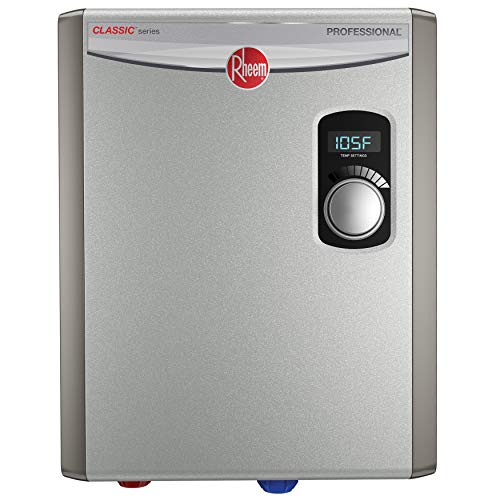
This higher-capacity Rheem model features external digital thermostatic control with LED display and self-modulation to adapt power delivery to demand. With durable copper immersion elements and a field-serviceable design, it supports flows up to about 4.4 GPM, making it suitable for larger households or simultaneous hot-water needs in multiple fixtures.
Rheem 11kW 240V Tankless Electric Water Heater
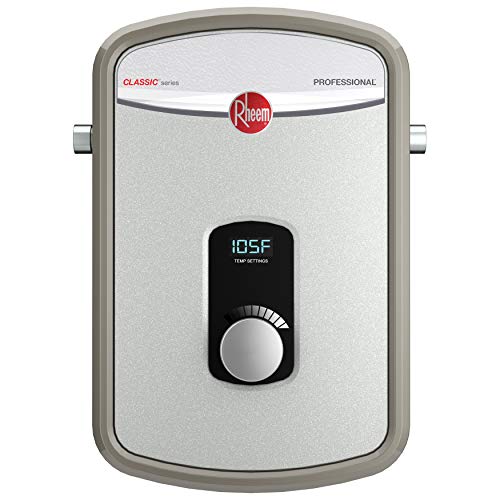
With an ON/OFF dial and adjustable digital temperature display, this model provides straightforward operation and self-modulating power control. It supports flows up to around 2.68 GPM, balancing energy efficiency with practical hot-water delivery for smaller homes or limited-use scenarios.
14kW Tankless Electric Water Heater By SIVUATEK
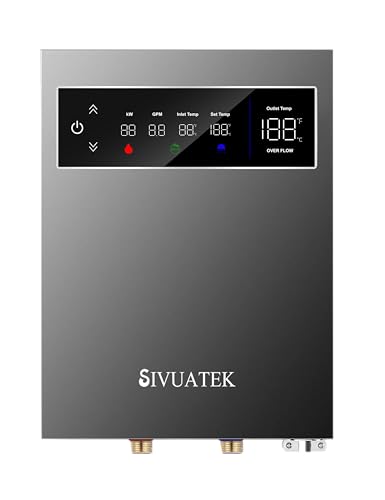
Designed for higher-demand scenarios, this 14kW unit provides strong on-demand hot water for 1–2 fixtures. It emphasizes energy efficiency with self-modulating technology and offers practical installation notes, including a recommended 60-amp circuit and standard 1/2″ NPT connections. The unit supports continuous hot water with fewer temperature fluctuations when multiple taps are in use.
Buying Guide: Key Purchase Considerations
- Hot-water demand and flow rate: Determine the maximum gallons per minute (GPM) you need. Smaller point-of-use units work well for a sink, while higher-wattage models are better for multiple fixtures or whole-home use.
- Electrical capacity: Check available circuits and amperage. 240V models range from 6.5kW to 18kW or higher; ensure your electrical panel can support the required breaker’s size and wiring.
- Self-modulating technology: Many models use self-modulation to adjust power based on demand, improving energy efficiency and reducing standby losses.
- Installation space: Tankless heaters are generally compact, but point-of-use units are particularly space-saving. Consider where you’ll mount or install the unit (under-sink, wall-mount, etc.).
- Temperature control: Look for models with precise digital displays or thermostatic controls. Temperature accuracy within a degree or two helps prevent scalding and ensures comfort.
- Safety features: Seek units with protective features like dry-fire protection, leakage protection, and automatic shutoff in overheating states. IP ratings (like IPX4) indicate splash resistance in some locations.
- Maintenance and serviceability: Field-serviceable components and clear installation instructions can lower long-term upkeep costs and downtime.
- Material quality: Copper elements tend to be durable and efficient for higher-flow setups; consider brand reliability and warranty terms for long-term use.
- Space constraints and location: For bathrooms or kitchens with limited space, point-of-use devices offer targeted hot water without replacing a whole-home heater.
- Energy efficiency expectations: Self-modulating units generally save energy by reducing heat output when hot water isn’t in demand, which can lower utility bills over time.