Choosing the right oil-based primer for exterior wood helps seal tannins, block stains, and improve adhesion for topcoats. The following five products are among the most relevant options for exterior wood projects, offering strong hiding power, tannin blocking, and weather resistance. This guide compares their key features to help you select the best primer for decks, siding, fencing, and other outdoor wood surfaces.
| Product | Brand | Highlights |
|---|---|---|
| Rust-Oleum 3554 Zinsser High Hide Cover Stain Primer and Sealer | Zinsser | High-hiding oil-based formula; exterior/Interior use; blocks tannin bleed; dries 35 minutes |
| Zinsser 3608 Cover Stain Oil Base Primer Spray | Zinsser | Spray primer; great adhesion; blocks stains; no sanding required |
| Zinsser 03504 Cover-Stain Oil-Based Stain Blocker | Zinsser | Oil-based stain blocker; interior/exterior; adds extra shine |
| Do it Best Exterior Oil-Based Wood Primer, EXT ALKYD WOOD PRIMER | Unknown | Exterior alkyd wood primer; designed for outdoor timber |
| Rust-Oleum Zinsser 3954 Odorless Oil-Base Stain Blocker Primer | Zinsser | Low-VOC; odorless; interior use; blocks stains; dries quickly |
Rust-Oleum 3554 Zinsser High Hide Cover Stain Primer and Sealer

Product features indicate versatile use for exterior and interior surfaces, including previously painted wood. The High Hide formula offers strong stain blocking and tannin sealant properties, aimed at exterior wood to prevent bleed-through. It dries to the touch in roughly 35 minutes and covers up to 100 square feet per can, making it a solid option for medium projects. The oil-based composition typically provides durability and improved topcoat adhesion on outdoor wood.
Zinsser 3608 Cover Stain Oil Base Primer Spray

This oil-based spray primer delivers strong hiding power suitable for indoor and outdoor projects. It seals, blocks stains, and improves adhesion with minimal surface prep, and it’s designed to reduce or eliminate sanding. The spray format can be advantageous for intricate exterior wood details and tight corners, though coverage per can is typically lower than traditional quarts. It’s particularly useful when tannin bleed or deep colors threaten the finish.
qt Zinsser 03504 White Zinsser, Cover-Stain Oil-Based Stain Blocker
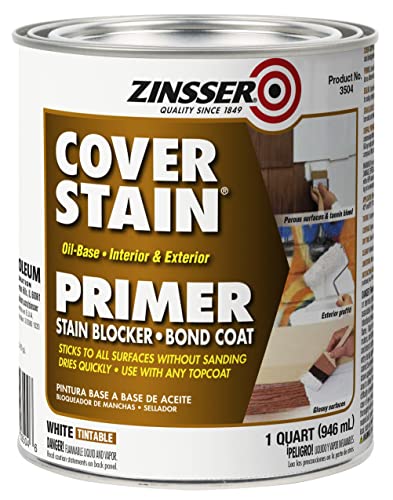
This quart-size oil-based stain blocker is designed to seal stains and improve topcoat adhesion on a variety of surfaces. It claims added shine to the final finish and is manufactured in the United States. Suitable for exterior wood when tannin bleed or heavy staining is a concern, it provides a solid base for further coats without extensive sanding. The oil base often yields better penetration into wood pores than some water-based primers.
Do it Best Exterior Oil-Based Wood Primer, EXT ALKYD WOOD PRIMER

This exterior oil-based wood primer is marketed specifically for outdoor timber surfaces. Its alkyd composition aims to provide robust adhesion, tannin blocking, and a durable base for exterior paints or sealers. Exterior primers like this are often chosen for siding, fences, and decks where weather exposure and resinous woods demand strong sealing properties and consistent film formation.
Rust-Oleum Zinsser 3954 Odorless Oil-Base Stain Blocker Primer

Designed for interior use on wood, drywall, plaster, concrete, and masonry, this odorless oil-based primer is formulated as a low-VOC option. While commonly used indoors, its stain-blocking efficiency can be beneficial for exterior wood projects where odor considerations and fast-drying times are important. It dries to the touch in about 30 minutes and covers up to 100 square feet per quart. For exterior corners or enclosed areas, odor management is a notable advantage.
Buying Guide: Key Purchase Considerations
- Surface compatibility: Exterior wood surfaces vary from weathered siding to fresh timber. Look for primers labeled for exterior use and one that penetrates and seals wood pores to reduce tannin bleed.
- Blocking power: Tannin bleed, smoke, or water stains may require a high-hide formula. Oil-based primers generally offer stronger stain blocking and adhesion on bare or previously stained wood compared with water-based options.
- VOC and odor: For indoor applications or areas with limited ventilation, choose low-VOC or odorless oil-based primers. Some primers state odor reduction benefits clearly, which can be important in occupied spaces or near living areas.
- Dry time and recoat window: Short dry times accelerate project progress. Check the manufacturer’s guidance for recoat intervals to avoid film incompatibilities when applying multiple coats.
- Finish and topcoat compatibility: Oil-based primers typically require oil- or solvent-based finishes. If you plan to use water-based topcoats, look for primers designed for such compatibility or consider a hybrid approach.
- Application method: Spray formats offer convenience for detailed exterior wood, but traditional quarts or gallons may provide better coverage per cost for large surfaces. Choose based on project size and tool preference.
- Drying and curing profiles: Exterior weather exposure means faster curing can help protect wood sooner. Consider primers that dry quickly but still cure to form a durable film under typical climate conditions.
- Environmental and health considerations: For indoor use or in occupied spaces, odorless or low-VOC options reduce exposure. Always read safety data for handling and ventilation requirements.
When selecting an oil-based exterior primer, assess the project scope, wood type, and climate. For tannin-heavy woods, seek products specifically noted for tannin blocking and high hiding power. For intricate exterior trim, consider spray primers for efficient coverage, while traditional cans can be more economical for larger flat surfaces. The five primers listed above offer a range of formats and strengths to address most exterior wood priming needs without sacrificing performance or durability.