Choosing non-slip flooring and floor-protection mats for hospital settings is essential for patient safety and caregiver efficiency. This article highlights top rated non-slip floor solutions designed to reduce bedside injuries, minimize tripping hazards, and support easy movement of beds, wheelchairs, and medical equipment. Below you’ll find five vetted products with practical features, and a buyer’s guide to help facilities compare options.
| Product | Brand | Key Benefit |
|---|---|---|
| OMECAL 70″x24″x1/2″ | OMECAL | High absorption, anti-slip bottom, beveled edges to prevent trips |
| ProHeal Fall Mat Brown | ProHeal | Low profile, taper edge for equipment access, anti-fatigue comfort |
| ProHeal Fall Mat Grey | ProHeal | Low profile design, easy equipment access, caregiver comfort |
| ProHeal Fall Mat Maroon | ProHeal | Elegant design, anti-fatigue features, secure placement |
| Made Medical 73″ x 24″ | Made Medical | Beveled edges, high impact foam, anti-slip top and bottom |
The products above are presented for hospital and eldercare environments where fall prevention and caregiver support are priorities. The selections emphasize beveled edges, anti-slip surfaces, and materials designed to cushion impact while remaining stable on a variety of floor types. Consider the table as a quick reference when evaluating options for patient rooms, hallways, or caregiver stations.
OMECAL Bedside Safety Floor Mat

The OMECAL floor mat is designed to reduce bedside falling risks with a comfort NBR foam core that provides maximum absorption and rebound, helping to cushion falls and minimize impact. Its anti-slip bottom netting helps keep the mat securely in place, and beveled edges facilitate smooth wheel transitions for beds, tables, and equipment. The high-quality compressed foam is engineered to resist compression over time, supporting long-term use in hospital rooms and eldercare facilities.
ProHeal Fall Mat Brown – Bedside Safety

The ProHeal Brown fall mat focuses on elderly monitoring and risk reduction for bed exits. Its low-profile hospital market design makes equipment access easier while reducing tripping around the perimeter rails. Anti-fatigue features provide additional care for caregivers, helping to reduce fatigue during long shifts. The mat’s elegant appearance helps it blend with patient room aesthetics while maintaining practical performance.
ProHeal Fall Mat Grey – Non-Slip Bedside Pad

The Grey ProHeal bed mat emphasizes elderly monitoring, with a tapered edge to ease equipment access and reduce stumbling near rails. The design prioritizes a balance between aesthetic appeal and safety. Like its brown counterpart, it is built with anti-fatigue considerations to support caregivers during routine checks and patient care activities.
ProHeal Fall Mat Maroon – Bedside Safety Pad
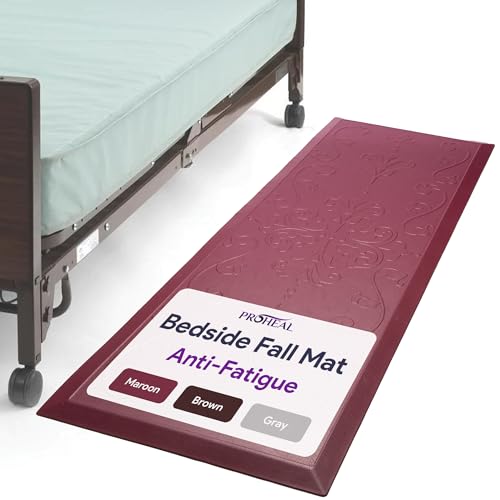
The Maroon edition maintains the ProHeal line’s emphasis on elderly monitoring and a low profile design. Its tapered edges ease access for equipment, while the anti-fatigue attributes provide care for staff during shifts. The color option can assist with room styling while maintaining clinical safety standards.
Made Medical 73″ X 24″ Bedside Non-Slip Mat

Made Medical’s 73″ x 24″ bed-side mat is designed for comprehensive bedside coverage. It features beveled edges to reduce tripping hazards and ensure smooth transitions for wheelchairs and walkers. The high-impact foam core absorbs impact while maintaining firmness, supporting longer-term use in busy hospital environments where frequent patient movement occurs.
Buying Guide: Key Purchase Considerations
- Material and safety: Look for anti-slip surfaces with a non-skid bottom and beveled edges to minimize trips. Anti-fatigue cores can reduce caregiver fatigue during long shifts.
- Size and fit: Choose a size that matches typical bedside dimensions and accommodates wheelchairs, beds, and equipment. Beveled or tapered edges improve access and reduce snagging.
- Durability and maintenance: Hospitals require durable materials that resist compression and are easy to clean. Consider materials that withstand frequent cleaning and disinfection cycles.
- Placement and stability: Mats should stay in place on different floor types (tile, vinyl, or carpet). Anti-slip bottoms and securing nets help prevent movement.
- Design and aesthetics: Subtle colors and clean lines can blend with patient rooms while still meeting safety standards. Availability of multiple color options can aid in room coordination.
- Caregiver support: Anti-fatigue properties and cushioning can reduce fatigue for staff during long rounds and transfers, contributing to safer patient handling.
- Maintenance protocol: Check whether mats are machine washable or require spot cleaning, and confirm recommended cleaning agents compatible with healthcare environments.
- Warranty and compliance: Verify manufacturer warranties and ensure compliance with hospital safety standards and infection-control guidelines.
- Cost of ownership: Factor in life-span, replacement cycles, and any impact on room turnover times when evaluating value over price.
Across hospital settings, selecting non-slip flooring and protective mats involves balancing safety, durability, care workflows, and aesthetics. The options above provide varying combinations of edge design, foam density, and grip features to support patient safety and caregiver efficiency in clinical environments.