Selecting the right moisture barrier for concrete is essential to protect coatings, flooring, and structural integrity. The following picks cover penetrating sealers, moisture barriers, and epoxy systems suitable for basements, garages, driveways, and industrial floors. Each product is evaluated for vapor control, surface preparation, and compatibility with coatings or flooring systems. This guide helps compare performance, application methods, and typical use cases across residential, commercial, and industrial projects.
| Product | Brand | Type | Key Benefit |
|---|---|---|---|
| Rust-Oleum 301239 Concrete Moisture Stop Fortifying Sealer | Rust-Oleum | Penetrating Sealer | Seals concrete and prevents moisture before coating |
| Hydro Prime – Moisture Barrier (1 Gal) | Slip Doctors | Moisture Barrier Primer | Blocks high moisture vapor transmission; improves coating adhesion |
| MPC-160 Epoxy Moisture Vapor Barrier | Master Protective Coatings | 2-Component Epoxy | Vapor barrier for industrial/commercial floors with ASTM F3010 compliance |
| RadonSeal Plus Deep-Penetrating | RadonSeal | Penetrating Sealer | Reduces moisture and radon; strengthens concrete |
| Vapor-Tek 440 Epoxy Moisture Barrier | Ghostshield | Epoxy Moisture Barrier | Low-permeance epoxy shield, suitable as primer or standalone |
The table above highlights five concrete moisture barriers with varied application styles—from penetrating sealers to full epoxy systems. The choice depends on whether you need a quick-drying sealer, a high-performance epoxy barrier, or a primer to improve coating adhesion in high-moisture environments. The following sections provide detailed product insights, usage notes, and practical considerations.
Rust-Oleum Concrete Moisture Stop Fortifying Sealer
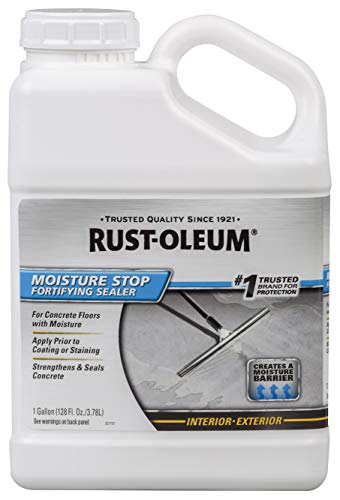
Rust-Oleum’s 301239 is a penetrating sealer designed to seal concrete floors and block moisture from seeping to surfaces that will later receive coatings. The formula bonds and seals without altering the surface appearance, preserving the floor’s look. Application requires allowing 45 minutes for penetration, and coverage reaches up to 200 sq. ft. per gallon. This product is well-suited for residential basements, garages, and interior concrete that will be coated or painted. It emphasizes moisture prevention while maintaining a uniform surface finish.
Hydro Prime Moisture Barrier (1 Gal)

Hydro Prime by Slip Doctors serves as a moisture barrier and penetrating sealer for concrete and masonry floors. It is designed to block high moisture vapor transmission, reducing the risk of coating failure. The product is described as an ideal primer for high-traffic areas, including pickleball and basketball courts, driveways, walkways, and patios, both indoor and outdoor. It also improves coating adhesion, preparing surfaces for paints, non-slip coatings, and epoxies for stronger, longer-lasting results. Suitable for projects needing robust vapor control and enhanced adhesion before finishing layers.
Hydro Prime 5 Gallon Moisture Barrier

This larger-volume version of Hydro Prime offers the same moisture-blocking and adhesion-boosting properties for bigger projects. Designed for high-traffic spaces, it remains suitable for indoor or outdoor concrete surfaces where coatings or toppings will be applied. The 5-gallon option is advantageous for contractors handling multiple rooms, large garages, or commercial floors, providing a cost-effective quantity with the same performance characteristics as the 1-gallon variant.
MPC-160 Epoxy Moisture Vapor Barrier
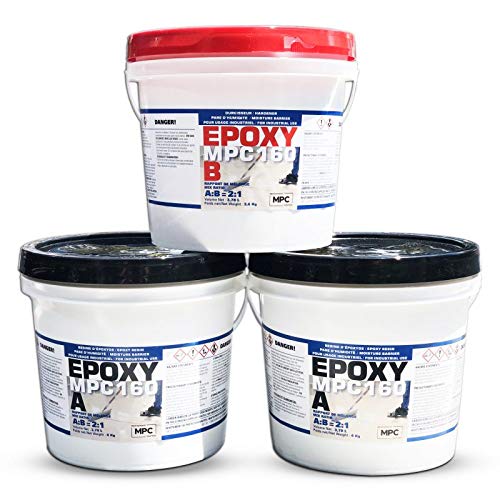
The MPC-160 is a 2-component epoxy moisture barrier designed for concrete floors in industrial and commercial contexts. It provides a moisture-controlled environment to support subsequent coatings. The system exceeds ASTM F3010 product requirements for vapor permeance when applied at 18 mils, delivering reliable protection against vapor emissions. It is described as durable for damp or high-humidity areas and capable of withstanding moisture transmission up to 25 lbs per 24 hours per 1,000 sq. ft. This product is suitable where long-term barrier performance and compatibility with epoxy or other topcoats are priorities.
RadonSeal Plus Deep-Penetrating Sealant

RadonSeal Plus is a deep-penetrating, water-based sealer with zero VOCs designed to reduce basement moisture and radon gas while strengthening concrete. It penetrates up to several inches, sealing internal pores and capillaries to limit moisture seepage while allowing concrete to dry naturally. The formula is suited for both indoor and outdoor concrete, including basement floors and foundation walls. It is easy to apply with common tools such as pump sprayers or rollers, making it a versatile option for DIY projects and professional jobs alike.
Vapor-Tek 440-100% Solids Epoxy Barrier

Vapor-Tek 440 is a 100% solids epoxy moisture barrier designed for basement, garage, and warehouse floors. It can function as a primer for epoxy systems or stand alone as a moisture barrier coating. The product helps protect moisture-sensitive floor coverings and provides a single-coat application option in some configurations. This epoxy system is suitable for environments requiring strong vapor control with excellent chemical and abrasion resistance. Proper surface preparation and ventilation are advised during application.
Buying Guide: Key Considerations for Concrete Moisture Barriers
Choosing the right moisture barrier depends on several factors, including moisture levels, surface condition, future flooring plans, and environmental conditions. Consider the following perspectives to match a product with your project needs:
- Penetration vs. film-forming: Penetrating sealers, like RadonSeal, rely on the concrete matrix itself and are often chosen when the surface should remain visually unchanged. Film-forming barriers, such as epoxies like MPC-160 or Vapor-Tek 440, provide robust vapor resistance and are ideal where a coating system will be applied atop the barrier.
- Vapor transmission rates: For high-moisture areas (basements, washrooms, or outdoor slabs), select products with high vapor barrier performance (lower permeance values). Epoxy systems frequently offer superior low-permeance performance compared to basic penetrating sealers.
- Surface preparation and curing: Some products require clean, dry surfaces and specific cure times before applying subsequent coatings. Others allow for rapid progression from sealer to finish. Plan for drying times to minimize coating failures and ensure bonding.
- Environmental and safety considerations: Look for low-VOC or zero-VOC formulations for indoor projects. Water-based systems are generally safer and easier to clean up than solvent-based alternatives.
- Project scale and maintenance: Large commercial jobs may benefit from bulk options (e.g., 5-gallon pails) for cost and consistency. For residential projects, smaller quantities may be sufficient and easier to handle.
- Compatibility with finishes: If you plan to apply paints, epoxies, or non-slip coatings, choose primers or moisture barriers that advertise improved adhesion and compatibility with those finishes.
- Durability under traffic and chemicals: Industrial and garage floors may encounter chemicals, salts, and constant traffic. Epoxy barriers like MPC-160 and Vapor-Tek offer enhanced durability for such environments.
In practice, for basements or interior spaces where coatings will be applied, a penetrating sealer or a moisture-blocking primer may be suitable as a first step. For garages, warehouses, or areas subject to higher moisture loads, two-step systems—penetrating sealer followed by an epoxy barrier or primer—often deliver the strongest long-term performance. Always follow manufacturer instructions for surface prep, application conditions, and cure times to maximize effectiveness.