Choosing the right mesh and supporting accessories can significantly impact the strength and longevity of a concrete slab. This guide highlights practical mesh chairs for rebar and versatile grinding and calibration tools that help prepare and finish concrete surfaces. Each option is evaluated for compatibility with common slab projects, ease of use, and overall value. The selections below are suitable for residential, commercial, and industrial applications.
| Product | Brand | Key Use |
|---|---|---|
| Mesh-Ups Lotel Concrete Reinforcing Chairs, 1-1/2″ | Mesh-Ups | Chairs for #6, #8, #10 rebar; 1-1/2″ height |
| Lotel Mesh-Ups Concrete Reinforcing Chairs, 2″ | Mesh-Ups | Chairs for #6, #8, #10 rebar; 2″ height |
| Lotel Mesh-Ups Concrete Reinforcing Chairs, 3″ | Mesh-Ups | Chairs for #6, #8, #10 rebar; 3″ height |
| 7 Inch Swirl Diamond Grinding Cup Wheel | KLUD | Grinding cup wheel for concrete/masonry; 12 segments |
| 14″ Diamond Bridge Saw & Milling Wheel | Brolangt | Bridge saw bed leveling, slab calibration, and back texturing |
Mesh-Ups 1-1/2 Inch Reinforcing Chairs

These Mesh-Ups Lotel chairs are designed for standard #6, #8, and #10 gauge rebar and have a 1-1/2″ height suited for moderate slab depths. The package includes 150 chairs, offering a cost-effective solution for typical residential and small commercial slabs. The chairs’ domestic production emphasizes straightforward installation and stable supporting spacing, helping to maintain rebar position during concrete pours. They are compatible with common reinforcement practices, ensuring uniform concrete coverage around the steel to resist shear and crack propagation.
Mesh-Ups 2 Inch Reinforcing Chairs

The 2″ Mesh-Ups chairs provide a taller support profile for thicker slabs or projects requiring greater clearance between the bottom surface and the rebar layer. With a 250-unit count, these chairs are well-suited for larger pours typical of multi-unit buildings or commercial slabs. The product is designated for domestic manufacture, which can influence availability and lead times. The 2″ height helps maintain proper cover and spacing, reducing the risk of concrete exposure to reinforcement and helping meet code-required clearances.
Mesh-Ups 3 Inch Reinforcing Chairs
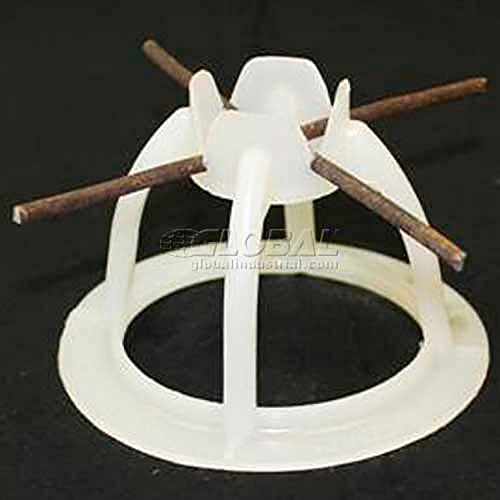
The 3″ version of the Mesh-Ups chairs offers the highest clearance among the three sizes listed, making it suitable for thick slabs or for installations where more space is needed below the rebar. With 200 chairs per package, this option aligns with mid-to-large scale projects, including commercial floors and industrial slabs. The chairs are designed to securely hold rebar in place during pouring, maintaining structural integrity and concrete coverage to support long-term durability.
KLUD 7 Inch Diamond Grinding Cup Wheel

The KLUD 12-segment cup wheel features a green design and top-grade diamond powder for aggressive material removal on concrete and masonry surfaces. The 7-inch size is a common fit for angle grinders used on small to medium slabs or patchwork tasks. This cup wheel excels in rapid material removal while maintaining control and reducing gouging when preparing surfaces for coatings, overlays, or calibration work. The 5/8-11 thread standard fits many grinder models, ensuring broad compatibility.
Brolangt 14-Inch Diamond Bridge Saw Milling Wheel

This 14″ diamond wheel is designed for bridge saw beds and milling/calibration tasks rather than cutting. It supports slab leveling, back texturing, and surface finishing, with a silent core concept to reduce vibration during wet use. The dual-bore sizing (50/60mm) accommodates specific bridge saw configurations and enables smoother operation when flattening or calibrating large concrete surfaces before final finishing or resin application. Not intended for direct cutting work.
Buying Guide
When selecting mesh and finishing tools for concrete slabs, consider these key factors:
- Project scope and slab thickness: Choose chair heights (1-1/2″, 2″, or 3″) based on desired concrete cover and slab depth. Larger projects may benefit from bigger batches of chairs to maintain consistent rebar spacing.
- Reinforcement compatibility: Ensure chairs are compatible with the rebar gauge used (#6, #8, #10) and the spacing required by code or project specifications.
- Material handling and installation: Chairs should be easy to install and stable during pouring. Domestic manufacture can influence lead times and availability, so plan accordingly.
- Surface preparation tools: Diamond grinding and milling wheels are selected based on the surface task—calibration, back texturing, or smoothing. Wet use often improves dust control and wheel life.
- Tool compatibility: Verify arbors, spindles, and grinder specifications (thread size, bore, and RPM) to ensure safe and effective operation.
- Durability and maintenance: Look for wheels with robust cores (silent or nylon composites) to minimize noise and vibration, which can affect operator fatigue and surface finish quality.
- Cost planning: A mix of chairs and wheels may be needed for different slab sections. Balance unit counts with project phases to optimize budget and scheduling.
- Regulatory and safety considerations: Use appropriate PPE and adhere to local building codes for reinforcement placement, pour timing, and finish methods.
In practice, a combination of reinforcing chairs for the rebar and tailored surface finishing tools provides a balanced workflow. Chairs ensure correct spacing and cover, while grinding and milling wheels prepare the surface for coatings or overlays, and help achieve level, smooth concrete beds. Evaluating project size, slab type, and required finish will guide the optimal mix of components for durable concrete slabs.