When choosing a kerosene heater for a garage or workshop, consider heating capacity, fuel type flexibility, runtime, safety features, and portability. This guide highlights reliable models that balance power with practical features for American spaces—from small garages to larger workshops. The following selections emphasize multi-fuel options, ease of use, and clear safety protections to help maintain a comfortable workspace even in cold months.
| Product | Fuel Type | Heat Output (BTU) | Approx. Runtime | Notable Safety/Features |
|---|---|---|---|---|
| Remington 80,000 BTU Kerosene/Diesel Heater | Kerosene / Diesel | 80,000 | Up to 10 hours | 5-point safety system, flameout protection |
| VEVOR Kerosene Forced Air Heater | Kerosene / Diesel | 215,000 | All-day operation with large tank | Thermostat, overheat protection, fuel gauge |
| Reddy Heater Forced Air Heater 80,000 BTU | Kerosene / Diesel | 80,000 | Up to 8 hours | Multi-fuel compatibility, high-performance motor |
| BILT HARD 135,000 BTU Forced Air Heater | Multi-fuel (Kerosene, Diesel) | 135,000 | Up to 8 hours | Wheels, thermostat, CSA-certified |
| Mr. Heater 140,000 BTU Forced Air | Kerosene | 140,000 | Up to 8 hours | High heating capacity for large spaces |
class=”intro” style=”display:none;”>
Remington 80,000 BTU Kerosene/Diesel Heater
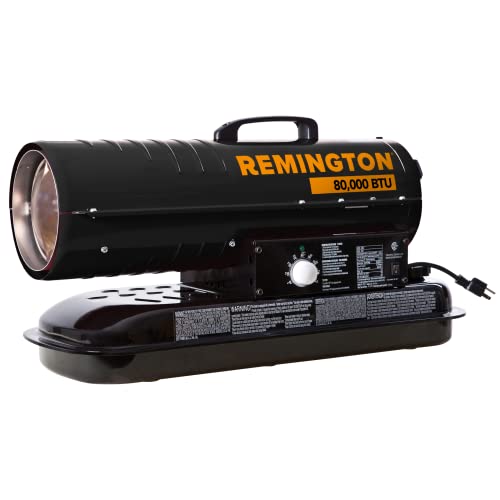
- INSTANT HEAT: Warms spaces up to 2,000 square feet for up to ten hours on a full tank.
- Multi-fuel compatibility: K-1 kerosene, #1 and #2 diesel, JP8/Jet A fuel, and fuel oils.
- SAFETY: 5-point safety system with high-temp limit shut off and flameout protection.
VEVOR Kerosene Forced Air Heater

- HEAT CAPACITY: 215,000 BTU for large spaces like workshops and barns.
- Thermostat energy efficiency: adjustable temperature range with room display and overheat protection.
- Fuel flexibility: supports kerosene and diesel; includes dual fuel filters and fuel gauge.
Reddy Heater 80,000 BTU Forced Air

- Forced air heating up to 2,000 sq ft, suitable for large workspaces.
- Multi-fuel compatibility: kerosene, fuel oils, JP8, and jet fuel.
- High-performance motor for rapid, even heating.
Mr. Heater 140,000 BTU Forced Air Kerosene

- Powerful heat output suitable for large garages and workshops.
- Reliably heats spaces up to 3,500 square feet with up to 8 hours runtime.
- Easy-fill 8-gallon tank for extended operation.
BILT HARD 135,000 BTU Forced Air Heater

- High output heat: 135,000 BTU with up to 8 hours runtime.
- Multi-fuel compatibility: 2-K kerosene, 1-K kerosene, and diesel options.
- Portable with wheels and anti-slip design; CSA certified.
Buying Guide: Key Considerations For Kerosene Heaters
- Space size and heating needs: For garages and large workshops, prioritize higher BTU outputs (100,000+ BTU) and a heater that can warm multiple zones if needed.
- Fuel flexibility: Models that support kerosene and diesel offer resilience during fuel shortages. Check recommended fuels to ensure cleaner burn and longer heater life.
- Run time and fuel capacity: Look for larger tanks or fuel gauges for all-day operation without frequent refills. Consider whether you need continuous operation or intermittent use.
- Safety features: Essential protections include flame-out shutoff, high-temperature limit switches, overheat protection, and sturdy guards. Some models incorporate automatic shutoffs if tipped or if airflow is obstructed.
- Ventilation needs: Kerosene heaters require adequate ventilation to manage CO2 and other emissions. Ensure the workspace has proper airflow or consider outdoor usage when possible.
- Portability and setup: Wheels, handles, and compact frames improve mobility between job sites or different garage bays.
- Controls and monitoring: Thermostats, temperature displays, and remote controls help maintain a stable environment and conserve fuel.
- CSA/UL certifications: For safety and compliance, choose units with recognized third-party certifications.
- Maintenance: Some units require routine checks on fuel lines, filters, and ignition systems. Plan for regular upkeep to maximize longevity.
- Cost of ownership: Consider initial price, fuel efficiency, and expected maintenance to determine total ownership costs over time.