The right hot water solution can improve comfort on the road, whether you’re camping, road-tripping, or living in an RV. This guide highlights five well-regarded options for camper use, covering traditional tank-style heaters, electric under-sink units, and tankless concepts. Each product is chosen for durability, efficiency, and compatibility with typical RV setups. Use the quick reference table below to compare core specs at a glance.
| Product | Brand | Capacity / Type | Key Feature |
|---|---|---|---|
| Suburban Advantage SW6DE | Suburban | 6 gallon, porcelain-lined steel tank | Direct spark ignition and optional electric element |
| Feelrogast Electric Tank 8 Gal | Feelrogast | 8 gallon, electric under-sink | Rapid heat, high durability, multi-safety protections |
| Poukaran 65,000 BTU Tankless | Poukaran | Tankless, propane, 12V compatibility | High-altitude design, on-demand hot water |
| APUS 68,000 BTU Tankless | APUS | Tankless, propane, 12V, 3.9 GPM | Microcomputer control, smart remote, precise temp |
| Camco Water Heater Rinser | Camco | Accessory for flushing sediment | Extends heater life, improves efficiency |
Suburban Advantage RV Tank Water Heater SW6DE
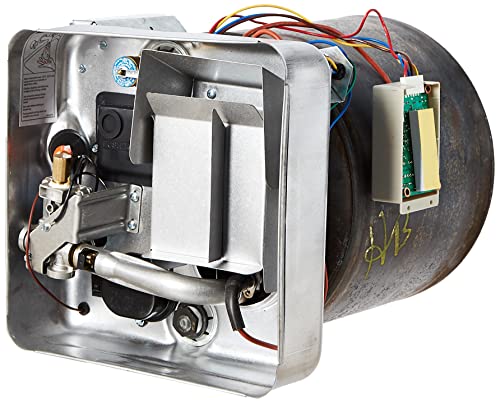
The Suburban SW6DE is a 6-gallon tank water heater with a porcelain-lined steel tank designed for durability in RV settings. It features a replaceable anode rod for corrosion protection and a drain option integrated with the anode rod, simplifying maintenance. An optional electric heating element provides flexibility to heat water when shore power or generators are available, enhancing versatility for varied camping scenarios.
Feelrogast Electric Tank Water Heater – 8 Gallon

This 8-gallon Feelrogast electric tank heater provides rapid hot water with a 316 stainless steel heating element and an adjustable temperature range (roughly 86–167°F). It emphasizes safety with multiple protections, including leakage protection, sturdy insulation, and a high-temp cutoff. The unit uses 120V power and is designed for under-sink or counter-height installation, suitable for RV kitchens or compact living spaces in campers.
Poukaran 65,000 BTU RV Tankless Water Heater
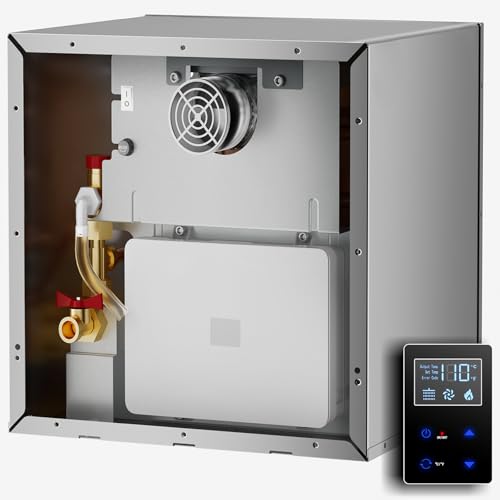
This propane-powered tankless water heater delivers up to 65,000 BTU with oxygen-free copper heat exchange and a brushless DC fan. It’s designed for high-altitude use and can operate efficiently in variable RV environments. The unit is compatible with multiple RV door sizes and kit combinations, offering on-demand hot water without storing heated water in a tank, which can save space and weight in compact RVs.
APUS RV Tankless Water Heater

APUS offers a 68,000 BTU tankless option with 3.9 GPM, designed for RVs and high-altitude use. The system provides precise temperature control via a microcomputer controller and supports a remote control for convenient operation. It emphasizes compact installation, 12V power compatibility, and standard NPT fittings, aiming to balance performance and ease of use in mobile environments.
Camco Camper & RV Water Heater Rinser
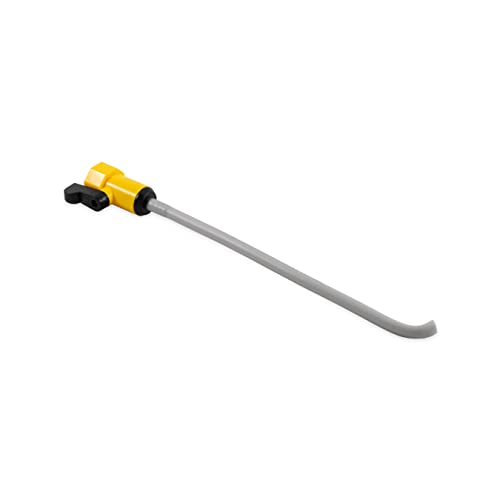
The Camco Rinser is a practical accessory to extend the life and efficiency of RV water heaters. By flushing sediment from the tank, it helps reduce heat loss and corrosion, reinforcing performance over time. This simple attachment connects to a standard garden hose and works with various residential and camper heaters, making maintenance straightforward for RV owners.
Buying Guide: Key Purchase Considerations for Camper Hot Water Solutions
- Type and application: Choose a traditional tank heater for simplicity and established performance or a tankless model for on-demand hot water and space savings. Tankless options are common in tight camper spaces, while tank models offer consistent storage hot water.
- Power source and energy availability: Electric tank heaters rely on shore power or generators, while propane/fuel options are independent of electrical supply. Consider your typical camping setup and power access when choosing.
- Capacity and flow: Tank sizes (e.g., 6–8 gallons) suit dishwashing and showers in smaller RVs. Tankless units’ flow rates (GPM) determine how many fixtures can run simultaneously without a temperature drop.
- Durability and maintenance: Porcelain-lined tanks and corrosion protection (anode rods) extend life in humid, mineral-rich environments. Accessories like tank risers or flush kits help maintain performance.
- Installation considerations: Check dimensions, fit with existing openings, and compatibility with common RV door and vent layouts. Ensure fittings and electrical requirements align with your vehicle’s setup.
- Safety features: Look for high-temperature cutoffs, leak protection, insulation, and certified components (CE, ROHS, FCC) to ensure safe operation in confined spaces.
- Warranty and serviceability: Longevity and ease of replacement parts (anode rods, heating elements) can influence long-term cost of ownership in mobile use.
- Maintenance routines: Sediment flushing, anode rod inspection, and regular component checks help maintain efficiency and hot water availability on the road.