Gutter seam sealers protect homes from leaks by creating flexible, weatherproof bonds at joints, lap joints, and flashing. The right sealant should resist temperature swings, UV exposure, and moisture while adhering to common gutter materials such as metal, vinyl, concrete, and asphalt shingles. The products below are among the most reliable options for exterior gutter and seam sealing, offering strong adhesion, long-lasting flexibility, and easy application for DIY and professional projects alike.
| Product | Brand | Key Benefit | Best For |
|---|---|---|---|
| DAP Dynaflex Gutter & Narrow Seam Advanced Elastomeric Waterproofer | DAP | Extreme durability and permanent exterior flexibility | Gutters, downspouts, pipes, ducts |
| Titebond WeatherMaster Gutter & Seam Sealant | Titebond | Outperforms common sealants on metals and many substrates | Metal roofs, gutters, flashing |
| OSI GS121 Gutter and Seam Sealant | OSI | Permanently flexible, water resistant seal | Gutters and downspouts |
| Geocel 2320 Gutter Sealant | Geocel | High-performance tripolymer, adheres to many substrates | Gutter and narrow seam joints |
| Seal Bond 415 Gutter & Seam Sealant | Seal Bond | Low VOC, solvent-free, remains flexible | Substrates and seam joints in gutters |
DAP Dynaflex Gutter & Narrow Seam Sealer

DAP Dynaflex Gutter & Narrow Seam Advanced Elastomeric Waterproofer delivers durable, permanent flexibility on exterior surfaces. Its elastomeric formula provides strong multi-surface adhesion and is suitable for gutters, downspouts, lap joints, flashings, pipes, and ducts. The product stands up to weather and temperature extremes without cracking or losing adhesion, making it a versatile option for seasonal outdoor use. This sealer is designed to maintain elasticity over time, reducing the risk of joint failure in fluctuating conditions. Ideal for DIY gutter repairs and sealing projects that require a robust, long-lasting seal.
Titebond WeatherMaster Gutter & Seam Sealant

Titebond WeatherMaster is formulated for sealing metal roofs, windows, doors, siding, gutters, and vents. It bonds to Kynar-coated metals, aluminum, galvanized steel, copper, PVC, wood, concrete, brick, vinyl, and more. The sealant claims superior performance over silicone, tripolymer, and urethane options in many common building applications. Its broad substrate compatibility makes it a practical choice for multi-material gutter projects, including flashing and seam joints in harsh weather zones. This product is designed for strong adhesion with long-lasting flexibility.
OSI GS121 Gutter and Seam Sealant
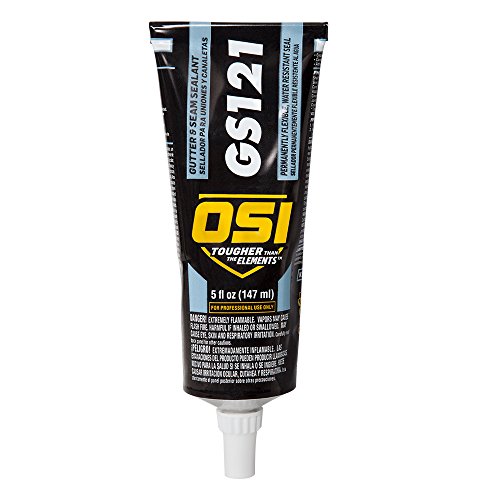
OSI GS121 is a permanently flexible, water-resistant sealant designed for gutters and downspouts. It provides reliable adhesion to a range of common gutter materials and remains flexible to accommodate expansion and contraction with temperature changes. This sealant is suitable for sealing joints in metal, vinyl, and other substrate materials commonly found in exterior gutter systems. It is a straightforward choice for sealing small seam gaps and is recognized for its durable performance in exterior environments.
Geocel 2320 Gutter Sealant
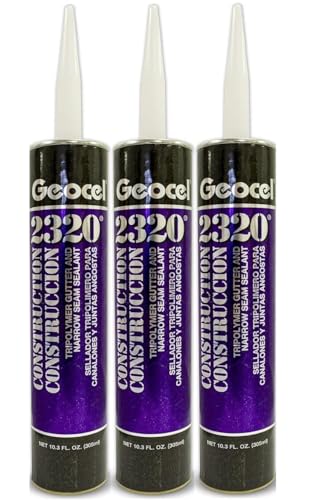
Geocel 2320 is a high-performance tripolymer gutter and narrow seam sealant that adheres to asphalt shingles, brick, concrete, glass, vinyl, wood, and other substrates. It is designed to prevent air and moisture passage through small joints and seams, offering strong adhesion even when damp or oily surfaces are present. The single-component formulation simplifies application and helps ensure a consistent seal along gutter joints and seam areas, contributing to long-lasting gutter protection in varied climates.
Seal Bond 415 Gutter & Seam Sealant

Seal Bond 415 Gutter & Seam Sealant is a 100% solids sealant with no shrinkage and ultra-low VOC content. It is safe to use because it is solvent and isocyanate-free, aligning with LEED-friendly projects. The sealant remains flexible to absorb expansion and contraction across joints, making it suitable for gutters and seam joints on a variety of building substrates. Its low odor and environmental considerations can be important for interior-adjacent applications or enclosed spaces near gutter lines.
Buying Guide: Key Purchase Considerations
- Substrate compatibility: Gutters are made of metal, vinyl, or masonry. Choose a sealant designed to adhere to your gutter material and nearby flashing, shingles, or siding.
- Flexibility and weather resistance: Look for products that maintain elasticity under temperature changes and resist UV exposure. Elastomeric formulas, tripolymer seals, and low-VOC options often provide durable performance.
- VOC content and safety: For enclosed or occupied spaces, consider low-VOC or solvent-free formulas to minimize odors and emissions during application and curing.
- Application temperature and curing: Some sealants cure faster in warm conditions, while others are formulated for cooler climates. Plan around local seasonal weather and project timelines.
- Durability under moisture: Exterior gutter joints endure rain, snow, and condensation. Select products with proven water resistance and long-term stability to prevent recurring leaks.
- Adhesion on damp or oily surfaces: If you need to seal near damp areas or existing residue, look for products marketed as having strong adhesion on damp substrates.
- Environmental impact: Consider products that are LEED-friendly or have low environmental impact claims if sustainability is a priority for your project.
- Warranty and technical support: Some brands offer product warranties and professional guidance, which can be valuable for difficult joints or large gutter systems.
Practical tips for applying gutter seam sealers
- Clean and dry the joint area before applying sealant to maximize adhesion.
- Cut the nozzle to control bead size and work in smooth, continuous strokes along the seam.
- Apply sealant in moderate temperatures to ensure proper setting and cure.
- Follow curing times recommended by the manufacturer for best results; avoid exposing fresh sealant to water until cured.
- Use painter’s tape to create clean edges if you want a neat finish, then remove tape after tooling the sealant.