Choosing a gas-powered hot water system involves balancing flow rate, reliability, and efficiency across multiple fixtures. The following selections emphasize high efficiency, consistent temperature control, and adaptable indoor or outdoor installation. Each product is evaluated on GPM, BTU, and features to help homeowners select a system that fits family size and usage patterns.
| Product | GPM | BTU | Install |
|---|---|---|---|
| FOGATTI Instagas Comfort 180S Series (Outdoor) | Up to 8.1 | 180,000 | Outdoor |
| FOGATTI Instagas Comfort 170S Series (Indoor) | Up to 7.5 | 170,000 | Indoor |
| RIWORY 102000 BTU (Indoor) | Up to 4.3 | 102,000 | Indoor |
| ThermoMate CZ422NG (Indoor) | Up to 5.0 | 113,000 | Indoor |
| Rinnai RX130iN (Indoor/Outdoor) | Up to 7.1 | 130,000 | Indoor/Outdoor |
FOGATTI Instagas Comfort 180S Outdoor

Instant hot water is the hallmark of the FOGATTI 180S outdoor unit, delivering continuous warmth with up to 8.1 GPM at 180,000 BTU. Its outdoor design includes a remote control panel for indoor operation, a bottom-mounted fan to support safe combustion, and a four-stage system to maintain stable temperatures within tight tolerances. This model is built for durability in varied climates and supports multiple outlets without sacrifice in water temperature.
FOGATTI Instagas Comfort 170S Indoor

This compact indoor tankless unit provides strong performance with 7.5 GPM at 170,000 BTU. It is designed to save space while delivering instant hot water across multiple fixtures. Precision temperature control, aided by a four-stage combustion system and sensors, maintains comfort with minimal fluctuation as demand changes throughout the day.
RIWORY 102000 BTU Indoor Tankless

RIWORY’s model offers up to 4.3 GPM and 102,000 BTU for reliable on-demand hot water at three to four points of use. It includes anti-freeze protection for winter operation and a four-heating-module design. The system prioritizes safety and efficiency while maintaining steady temperatures even in cooler weather.
ThermoMate CZ422NG Indoor Tankless

The CZ422NG provides up to 5 GPM and 113,000 BTU with advanced temperature control within ±1°F. It features eight protections (boil-dry, freeze, flame-out, etc.) and corrosion-resistant copper heat exchangers. The system emphasizes energy efficiency, reducing operating costs and preventing pipe damage from freezing and over-temperature events.
NEW Rinnai RX130iN Condensing

This versatile unit is suitable for indoor or outdoor installation, running on natural gas or propane with Smart Sense gas control. It delivers up to 7.1 GPM (enough for four fixtures) in a compact footprint and features a modern interface, Quick Flush for maintenance, and a high energy efficiency factor (UEF .97). WiFi-ready control can integrate with smart home systems via the Controlr module (not included).
APUS Indoor Tankless Gas Water Heater
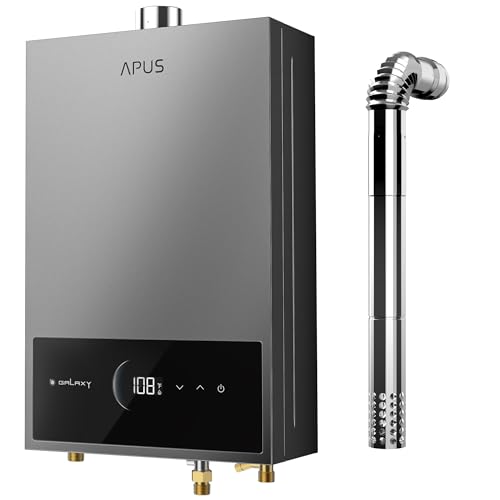
APUS delivers 4.42 GPM at 95,000 BTU with smart digital display, ensuring stable water temperature between 95°F and 140°F with ±1°F accuracy. The unit uses segmented combustion and oxygen-free copper heat exchangers to achieve efficiency gains and reliable performance for two showers plus a sink, making it a compact choice for smaller households.
Buying Guide
Key considerations when selecting a gas hot water system include capacity and flow, installation type, energy efficiency, and safety features. For households with multiple baths or high simultaneous demand, prioritize higher GPM ratings (4–8 GPM) and BTU outputs (100,000–180,000 BTU). Indoor vs. outdoor installation affects venting requirements, weather resilience, and space constraints—outdoor models often require durable housing and remote control access, while indoor units rely on compact footprints and robust frost protection.
- Fuel type and venting: Ensure compatibility with natural gas or propane and verify venting requirements for your home. Condensing models offer higher efficiency but may require more complex venting.
- Temperature control: Look for units with ±1°F stability and clear digital controls to minimize temperature fluctuations during peak usage.
- Automatic protection: Boil-dry, freeze protection, flame-out, and anti-freeze features protect both the unit and piping in variable climates.
- Maintenance: Consider units with accessible maintenance features like quick flush, easy access panels, and durable heat exchangers for longevity.
- Space and installation: Indoor units save outdoor exposure but need proper ventilation and space. Outdoor units demand weatherproof housing and remote operation options for convenience.
- Smart controls: Some models offer WiFi or app-based controls for monitoring performance and adjusting settings remotely.
To choose the optimal system, match your household water usage patterns to the product’s GPM capability, then weigh the installation flexibility (indoor vs outdoor) and long-term efficiency gains against upfront installation complexity. All listed models emphasize temperature stability, safety protections, and robust heat exchange, providing multiple pathways to reliable hot water across a modern American home.