Choosing basement flooring involves balancing moisture resistance, durability, comfort, and ease of installation. The following selections emphasize interlocking foam mats, peel-and-stick vinyl tiles, and reusable vinyl options that perform well in basements, playrooms, home gyms, and multi-use spaces. Below is a quick overview of five relevant products to help you compare at a glance.
| Product | Brand | Type | Best For |
|---|---|---|---|
| Sorbus Wood Grain Floor Tiles (24 Tiles) | Sorbus | Interlocking EVA Foam Tiles | Basements, playrooms, trade shows |
| Sorbus Wood Grain Floor Tiles (24 Tiles) – 96 Sq Ft | Sorbus | Interlocking EVA Foam Tiles | Wall-to-wall or partial areas, expandable |
| ProsourceFit Puzzle Exercise Mat 1/2 in | ProsourceFit | Interlocking Eva Foam | Home gym, kids play space |
| Sorbus 48 Sq Ft Wood Grain Tiles | Sorbus | Interlocking EVA Foam Tiles | Basement, playroom, trade shows |
| AKOLAFE Vinyl Peel & Stick Floor Tiles | AKOLAFE | Peel-and-stick Vinyl | Budget-friendly basement updates |
Sorbus Wood Grain Interlocking Tiles – 96 Sq Ft

The Sorbus 96 Sq Ft Wood Grain Floor Tiles combine comfort with a faux wood look, using 3/8-inch thick EVA foam for cushion over hard basement floors. The 24-tile set forms a modular surface that locks together like a puzzle, delivering a seamless appearance. Edge pieces are detachable to create borders or corners, and tiles can be expanded with additional sets. It suits home spaces, basements, and even trade-show booths where a softer step is desired without sacrificing a wood-like aesthetic.
Key features include interlocking puzzle tiles for a secure fit, a detachable border system to customize edges, and suitability for wall-to-wall installation. The wood grain pattern complements many decor styles, making it versatile for living rooms, workout areas, or kids’ play zones. While comfortable and visually appealing, it remains lightweight for quick installation and rearrangement if your basement layout changes.
Sorbus 96 Sq Ft Wood Grain Floor Tiles – 96 Sq Ft (Second Listing)

This Sorbus kit features the same 24 interlocking tiles with a wood-look finish and 3/8-inch foam for cushioning. It’s designed for modular layouts that can be wall-to-wall or used to section off areas in basements, living rooms, or offices. The tile system supports expansion, making it easy to scale as your space grows. It’s an appealing option for those who want a soft underfoot feel with a subtle wood aesthetic in a basement setting.
Pros include quick installation, edge pieces for borders, and adaptability for various room shapes. Consider this option if you plan to reconfigure space or add more tiles later. Note that as with many foam products, care should be taken to place on flat, clean surfaces to maximize longevity and avoid premature edge lifting.
ProsourceFit Puzzle Exercise Mat 1/2 Inch
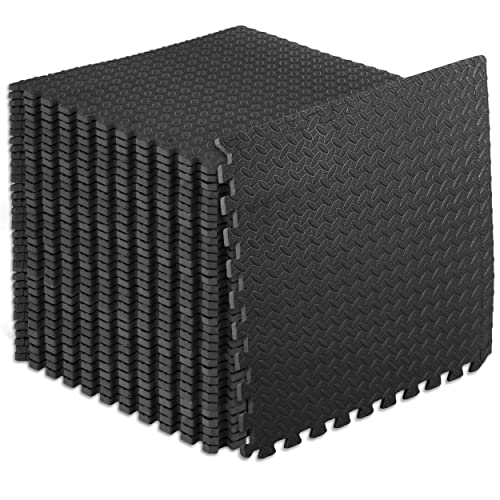
The ProsourceFit 1/2-inch puzzle mats provide robust cushion and support for home gyms or kids’ play areas. Made from high-density EVA foam, these mats offer durable underfoot comfort while helping protect floors from equipment and heavy foot traffic. The design minimizes noise and water exposure, and the tiles are easy to clean, which is useful in basements that encounter moisture or spills. They can be laid directly on flat, hard surfaces and will interlock securely to form a stable workout space or play surface.
Key considerations include the thickness for impact absorption, compatibility with other flooring types, and the ease of cleaning. The set is well-suited for exercise rooms, garages converted into gyms, or playrooms where extra padding is beneficial. Potential drawbacks include slight color variation and the need for a flat subfloor to prevent edge gaps during use.
Sorbus 48 Sq Ft Wood Grain Tiles

This 48-square-foot Sorbus set uses interlocking EVA foam tiles with a gray wood grain finish. It’s designed for easy wall-to-wall installation or partial room coverage, offering a cushioned surface that’s ideal for basements, playrooms, or trade shows. The modular approach allows for corner or border tiling as needed, and you can combine multiple sets to cover larger areas. The finish blends well with modern basements and provides a non-slip underfoot experience that’s helpful when the space doubles as a gym or kids’ play area.
Consider edge edging and border pieces to achieve a clean look around the room. Durability is good for low- to moderate-traffic basement spaces, but foam tiles may require periodic resealing or replacement if exposed to sharp objects or heavy weight regularly.
AKOLAFE Peel-and-Stick Vinyl Floor Tiles

AKOLAFE’s vinyl floor tiles offer a budget-friendly, quick-install option for basements. Each 12 x 12 inch tile is designed to be peeled and stuck, with a laid-back installation that doesn’t require adhesives or specialized tools. The package covers about 40 square feet and includes clear instructions for flat, dry surfaces. The tiles are described as waterproof and suitable for bathrooms, kitchens, and basements, though users should verify subfloor flatness and moisture exposure prior to installation. The self-adhesive design supports straightforward customization and easy removal if needed.
Key considerations include moisture resistance, surface preparation, and the potential for color or texture differences across batches. This option suits quick refurbishments or experimenting with new patterns without a big upfront investment. It may be best for less-trafficked basement zones or temporary setups rather than high-traffic living areas.
Buying Guide: Key Considerations For Basement Flooring
- Moisture resistance: Basements are prone to humidity and minor moisture. Interlocking foam tiles and vinyl options with sealed edges perform well when moisture is a concern. Avoid porous materials that can trap moisture or warp over time.
- Subfloor prep: Ensure a flat, clean surface before installation. Peel-and-stick tiles require a dry, smooth base, while foam mats benefit from a dry, even floor for a long-lasting seal and fit.
- Comfort and safety: Cushioned surfaces reduce fatigue for standing tasks, workouts, or kids’ play. Look for non-slip textures and thicker mats for higher-impact activities.
- Durability and maintenance: EVA foam is lightweight and easy to replace, but may show wear in high-traffic zones. Vinyl tiles offer spill-resistance and easier cleaning, but ensure the adhesive or installation method suits your basement’s environment.
- Expansion and adaptability: Interlocking systems allow you to expand coverage as your space changes. Border pieces help create clean edges around walls or existing fixtures.
- Aesthetics and color: Wood grain finishes provide a warm look that complements many basements. If moisture is a concern, darker tones may better conceal scuffs and minor damage.
- Installation effort and budget: Peel-and-stick options are cost-effective and quick, while interlocking foam tiles require a bit more setup but deliver strong customization and comfort. Consider long-term maintenance costs and replacement parts.
- Safety and indoor air quality: Many products are formaldehyde-free and designed to minimize odors. Verify product certifications if sensitive occupants are present.
In selecting basement flooring, prioritize a balance between moisture resilience, cushioning, and ease of installation. For temporary or multi-use spaces, foam tiles offer flexibility and comfort. For spaces that require minimal maintenance with a more finished look, vinyl tiles provide durability and straightforward upkeep. If budget is a primary constraint, peel-and-stick vinyl options can deliver rapid updates without professional installation. Always ensure subfloor readiness to maximize the longevity of your chosen flooring.