Selecting the right fire-rated paint for wood can help slow the spread of flames and smoke, while preserving the appearance of wood surfaces. This guide highlights five top options from reputable brands, focusing on performance, safety, and ease of use. Each product includes a quick overview of key features, ideal applications, and practical considerations to help homeowners choose the best fit for fireplaces, wood stoves, and other high-heat areas.
Summary of Featured Products
| Product | Brand | Key Benefit |
|---|---|---|
| INSL-X FR110099-01 INS-LX Fire Retardant Paint | INSL-X | Low VOC, slows fire and smoke spread |
| Rutland High Temperature Fireplace Paint | RUTLAND PRODUCTS | Withstands up to 1200°F, adheres to multiple surfaces |
| Stove Bright High Temp Paint – Bark Brown | Woodeze | 1200°F protection, durable satin finish |
| Stove Bright High Heat Paint – Goldenfire Brown | Woodeze | Rust and scratch resistant, versatile indoor/outdoor use |
| Flamecheck M-111PA Fire Retardant Paint Additive | Flamecheck Simply Safer | Boosts latex paints with flame retardant properties |
Note: This article presents objective information about fire-rated wood coatings. Always follow manufacturer instructions and local building codes when applying fire-retardant finishes.
INSL-X FR110099-01 INS-LX Fire Retardant Paint

INSL-X’s FR110099-01 paint is engineered for interior wood surfaces that require enhanced fire resistance. The formula emphasizes a low VOC profile, making it suitable for living spaces and craft projects where indoor air quality matters. It’s designed to slow the spread of fire and smoke, potentially buying time for safe evacuation and reducing smoke development. This coating is often used on decorative trim, doors, and wooden components adjacent to heat sources in living areas or protected outdoor spaces.
Rutland High Temperature Fireplace Paint

This flat black paint is built to restore or upgrade the appearance of stoves, grills, and other metal surfaces exposed to high heat. Rutland’s formula claims adhesion to steel, cast iron, aluminum, brick, and most metals, making it suitable for fireplace bricks, wood stoves, chimney caps, and grills. It’s a practical choice for outdoor and semi-exposed indoor projects where heat resistance up to 1200°F is needed. It’s important to note that it is not intended for surfaces that contact food.
Stove Bright High Temp Paint – Bark Brown

Woodeze’s Bark Brown high temperature spray paint is formulated to withstand up to 1200°F, making it well-suited for wood stoves, fire pits, and barbecue components. The spray format provides convenient coverage for curved or irregular surfaces, while the satin finish lends a durable look. For best results, use compatible primers and cleaners from Stove Bright to optimize adhesion and longevity on metal, brick, and other heat-exposed substrates.
Stove Bright High Heat Paint – Goldenfire Brown

Another Woodeze option, Goldenfire Brown, is designed for extreme heat environments from stoves to radiators and engines. This paint delivers a protective satin finish in a decorative color, while offering rust resistance and scratch protection. It’s suitable for both indoor and outdoor use when paired with the proper Stove Bright primers and cleaners. This makes it a versatile choice for wood-based fire feature upgrades or visible heat-exposed components.
Flamecheck M-111PA Fire Retardant Paint Additive
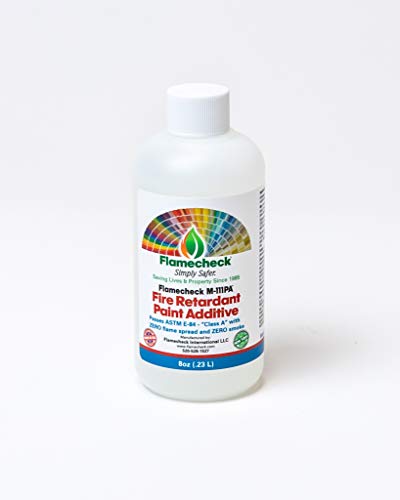
Flamecheck M-111PA is an additive rather than a standalone paint. It is designed to be mixed into interior or exterior latex paints or primers to impart flame retardant properties. The product is non-toxic, ASTM E-84 tested, and formulated to reduce flame spread and smoke production. It’s particularly useful for improving existing wood surfaces without replacing coatings, as long as the substrate supports latex-based systems after additive incorporation.
Buying Guide: Key Purchase Considerations
- Heat exposure and substrate: Choose products rated for the expected temperature and compatible with wood, brick, metal, or concrete as needed. Surface preparation effects adhesion and longevity.
- Formulation and safety: Low VOC options improve indoor air quality. For indoor living spaces, consider paints designed for-safety with proper curing and ventilation.
- Application method: Spray, brush, or roller options affect coverage efficiency on complex wood features. Sprays are convenient for intricate shapes; brushes work well for edges and priming.
- Finish and aesthetics: Satin, flat, or gloss finishes influence visual appeal and maintenance. Consider whether the finish masks irregularities or highlights details on wood grain.
- Post-treatment and compatibility: Some products require primers or sealers. When using additives like Flamecheck M-111PA, ensure compatibility with the chosen base paint and the substrate.
- Regulatory and safety standards: Look for certifications or test results (e.g., NFPA, ASTM E84) and ensure local codes align with the product’s intended use.
- Maintenance and durability: High-temp coatings should resist chipping, cracking, and staining caused by heat cycles. Consider the environment (indoor vs outdoor) and cleaning requirements.
Additional Perspectives
When selecting fire-rated paint for wood, homeowners should weigh practicality against aesthetics. A high-temperature coating on visible wood surfaces may require color-matched finishes or primers to maintain a cohesive look. For retrofit projects, using a paint additive can improve the fire resistance of existing paint schemes without complete replacement. It’s also prudent to evaluate the long-term maintenance plan, including re-coating frequency and the availability of compatible touch-up products from the same brand family.
Safety and Compliance Considerations
Always follow the manufacturer’s instructions for surface preparation, application, curing times, and ventilation. Fire retardant coatings are part of a broader fire safety strategy that includes proper clearance around heat sources, smoke detectors, and protective barriers. For any project near cooking appliances or heat-generating equipment, consult local building codes and, if needed, a professional installer to ensure compliance and performance.