Choosing the right fiberglass mesh for concrete repairs and plastering can improve crack control, bond strength, and overall durability. The following selections are designed to help builders, DIYers, and professionals find non-adhesive and adhesive alternatives suitable for EIFS, plaster, render, and cementitious coatings. This guide highlights five standout options with different weights, sizes, and performance traits, so you can pick the best fit for high-traffic areas, exterior walls, or delicate interior surfaces.
| Product | Brand | Use |
|---|---|---|
| Boen Non-Adhesive EIFS Stucco Mesh | Boen | EIFS base coat, crack control |
| SXKJDM Fiberglass Mesh Plastering Mesh (1x100m) | SXKJDM | Walls and ceilings, non-adhesive |
| YIQUEDOK Fiberglass Mesh | YIQUEDOK | Plastering, rendering, tiling |
| Fibre Glast Fiberglass Scrim Mesh | Fibre Glast | Concrete repairs, roofing, scrim |
| Boen Non-Adhesive EIFS Fiberglass Mesh (9.5″ x 150′) | Boen | Drywall, crack repair, alkali resistance |
Note: The list below focuses on five options that balance tear resistance, alkali compatibility, and ease of use, so you can assess which mesh best aligns with your project scale and substrate.
Boen Non-Adhesive EIFS Stucco Mesh

Industrial-grade EIFS reinforcement designed to embed in base coat and control cracking while adding impact resistance to EIFS or synthetic stucco systems. This 4.5 oz mesh rolls out 38 inches by 150 feet, covering roughly 475 square feet. It lays flat without curling, and overlaps are recommended at 2–4 inches to fully encapsulate seams and prevent telegraphing through the finish. Ideal for field areas with higher wear where a robust alkali-resistant mesh is required in cementitious or polymer-modified mortars.
SXKJDM Fiberglass Plastering Mesh (1x100m)

Non-self-adhesive fiberglass mesh made from platinum fibers, coated with a non-toxic emulsion. It offers insulation, high-temperature resistance, and strong tear resistance, while resisting reactions with cement and gypsum. The mesh is cuttable to fit various crack widths and irregular surface areas, making it suitable for large or complex repair jobs on walls, ceilings, and exterior insulation systems. Expect slight gaps at edges due to non-adhesive design, but it excels in durability and stability in demanding environments.
YIQUEDOK Fiberglass Mesh
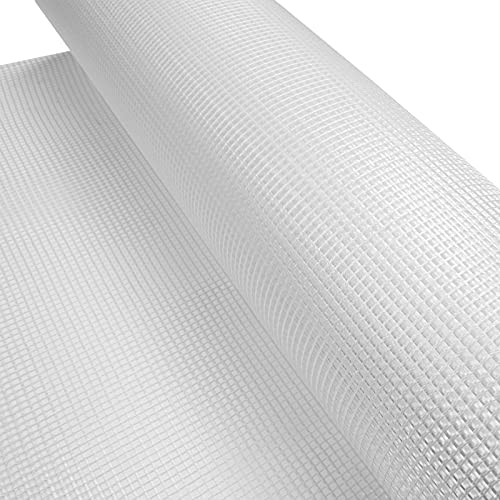
Non-adhesive fiberglass mesh designed with 39-inch width and approximately 5 yards of coverage. It delivers stable strength and easy installation for plastering, rendering, and tiling applications. Suitable for exterior wall insulation systems and interior or exterior renovation projects, it helps crack resistance and supports durable cement-based coatings. The non-sticky design relies on embedding into the base coat for reinforcement rather than adhesion to surfaces.
Fibre Glast Fiberglass Scrim Mesh

This white, heavy-duty scrim mesh is a popular choice for concrete repairs, roofing, sculpture casting, and window screens. It’s easy to use, lightweight, and available in a 1-2 oz cloth with a 50×36-inch footprint. It reinforces repair substrates under shingles, drywall joints, or other substrates where anti-cracking reinforcement is needed. The product carries a “First Quality” certification, signaling consistent batch-to-batch performance for demanding projects.
SXKJDM Fiberglass Mesh Plastering Mesh (1x50m)
A second SXKJDM option with a 1x50m size, featuring similar base characteristics as its 100m cousin: non-adhesive, resistant to alkaline materials like cement and gypsum, and cuttable for custom crack coverage. It emphasizes good insulation and high-temperature resistance while maintaining strong tear resistance for long-lasting repairs on walls and ceilings. Suitable for exterior or interior plastering projects where a stabilizing mesh is required.
Boen Non-Adhesive EIFS Fiberglass Mesh (9.5″ x 150′)
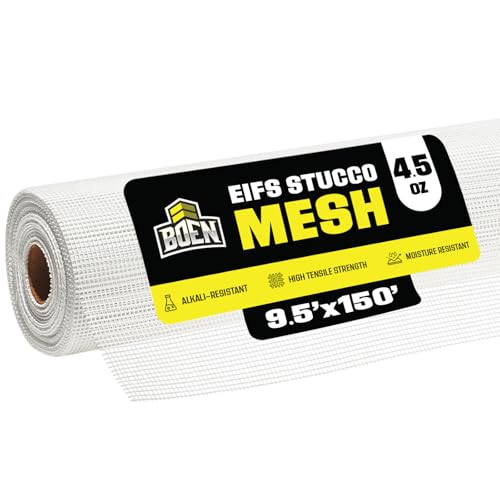
A larger-width, non-adhesive drywall mesh engineered for crack sealing and reinforcement. It is designed to be cut to size with regular scissors and offers high strength with simple installation. The mesh is flame retardant and demonstrates strong alkaline resistance, performing well in plaster and stucco environments where durable reinforcement is critical. It dissolves slowly in certain oily liquids, reducing risk of unintended residue in the base coat.
SAJIED Large Size Fiberglass Mesh Roll

High-density, enhanced-strength fiberglass mesh roll designed for walls and ceilings in plastering and exterior insulation systems. The 33 cm x 100 m roll supports heavy-duty crack resistance with an emphasis on durability in alkaline environments. It’s non-adhesive, cuttable, and suitable for large renovation projects where uniform mesh distribution and tear resistance are essential for long-term performance.
Bubujia Premium Select Alkaline Resistant Mesh

Premium fiberglass mesh designed for plastering, rendering, tiling, and gypsum applications. Width near 39 inches with five yards of coverage, this non-sticky mesh embeds into wet base coats to reinforce large surface areas. It offers strong mechanical support, and is adaptable to uneven surfaces, helping to strengthen the plaster layer and improve crack resistance across various substrates.
Buying Guide: How To Choose The Right Fiberglass Mesh For Concrete
- Non-adhesive vs. adhesive: Determine whether you need a non-adhesive mesh that embeds into the base coat or an adhesive-backed option for fast, tacky installs. Non-adhesive options often require embedding and proper embedding overlaps, while adhesive varieties can simplify alignment on flat surfaces.
- Weight and tear resistance: Heavier weights like 4.5 oz offer more puncture resistance and strength, suitable for high-traffic areas and exterior applications. Lighter scrim is adequate for minor crack control in interior spaces.
- Width and length: Wider rolls cover more area per piece but may be harder to maneuver in tight corners. Smaller widths allow precise adaptation to irregular surfaces. Consider roll length for your project scope to minimize joins.
- Alkaline resistance: Cement and plaster environments are alkaline. Choose meshes that are specifically rated to resist alkali to prevent degradation and ensure long-term performance.
- Compatibility with coatings: Some meshes are designed for EIFS, stucco, or plaster-based coatings. Ensure the mesh is compatible with the base coat material and finish you plan to apply.
- Ease of installation: Cuttable meshes with clear instructions and minimal curl are preferred for DIYers. Non-curl, flat-lying meshes reduce telegraphing in the final coat.
- Certification and quality: Look for products with industry-standard certifications or quality guarantees, which can indicate batch-to-batch consistency and performance in demanding environments.
- Application scale: For large exterior projects, select a reinforced mesh with higher tear resistance and longer roll length to minimize seams and ensure consistent performance across wide areas.
- Safety and handling: Check for flame retardant properties if the material may be exposed to heat sources during installation or early curing stages.