Keeping a chicken coop comfortable is essential for flock health and egg production. This guide highlights top fans that fit various setups—from off‑grid solar solutions to compact indoor models. Each option prioritizes airflow, durability, and animal safety. Read on to compare features, installation needs, and performance across five reliable choices designed for American backyards.
| Product | Key Benefit | Best For |
|---|---|---|
| NHZOTUD Solar Powered Fan Kit | Dual 15W solar fans; IPX7 weatherproof | Outdoors; hot days; solar setup |
| Windigaga 8 Inch Shutter Exhaust Fan | High airflow; low noise | Small to mid-size coops |
| AC Infinity AXIAL Muffin Fan | High-speed, compact; flexible mounting | DIY ventilation projects |
| Solar Powered Fan With Battery (TARKARI) | Smart modes; infrared sensing | Off-grid, larger coops |
| erifyng Solar Powered Dual Fans | Monocrystalline panel; dual fans | Solar setups; bigger spaces |
The following sections drill into each product’s core specs, suitable coop sizes, and installation considerations. All data reflects the listed features and typical use cases to help you decide quickly.
NHZOTUD Solar Powered Fan Kit
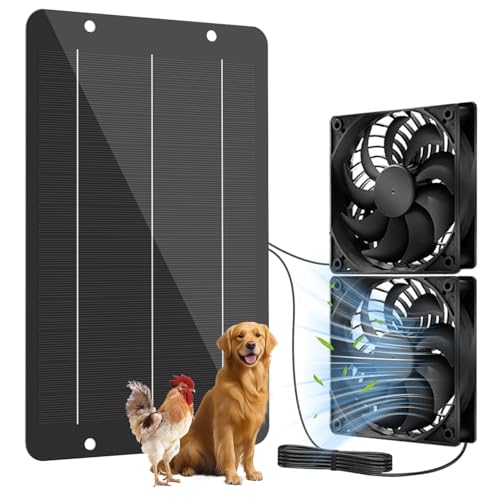
The NHZOTUD kit combines two 15W solar fans with a 12.6-inch design suitable for small chicken coops, doghouses, or greenhouses. It pushes heat out while pulling fresh air in, aiming to reduce indoor temperatures and maintain air quality. The unit is weatherproof with a waterproof IPX7 rating on its motor components, protecting against rain exposure. A noted feature is its high airflow, around 200 CFM, paired with a robust motor expected to last several years. It suits spaces up to about 200 cubic feet (L x W x H) for effective ventilation.
Considerations include sun exposure, since the system relies on solar power. For best results, position the solar panel to maximize sun during peak hours. The dual-fan setup supports both intake and exhaust configurations, enabling flexible installation in outdoor runs or covered coops. Users should ensure wiring remains protected from moisture and critters.
Comfort Zone 16-Inch Wall Mount Fan

The Comfort Zone wall-mounted option saves floor space while delivering strong air circulation. With a 16-inch blade span and three speed settings, this fan can handle a nursery, workshop, or greenhouse. Its wide-angle oscillation distributes air evenly to prevent hot spots. The unit is easy to install on a vertical surface and provides stable operation with a simple pull-chain control. It’s a practical choice for a coop needing steady airflow without occupying living space.
Key points to note include mounting height and room layout to achieve balanced airflow. The adjustable tilt head helps direct airflow toward roosts or nesting areas. It’s not a dedicated chicken coop fan, but its robust build and quiet operation make it a strong general-purpose ventilation tool for small to mid-sized coops or adjacent shelter spaces.
VEVOR 18 Inch Wall Mount Fan

The VEVOR 18-inch wall fan delivers high air movement with up to 4150 CFM, designed for outdoor and semi-outdoor environments like greenhouses or poultry houses. Its ETL listing denotes compliance with certain safety standards, and a 90W motor provides solid performance with relatively low noise for its size. The unit features an all-metal construction with a copper motor and six-foot power cord for versatile mounting. It’s ideal for larger coops or spaces that require strong cross-ventilation and longer reach.
Pros include powerful airflow and weather-rated housing, but installation should consider wind exposure and mounting security. The IP44 rating provides some water resistance, but avoid direct, heavy rain. If odor control or humidity is a concern, pairing this with a misting setup or additional exhaust points can improve comfort levels in warmer weather.
Windigaga 8 Inch Shutter Exhaust Fan

This shutter exhaust fan provides up to 760 CFM and is designed for rapid heat and humidity removal. It’s compact at 8 inches, making it well-suited for smaller coops, sheds, garages, or attics where space is at a premium. The unit runs on a quiet motor around 26W, keeping noise low while delivering strong airflow. Its durable aluminum blades and galvanized steel housing resist corrosion, extending life in humid environments common to chicken housing. ETL listing adds an extra layer of safety assurance.
Performance tips include mounting the exhaust inlet high to remove hot air effectively and pairing with a passive intake or window vent for cross-ventilation. For best results in a coop, position the fan to pull hot air away from roosts and nest boxes while maintaining a safe distance from birds’ feet to avoid drafts while resting.
Solar-Powered Exhaust Fan With Battery – 25W

The 25W solar-powered exhaust fan by TARKARI brings battery-backed operation and smart sensing. It includes two 4.7-inch fans with three operating modes: High, Low, and Auto-Sense. The Auto-Sense mode uses infrared detection to run the fans briefly when movement is detected, saving energy in mild weather. A controller memory function preserves the last settings after a restart, simplifying daily use. It’s particularly suitable for 6-by-6-foot coops or similar spaces and can be expanded with additional units for larger areas.
Considerations cover energy management and sensor logic. For off-grid setups, the automatic modes help maintain comfort without constant manual adjustments. Ensure proper sun exposure for optimal panel performance. Cable lengths are built to accommodate flexible placement of panels and fans, enabling cross-ventilation strategies across coop compartments.
erifyng Solar Powered Dual Fans

The erifyng system features two IPX7 waterproof 5-inch fans driven by a larger solar panel installation kit. This configuration targets spaces up to about 6 by 6 feet but can be scaled by adding more units for bigger coops. The design emphasizes weatherproof reliability and robust airflow, suitable for outdoor chicken housing in sunny climates. Installation involves mounting the dual fans on one side or in a cross-vent arrangement to maximize air exchange and odor control across the coop interior.
Key considerations involve layout planning and solar panel orientation. Since no battery is built in for some setups, you’ll rely on sunlight intensity to drive performance. For best results, pair with an intake fan or passive vent to create a continuous air loop that reduces ammonia buildup and moisture during hot days.
Buying Guide: Key Purchase Considerations
- Coop size and airflow needs: Match fan CFM (cubic feet per minute) to coop volume. Larger coops typically require higher CFM or multiple fans for even distribution.
- Power source: Decide between mains-powered, solar, or battery-backed units. Solar options excel in sunny climates and can operate off-grid, while wired fans deliver consistent performance regardless of sun.
- Weather resistance: For outdoor installations, look for waterproof or weatherproof ratings (IPX7, IP44) and corrosion-resistant housings to withstand humidity and dust.
- Noise and reliability: Quieter fans reduce stress for poultry and coop neighbors. Durable motors and aluminum or steel housings tend to last longer in humid settings.
- Installation flexibility: Wall-mount vs. roof/ceiling mounting, intake/exhaust configurations, and adjustable directions help tailor airflow to roosts, feeders, and nesting areas.
- Smart features: Some solar fans offer auto-sense or programmable modes to optimize energy use and respond to temperature or animal presence.
- Maintenance: Look for easy-access filters or guards to prevent debris buildup and ensure safe operation around birds.
Selecting the right combination depends on your coop’s location, climate, and whether you prefer a plug-in, solar, or hybrid approach. For off-grid setups, solar-powered fans with battery backup and smart modes provide reliable cooling for hot summers. Indoor or partially sheltered spaces can benefit from high-CFM wall-mounted or shutter exhaust options to prevent heat buildup and reduce humidity. Always verify product dimensions and ensure the installation does not obstruct birds’ access or roosting areas.