For homeowners and DIY enthusiasts, selecting a reliable epoxy for plastic radiators and related cooling-system fixes is essential. The right epoxy provides a durable seal, resists heating and chemicals, and works on damp surfaces when needed. Below, five top-rated epoxy products commonly used for plastic radiator repairs are featured, with practical details and applications to help you compare options. This guide also includes a practical buying guide to aid in choosing the best epoxy for your specific radiator repair needs.
| Product | Brand | Primary Use | Notable Feature |
|---|---|---|---|
| ProSeal Instant Gas Tank & Radiator Repair | Pro Seal | Small holes, cracks, split seams | Steel-reinforced, quick set |
| PlasticWeld Plastic Repair Epoxy Putty | J-B Weld | Plastic repairs on ABS, PVC, CPVC | Two-part, NSF certified |
| Metal Glue High-Strength Epoxy | vicpricme | Metal, plastic, ceramic, etc. | Heat and chemical resistant |
| Versachem 90214 Plastic Tank & Radiator Kit | AP Products | Tanks and radiators | No draining, quick repairs |
| Blue Magic QuikSteel Plastic Repair Epoxy Putty | Blue Magic | Plastic repairs | 2 oz. putty |
The selected products emphasize quick setup, durability under heat, and compatibility with plastic radiator materials. Use them to seal leaks, rebuild damaged seams, or reinforce weak areas around radiator tanks and hoses. Always follow manufacturer instructions, ensure proper ventilation, and test the repair under safe conditions after curing.
ProSeal Instant Gas Tank & Radiator Repair

The ProSeal product is a steel-reinforced epoxy putty designed for quick fixes on radiators and gas tanks. It seals small holes, cracks, and split seams without draining or removing parts. It hardens like steel in 2–4 hours for a durable, permanent repair and reaches full strength after about 12 hours. This makes it suitable for emergency repairs where downtime must be minimized and the material is designed to perform on wet or moist surfaces, which can be common in cooling system components during repair work.
- QUICK FIX: Instantly seals small holes, cracks, and split seams without draining or removing parts.
- STEEL-REINFORCED: Hardens like steel in 2–4 hours for a durable, permanent repair.
- FULL CURE: Achieves maximum strength after 12 hours.
Ideal for temporary or semi-permanent repairs on damaged radiator caps, small leaks in plastic tanks, or cracked seams near hose connections. Ensure surfaces are prepared as directed and allow adequate cure time before pressurizing the system.
J-B Weld PlasticWeld Plastic Repair Epoxy Putty

J-B Weld PlasticWeld is a hand-mixable two-part epoxy putty formulated for repairing and rebuilding various plastic materials. It’s suitable for ABS, PVC, CPVC pipes, auto bumpers, and other plastics. The putty cures in about 3 hours, forming a strong bond with a lap shear strength around 600 psi. It can withstand continuous temperatures up to 250°F (121°C) and intermittent temperatures up to 300°F (148°C). It does not shrink and can be molded, shaped, sanded, drilled, and cut after curing, which is helpful when contouring a repair to fit a plastic radiator component.
- Two-part epoxy putty that sets in 25 minutes and cures in about 3 hours.
- Will bond ABS, PVC, CPVC, and other plastics; NSF certified for potable water contact.
- High heat resistance and non-shrinking formula for durable radiator repairs.
Metal Glue High-Strength Epoxy

This high-strength epoxy is a versatile, professional-grade option that cures to a steel-like strength within 24 hours and sets in about 5 minutes. It creates a permanent, waterproof bond that can be drilled, sanded, and painted. The formula bonds metal, stainless steel, aluminum, plastic, ceramic, wood, glass, and concrete, making it particularly useful for mixed-material radiator repairs, such as sealing a small crack in a plastic tank connected to a metal component. It is designed to withstand temperatures from -54°C to 287°C (-65°F to 548°F) and resist oils, fuels, and many chemicals.
- Fast initial set (about 5 minutes) and full cure in 24 hours.
- Heat and chemical resistance suitable for engine environments.
- Versatile bonding across multiple substrates including metal and plastic.
Versachem Versachem 90214 Plastic Tank and Radiator Repair Kit
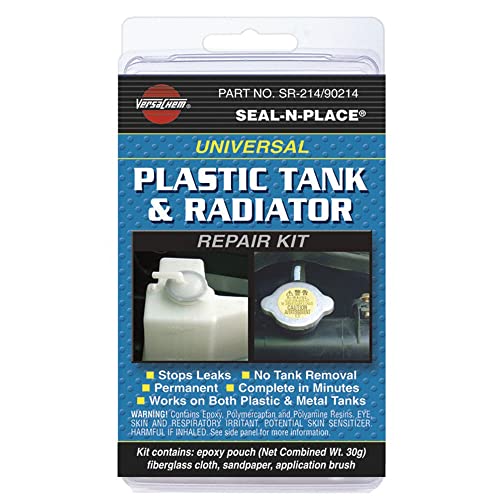
The Versachem repair kit is built to permanently repair gasoline and diesel fuel tank leaks. It can repair leaks in less than 20 minutes, with no draining or welding required. The kit’s chemical solvent resistance caters to gasoline, diesel, and kerosene environments, making it a practical option for radiator tanks that are integrated with fuel systems or vent lines. It emphasizes quick, field-friendly repairs and compatibility with common automotive fluids.
- Permanent repairs with fast cure times.
- No draining or welding required for leaks.
- Chemical solvent resistance against gasoline and diesel.
Blue Magic QuikSteel Plastic Repair Epoxy Putty
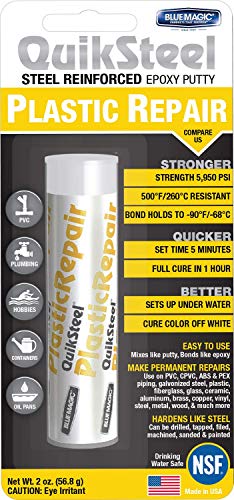
Blue Magic QuikSteel is a plastic repair epoxy putty designed to seal cracks and fill holes in plastic components. The putty comes in a 2 oz. package, suitable for small radiator repairs or patches around plastic tanks and hoses. While the product details here are limited, QuikSteel putty is commonly used for quick, temporary to semi-permanent fixes where heat and exposure to radiator fluids are considerations. It offers a convenient option for on-the-spot repairs in the field.
- Two-ounce putty for small repairs.
- Accessible for quick field fixes on plastic parts.
- Designed for durable bonding to plastic surfaces.
Buying Guide: Key Considerations For Choosing Epoxy For Plastic Radiator Repairs
-
<liTemperature resistance: Radiator components experience high heat. Look for epoxies rated to withstand sustained temperatures near or above 180–250°F (82–121°C) and even higher for certain applications.
<liSubstrate compatibility: Ensure the epoxy adheres to plastic radiators, tanks, and hoses; some products also bond metal or composite parts for mixed-material repairs.
<li Cure time vs. strength: A quicker set is helpful for field repairs, but verify that full cure strength will meet the demands of the radiator environment before pressurizing the system.
<liWater and chemical resistance: Repair materials should resist coolant fluids, oil, fuel residues, and kerosene when applicable, especially for fuel-integrated tanks.
<liSurface preparation: Some epoxies require sanding, cleaning, or priming; follow product instructions for best results.
<liRemovability and future repairs: Consider whether the repair is intended as a temporary fix or a long-term solution, and plan for possible future maintenance or part replacement.
<liNSF/certifications: For potable-water or sensitive environments, NSF certification may be relevant; select products with appropriate approvals when needed.
<liApplication method: Putty-like sticks, two-part epoxies, and ready-to-use kits offer different handling and curing characteristics—choose based on accessibility and skill level.
When using epoxy for radiator repairs, prioritize products designed for automotive and densely heated environments. For critical cooling-system components, consider professional-grade epoxies and consult a mechanic if the repair involves pressure testing or potential coolant leaks that could impact engine performance. This guide aims to present options that balance ease of use with durability for a range of repair scenarios.