Choosing a gas-powered water heater that delivers reliable hot water while maximizing energy efficiency can lower utility bills and reduce environmental impact. This guide highlights five high-efficiency gas water heaters from trusted brands, emphasizing flow capacity, energy-saving features, and suitable installation scenarios for typical American homes. Use the buying guide below to compare installation needs, maintenance, and performance across options that fit indoor and outdoor spaces.
| Product | Brand | GPM | BTU | Type |
|---|---|---|---|---|
| RTGH Series 8.4 GPM | Rheem | 8.4 | 157,000 | Indoor Tankless |
| RTG-84XLN-3 | Rheem | 8.4 | 180,000 | Indoor Tankless |
| RTGH-95DVELP-3 | Rheem | 9.5 | unknown | Indoor Condensing Tankless |
| NEW Rinnai RX199iN | Rinnai | 11.1 | 199,000 | Indoor/Outdoor Condensing |
| 50 Gal Smart High Efficiency Hybrid | Rheem | — | — | Hybrid Heat Pump |
Below are five models that stand out for energy efficiency, reliability, and suitability for alternating demand scenarios like showers, laundry, and dishwasher cycles. The list includes both compact indoor units and outdoor configurations to fit different home layouts and climate considerations. Each option supports modern controls or remote access where applicable, helping households optimize hot water use and energy consumption.
Rheem RTGH Series 8.4 GPM Tankless Indoor
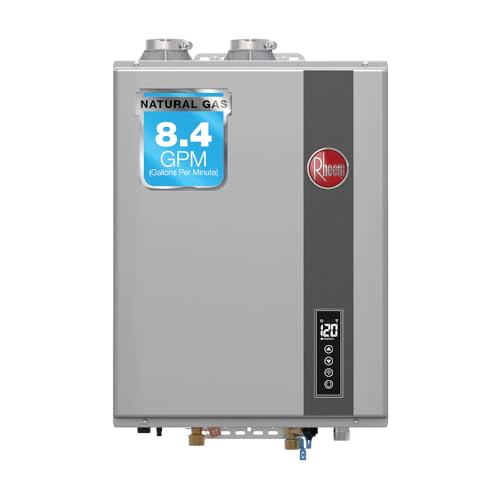
The Rheem RTGH84DVLN3701171 combines 8.4 GPM capacity with 157,000 BTU input in a compact indoor unit. It uses electric ignition and offers temperature settings from 100 to 140F, defaulting to 120F for comfort and efficiency. This model is designed for continuous on-demand hot water, suitable for homes with multiple simultaneous hot water needs. The 120-volt electrical requirement is standard for residential installations, and a professional installation ensures proper venting and gas line sizing. Energy performance benefits come from high-efficiency operation and precise digital controls.
Rheem 50 Gal Smart High Efficiency Hybrid
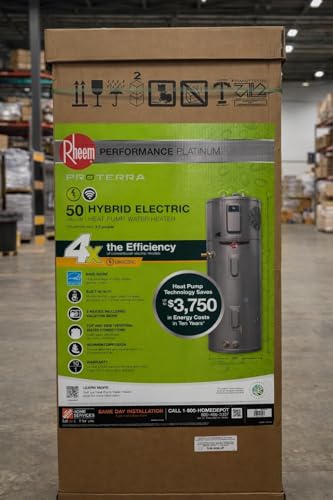
This hybrid heat pump model focuses on energy savings by using ambient heat to pre-warm water, enabling lower operating costs over time. It requires electrical wiring and a dedicated circuit similar to large electric appliances, reflecting its advanced heat pump technology. While not a plug-and-play unit, the efficiency gains are meaningful for homes with space for a larger storage tank and a suitable electrical connection. Ideal for households seeking higher storage capacity and reduced standby heat loss compared with standard electric or gas-only options.
Rheem RTG-84XLN-3 Outdoor Tankless
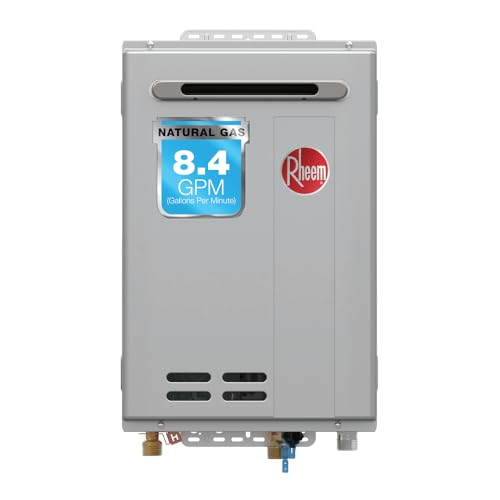
This outdoor, high-efficiency tankless unit delivers up to 8.4 GPM with 180,000 BTUs and is designed for outdoor installation. It’s well-suited for homes with multiple hot water demands, such as simultaneous showers and laundry. The unit’s rugged metal cabinet supports wall mounting by a qualified installer, and it maintains quick, reliable hot water even under peak usage. Outdoor installation can simplify venting but may require weatherproofing considerations and proper drainage planning.
Rheem Natural Gas Condensing Indoor Tankless

This indoor condensing tankless heater provides up to 9 GPM with 180,000 BTUs, delivering continuous hot water with high efficiency. The unit supports a wide temperature range (100–140F) with a default of 120F. Features typically include an electric ignition and compact cabinet designs suitable for interior installation in households aiming to reduce standby heat loss while meeting multiple simultaneous hot water needs. Efficient gas usage is achieved through condensing technology, which recovers heat from exhaust gases.
Rheem RTGH-95DVELP-3 High Efficiency Condensing Indoor
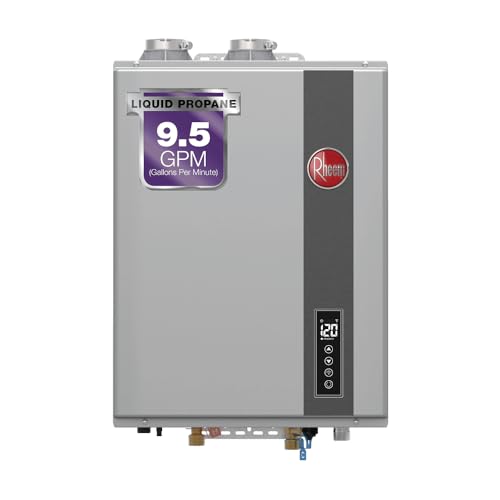
Rheem’s RTGH-95DVELP-3 is a high-efficiency condensing indoor tankless option delivering about 9.5 GPM of hot water with a modern WiFi-enabled EcoNet interface. The unit runs efficiently by modulating gas usage to match demand, reducing energy waste. It’s designed for installation inside the home and includes a compact, durable cabinet. The WiFi connectivity supports remote monitoring and temperature control, enabling homeowners to optimize energy use while maintaining comfort across multiple fixtures.
Buying Guide: Key Purchase Considerations
- Gas type and venting: Confirm whether the unit uses natural gas or propane, and check venting requirements. Indoor units often require venting to the exterior, while some condensing models may offer optional venting configurations.
- Flow rate and temperature needs: Match GPM capacity to your home’s hot water profile. For households with multiple showers and appliances, aim for higher GPM to prevent cold-water sandwich experiences during peak demand.
- Efficiency ratings: Condensing models achieve higher efficiency, reclaiming heat from exhaust. Compare energy factors (EF/UEF where available) and potential fuel savings over time.
- Installation space: Indoor models demand ventilation, gas line sizing, and potential electrical connections. Outdoor units simplify venting but require weatherproofing and landscape considerations.
- Controls and smart features: WiFi or remote-control options can help you monitor energy use, adjust temperatures, and schedule hot water usage for efficiency.
- Maintenance and service: Condensing units rely on condensate drainage and periodic flushing. Ensure access for routine maintenance and local technician availability.
- Warranty and brand support: Select models from brands with nationwide service networks and clear warranty terms for parts and labor.
- Electrical requirements: Hybrid and some high-efficiency models may require dedicated circuits. Plan electrical upgrades if needed to support the unit.
- Overall cost of ownership: Consider initial installation costs, fuel savings, maintenance, and potential demand for replacements when evaluating long-term value.
The selections above represent a range of energy-efficient gas water heaters suitable for different home configurations. When choosing, consider your peak hot water needs, space constraints, and whether you prefer indoor or outdoor installation. Consulting a licensed plumber or HVAC technician can ensure correct sizing, venting, and safe operation aligned with local code requirements.