Planning ahead can reduce stress for loved ones during difficult times. This guide highlights five top end-of-life organizers that help you capture essential information, wishes, and arrangements in a clear, organized format. Each picks combines durable design, practical sections, and user-friendly layouts to simplify estate planning, medical details, and final arrangements.
| Product | Brand | Key Benefit |
|---|---|---|
| End of Life Planner, Spiral Estate Planning Organizer | Blugool | 16 detailed sections, 7.9″ x 10.4″ B5 spiral bound for easy page turning |
| Peace of Mind Planner: Important Information about My Belongings | PETER PAUPER PRESS | Durable hardcover with archival, acid-free paper |
| Peace of Mind Planner, 7.9″ x 10.4″ with Tabs | GloBooking | Comprehensive 16-section structure with inner pocket and sturdy binding |
| End-of-Life Planner: Gracious Goodbye | The Intentional Maven | Printable templates via QR code; flexible binder system |
| Clever Fox End of Life Planner | Clever Fox | Guided final arrangements with 16 sections and clear prompts |
End of Life Planner by Blugool

The Blugool End of Life Planner focuses on thorough documentation across 16 sections. Its design centers on clarity for family members, with personal information, final wishes, and essential details organized for easy reference. The B5 size (7.9″ x 10.4″) and twin-wire spiral binding allow comfortable 360° page turning. An inner pocket, pen holder, and elastic band enhance on-the-go accessibility, supporting a comprehensive, structured approach to end-of-life planning.
Peace of Mind Planner by Peter Pauper Press

This hardcover organizer emphasizes durability with archival, acid-free paper, helping preserve critical information over time. Its concise, legible design supports careful cataloging of belongings, business affairs, and final wishes. With a focus on longevity, this planner is suitable for long-term record keeping while remaining user-friendly for family members and executors.
Peace of Mind Planner by GloBooking

The GloBooking planner uses a 7.9″ x 10.4″ format with a protective design and an inner pocket for document storage. It covers 16 detailed sections including personal, medical, property, financials, beneficiaries, and funeral plans. The gold corner protection adds durability, ensuring it remains intact through routine handling and revisions.
End-of-Life Planner: Gracious Goodbye
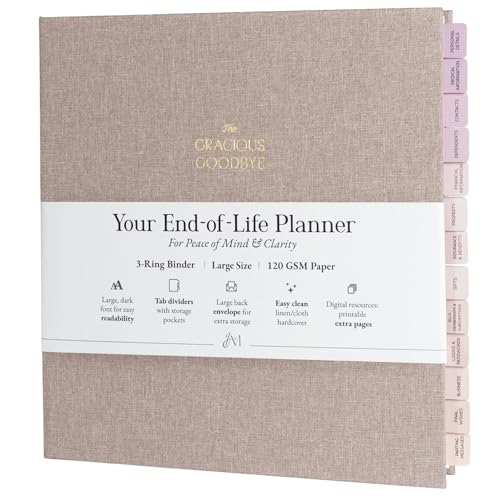
The Gracious Goodbye planner by The Intentional Maven offers a binder-based system with printable templates accessible via a QR code. It emphasizes versatility and customization, allowing pages to be added, removed, or replaced. This flexibility makes it suitable for evolving needs and personal preferences as circumstances change over time, while centralizing essential documents and final wishes in one place.
Ampleer Life Book Document Organizer Folio

The Ampleer Life Book provides a 3-ring binder structure with 8 tab dividers and a 30-page life planner. It includes 5 waterproof zipper pockets and a back pocket, offering secure storage for important papers and documents. This organizer is particularly suited for those who want a robust, modular system for paper-based estate planning and personal records.
Clever Fox End of Life Planner

The Clever Fox planner offers a guided approach with 16 sections designed to create a thorough record of medical, financial, and personal information. Its user-friendly layout helps save time for loved ones, reducing ambiguity during difficult moments by clearly outlining instructions, beneficiaries, and important accounts. The practical structure supports executors and family members in executing final wishes with clarity.
Buying Guide
1) Binding and Format
Choose between spiral, hardcover, or binder-style organizers. Spiral bindings allow full 360° page turning and easy flat-lay use, which is convenient for reading while documenting information. Binders offer modularity, letting you add or remove pages as circumstances change. Consider whether you want a format that supports printable templates or digital accessibility as a backup.
2) Size and Portability
Most recommended planners come in 7.9″ x 10.4″ or similar sizes, balancing ample writing space with portability. A larger size improves readability but may be less convenient to carry or store. Select a size you can easily keep in a dedicated file, safe, or home office drawer.
3) Sectional Coverage
Ensure the planner includes core categories: personal and family information, medical details, financial assets, property, insurance, active accounts, beneficiaries, funeral preferences, and final wishes. Some planners add pet information, memberships, and emergency contacts. A well-structured 16-section layout commonly covers essential needs for executors and loved ones.
4) Durability and Materials
Durable covers, archival or acid-free paper, and protective corners or binding contribute to long-term usability. If the document is intended to be kept for decades, archival-quality materials help preserve information for future generations or when needed by professionals.
5) Storage and Accessibility
Look for inner pockets, document sleeves, or additional zip pockets to securely store copies of important documents. An accessible, clearly organized layout reduces search time for executors and family members during emergencies or after a loss.
6) Customization and Future-Proofing
Flexibility matters. Some planners offer QR codes for downloadable templates or printable pages, enabling customization as needs evolve. Binder-based systems are particularly adaptable, allowing page additions or replacements without discarding the entire binder.
7) Usability and Clarity
Prompted sections, readable typography, and logical flow help minimize confusion. If the planner targets seniors or caregivers, large-print options, high-contrast covers, and easy-to-read layouts are valuable features.
8) Privacy and Security
Consider what information you’ll store and how it will be protected. Some planners emphasize offline storage and durable construction to reduce risk of loss or damage. If you plan to share information with professionals, check whether the format supports secure access or distribution of copies to trusted parties.
9) Price and Value
Prices vary by material quality and features, such as hardcover construction, tabs, and included templates. Compare the long-term usability, the number of sections, and durability to determine overall value. A well-chosen organizer can consolidate multiple documents and notes into a single, reliable reference point.
10) Intended Audience and Tone
Some planners emphasize a practical, straightforward tone, while others use a lighter, humorous approach. Decide whether you prefer a serious, procedural resource or a more relaxed style that might encourage consistent use. The right tone can influence how regularly information is updated and maintained.
Overall, an ideal end-of-life organizer should balance comprehensive coverage with durable construction and user-friendly design. It should provide a clear framework for documenting critical personal, financial, and logistical details, while allowing room for updates as circumstances change. Evaluating products through these criteria helps ensure a reliable, respectful, and practical planning tool for you and your loved ones.