Driveway alarm systems offer a proactive way to monitor entrances, protect property, and alert you to activity before it reaches your home or business. This guide highlights five top options that balance long-range wireless capability, weather resistance, and easy installation. Each product is evaluated on range, sensor count, weatherproof features, and expandability to help you choose a system that fits a driveway, gate, or large perimeter. Read on to compare key specs and practical considerations for American homeowners and small businesses.
| Product | Brand | Range | Sensors | Key Strength |
|---|---|---|---|---|
| Driveway Alarm – 1 Receiver + 2 Sensors | HTZSAFE | 1/2 mile | 2 | Solid weatherproofing; versatile placements |
| Driveway Alarm – 1 Receiver + 1 Sensor | HTZSAFE | 1/2 mile | 1 | Compact setup for smaller perimeters |
| Driveway Alarm – 1 Receiver + 4 Sensors | HTZSAFE | 1/2 mile | 4 | Broad coverage for larger properties |
| Non-APP Wireless Driveway Alarm | eMACROS | 1/2 mile | Expandable (up to 64 sensors) | High expandability; robust long-range |
| Solar Driveway Alarm Wireless Outside | Wuloo | 1/3 mile | 2 (expandable) | Solar-powered; long-term battery life |
HTZSAFE Driveway Alarm With 2 Sensors — 1/2 Mile Range

The HTZSAFE system includes one receiver and two weather-resistant motion sensors. It is designed for outdoor and indoor property monitoring, including driveways, porches, gates, pools, garages, and sheds. The system operates across a temperature range from -30 to 150 degrees Fahrenheit, making it suitable for diverse climates. A wireless transmission range of up to 0.5 miles supports larger perimeters, with an improved signal technology (FSK+FHSS) to reduce interference from other devices. The motion detector offers a 50-foot detection window with adjustable sensitivity (low = 35 ft; high = 50 ft) to minimize false alarms from leaves, animals, or weather effects.
HTZSAFE One Sensor, 1/2 Mile Range Driveway Alarm
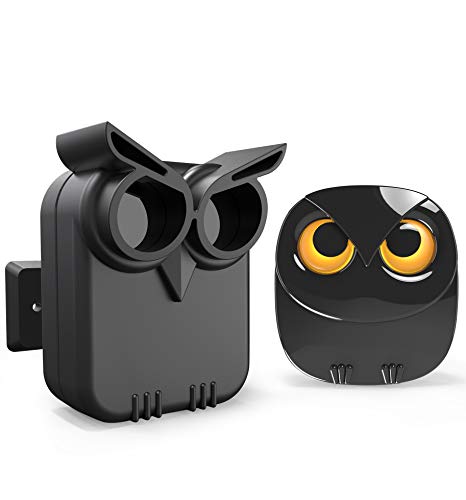
This HTZSAFE setup features a single motion sensor and a plug-in receiver, offering a streamlined option for medium-sized properties. It preserves the same long-range wireless capability of up to 0.5 miles and employs the same interference-resistant transmission technology (FSK+FHSS). The sensor detects motion within a 50-foot range and provides two adjustable sensitivity levels to tailor alerts for driveways, walkways, or gates. It suits users seeking easy installation and a compact footprint without sacrificing perimeter coverage.
HTZSAFE Four-Sensor Driveway Alarm System

This expanded HTZSAFE package includes four sensors and a single receiver, enabling broader coverage for large properties, multiple entry points, or separate zones such as a front driveway, side gate, and garage. The system maintains a 0.5-mile wireless transmission range and features dual-sensitivity options to fine-tune alerts. It is well-suited for detecting movement across multiple corridors while minimizing false alarms from environmental factors.
eMACROS Non-APP Solar Driveway Alarm — 1/2 Mile

The eMACROS system emphasizes solar power and wireless simplicity, delivering a 1/2 mile range with no need for wiring. It supports up to 64 sensors and unlimited receivers, enabling expansive coverage for long driveways, barns, or multiple entry points. The solar-powered design reduces maintenance, and the quick-start guide allows installation in minutes. This option is ideal for property owners seeking scalable expansion and minimal ongoing upkeep, with robust detection for people, cars, and larger animals.
Betterlink 1/2 Mile Solar Driveway Alarm System
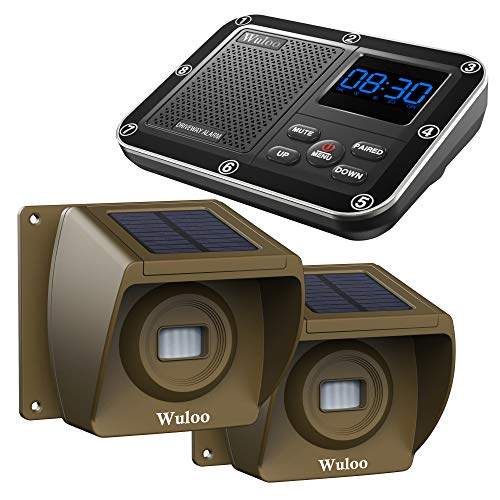
The Betterlink solar driveway alarm system features IP65 weatherproof sensors and a receiver, with a 1/2 mile wireless range. The motion detector uses pyroelectric infrared technology to minimize false alarms and can be expanded to up to 16 sensors for full property coverage. The solar-powered operation enhances reliability in remote areas and reduces ongoing power requirements, making it a strong choice for larger properties or properties with limited electrical access.
Buying Guide: Key Purchase Considerations
- Range and terrain: Real-world range depends on terrain, buildings, and vegetation. Choose systems that advertise at least 0.5 miles in open space and verify expansion options for longer perimeters.
- Sensor count and zoning: For large properties, multiple sensors across zones improve coverage. If you need fewer entry points monitored, a single-sensor option may suffice.
- Weather resistance and IP rating: Look for weatherproof sensors (IP65 or higher) to withstand rain, snow, and temperature swings in any season.
- Power source and maintenance: Solar options reduce wiring and maintenance, but they require sun exposure and periodic cleaning. Battery-powered systems need replacement batteries over time.
- Interference and reliability: Systems with FSF+FHSS (or equivalent) reduce interference from other wireless devices. Consider testable alerts and adjustable sensitivity to minimize false alarms from wind, leaves, or animals.
- Expansion potential: If you anticipate growth, pick a system that supports additional sensors or multiple receivers to cover new zones without replacing the core unit.
- Alerts and integration: Decide between audible chimes, LED indicators, or both. Some systems allow multiple chime options and volume control for different areas.
- Installation: Wireless systems with simple mounting on walls, fence posts, or trees are ideal for quick setup. Ensure the chosen model offers straightforward placement without invasive wiring.
In sum, the five highlighted options provide a spectrum of coverage—from compact, single-sensor setups ideal for smaller properties to expansive, solar-powered networks suitable for large estates or multi-entry sites. Assess your perimeter size, preferred power source, and future expansion needs to select the most effective driveway alarm system for your property.