Choosing the right drill bits for ceramic tile can mean the difference between a clean, precise hole and a cracked tile. This guide highlights five highly capable options that perform well on ceramic, porcelain, and other hard surfaces. Each pick blends durable carbide or diamond tips with design features tailored to tile work, helping you drill with confidence on projects ranging from backsplashes to tiled showers.
| Product | Brand | Key Feature |
|---|---|---|
| DKIBBITH 7 Pack Dry Diamond Drill Bits & Tile Drill Bits Set | DKIBBITH | Integrated wax lubricant, vacuum brazed diamond technology for clean holes |
| Professional Masonry Drill Bit Set (10PCS) for Glass/Brick/Plastic/Cement/Wood/Tile | TITGGI | Industrial carbide tips, fast penetration, 3-flats shank for secure grip |
| BOSCH PTBX05 5 pc. Porcelain Tile Drill Bit Set | Bosch | Carbide-tipped, optimized for hard tile materials, designed for longer life |
| DKIBBITH 10 Pack Dry Diamond Drill Bits & Tile Drill Bit Set | DKIBBITH | Wax-lubricated tips, vacuum brazed diamonds for neat tile holes |
| 8 Pack Diamond Drill Bits Set for Granite Ceramic Marble Tile | DKIBBITH | Integrated coolant and multiple sizes for versatility on tile projects |
When selecting a drill bit for ceramic tile, consider tip material (carbide vs. diamond), shank compatibility, hole clarity, and lubrication or cooling design. The following sections break down each option, highlighting what makes it suitable for tile work and where it excels in a typical project workflow.
DKIBBITH 7 Pack Dry Diamond Drill Bits

This full-size set includes multiple diameters (3/16″, 1/4″ x2, 5/16″, 3/8″, 1/2″), plus a masonry bit. The dry drilling design integrates a wax lubricant inside each diamond bit to cool the tip and reduce diamond loss, allowing for successive holes without overheating. Vacuum brazed diamond technology helps produce clean holes in ceramic, porcelain, granite, and other hard materials. The round shank design supports common drill chucks, and the set’s variety makes it suitable for backsplash work or tile repair projects where different hole sizes are needed.
Professional Masonry Drill Bit Set (10PCS) by TITGGI
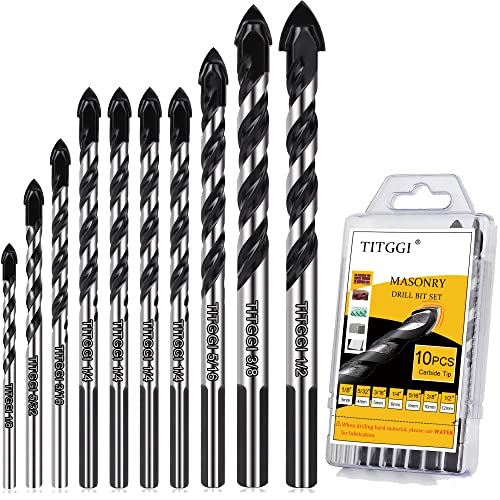
Designed for versatility, this TITGGI set uses industrial-strength carbide tips to handle ceramic tile, glass, cement, and other hard substrates. The 10-piece assortment covers a wide range of hole sizes, beginning with 1/8″ up to 1/2″. A double U-type groove aids dust removal, and a 3-flats shank helps prevent slippage during drilling. The variety supports both small pilot holes and larger drilling tasks without needing to switch bits frequently.
BOSCH PTBX05 Porcelain Tile Drill Bit Set

Bosch’s 5-piece porcelain tile drill set is optimized for hard materials like porcelain, marble, and granite tiles. The carbide-tipped bits deliver fast, precise drilling with a focus on longer bit life compared with general-purpose tile bits. An arrow-shaped head design reduces skating, enabling cleaner entry and reducing chatter during drilling. This set is ideal for precise pilot holes for mounting hardware or fixtures in tile installations.
DKIBBITH 10 Pack Dry Diamond Drill Bits
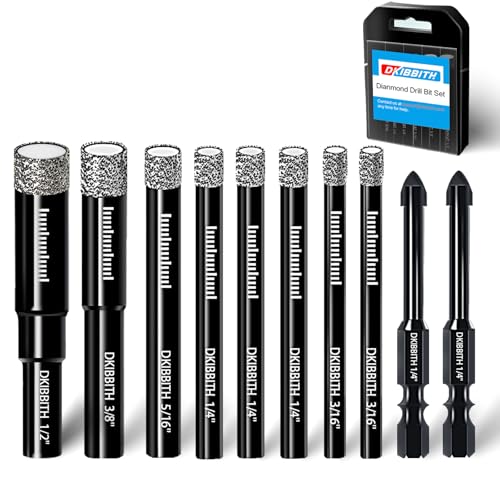
This extended DKIBBITH set mirrors the dry-diamond approach with a broader range of sizes (3/16″, 1/4″ x3, 5/16″, 3/8″, 1/2″) plus two extra masonry bits. The integrated wax lubricant helps cool the tip during dry drilling, reducing diamond loss and allowing multiple holes to be formed with minimal downtime. Vacuum brazed diamond technology ensures clean edges on tile surfaces, aiding in professional-looking installations.
DKIBBITH 8 Pack Diamond Drill Bits Set

This 8-pack focuses on a balanced selection of sizes: 3/16″, 1/4″, 5/16″, 3/8″, and 1/2″ with two 3/16″ variants. The included coolant integration helps maintain bit performance during longer tile drilling sessions. The diamond core design supports fast, clean holes in ceramic, porcelain, granite, and other hard materials, making it well-suited for tile countertop or wall installations where multiple hole sizes are needed in one drill session.
DKIBBITH 10 Pack Dry Diamond Drill Bits & Tile Set (Second Listing)
This listing highlights a ten-piece assembly with the same core principles: dry drilling capabilities, integrated wax lubrication, and vacuum brazed diamonds for crisp tile holes. The extended set provides more options for tile, porcelain, granite, and ceramic, letting users perform multiple tasks from faucet installation to decorative tile work without frequent bit changes.
Buying Guide: Key Purchase Considerations
- Tile material compatibility: Porcelain and ceramic tiles demand carbide-tipped or diamond-coated bits for clean holes without cracking. For granite or marble, diamond-tipped bits often perform best.
- Lubrication and cooling: Dry drilling with built-in wax lubricants helps prevent diamond loss and reduces heat buildup. Vacuum brazed diamonds offer durable, long-lasting cutting edges.
- Shank and chuck compatibility: Ensure the shank fits your drill’s chuck (round shanks are common; some sets include hex shanks for quick-change chucks).
- Hole size range: A multi-size set reduces the need for swapping bits mid-project. Look for sets that cover common sizes like 1/8″, 1/4″, 3/16″, 5/16″, 1/2″, etc.
- Durability and life: Carbide-tipped bits excel in metal and masonry, while diamond bits excel for tile surfaces. Consider your project frequency and tile hardness to choose accordingly.
- Ease of use: A design that minimizes walking or skating (e.g., cross-ground tips, anti-walk features, and hex shanks) helps achieve clean entry holes with less effort.
- Size and budget balance: For occasional DIY, a compact, versatile set may suffice. For professional tile work, a larger, durable kit with a range of sizes is advantageous.
When planning a tile drilling project, match the material, hole size requirements, and drill speed to the bit’s design. Diamond bits deliver clean, precise holes in tile surfaces, while carbide-tipped options excel on a wider set of materials you might encounter near a tile installation site. A staggered approach—starting with a small pilot bit and progressively moving to larger sizes—often yields the best results for accuracy and edge integrity.